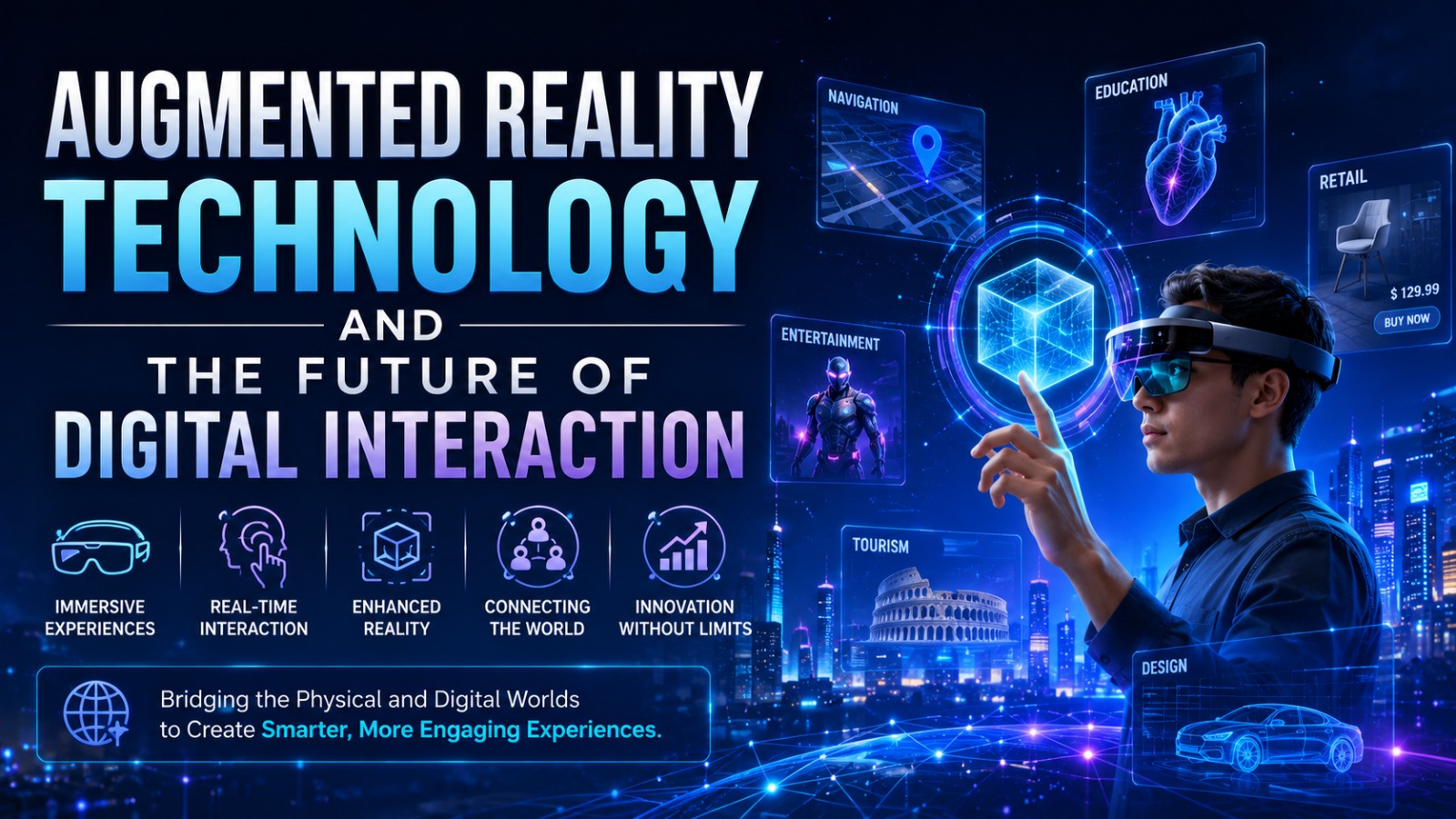
Augmented Reality (AR) technology is rapidly transforming how people interact with digital content. By blending virtual elements with the real world, AR creates immersive experiences that enhance perception and engagement. As industries continue to adopt this technology, augmented reality is becoming a key driver of innovation in digital interaction.
WHAT IS AUGMENTED REALITY?
Augmented Reality is a technology that overlays digital information—such as images, sounds, or text—onto the physical world in real time. Unlike virtual reality, which creates a fully immersive digital environment, AR enhances the existing environment by adding interactive digital elements.
This integration is typically achieved through smartphones, tablets, or AR-enabled devices such as smart glasses. As a result, users can experience a seamless combination of real and virtual worlds.
KEY FEATURES OF AUGMENTED REALITY
Several features make AR a powerful tool for digital interaction:
- Real-Time Interaction: Users can engage with digital elements instantly.
- 3D Visualization: Enhances understanding through realistic representations.
- Context Awareness: Adapts content based on the user’s environment.
- User Engagement: Provides interactive and immersive experiences.
These characteristics contribute to AR’s growing popularity across multiple sectors.
APPLICATIONS IN VARIOUS INDUSTRIES
Augmented Reality is being widely adopted in different industries, offering unique benefits:
- Retail: Customers can visualize products before purchasing, improving decision-making.
- Education: Enhances learning through interactive and engaging content.
- Healthcare: Assists in medical training and surgical procedures.
- Entertainment: Creates immersive gaming and media experiences.
These applications demonstrate AR’s versatility and its potential to reshape traditional processes.
ENHANCING USER EXPERIENCE
One of the most significant advantages of AR is its ability to improve user experience. By providing interactive and personalized content, AR allows users to engage with information in a more meaningful way.
For example, AR applications can guide users through complex tasks, offer real-time navigation, or provide additional information about objects in their surroundings. This level of interaction increases user satisfaction and efficiency.
ROLE IN DIGITAL TRANSFORMATION
AR plays a crucial role in digital transformation by bridging the gap between physical and digital environments. Businesses can use AR to create innovative solutions that enhance productivity and customer engagement.
In manufacturing, AR can assist workers with real-time instructions, reducing errors and improving efficiency. In marketing, it enables brands to deliver interactive campaigns that capture consumer attention.
CHALLENGES AND LIMITATIONS
Despite its potential, AR technology faces several challenges. High development costs, hardware limitations, and privacy concerns can hinder widespread adoption.
Additionally, creating high-quality AR experiences requires advanced technical expertise. Ensuring compatibility across different devices is another challenge that developers must address.
FUTURE TRENDS IN AUGMENTED REALITY
The future of AR is promising, with continuous advancements in technology driving its evolution. Improvements in hardware, such as lighter and more powerful devices, will enhance accessibility and usability.
Integration with technologies like artificial intelligence and 5G will further expand AR capabilities. These developments are expected to create more immersive, responsive, and intelligent digital experiences.
CONCLUSION
Augmented Reality is revolutionizing digital interaction by merging virtual elements with the real world. Its applications across industries highlight its potential to enhance user experience, improve efficiency, and drive innovation.
As technology continues to evolve, AR will play an increasingly important role in shaping the future of how people interact with digital content. Organizations that embrace this technology will be better positioned to thrive in the digital age.
About the Author
Gusti Ayu Tita
Author — STEKOM University
An active author focused on academic issues, educational technology, and human resource development in the campus environment.