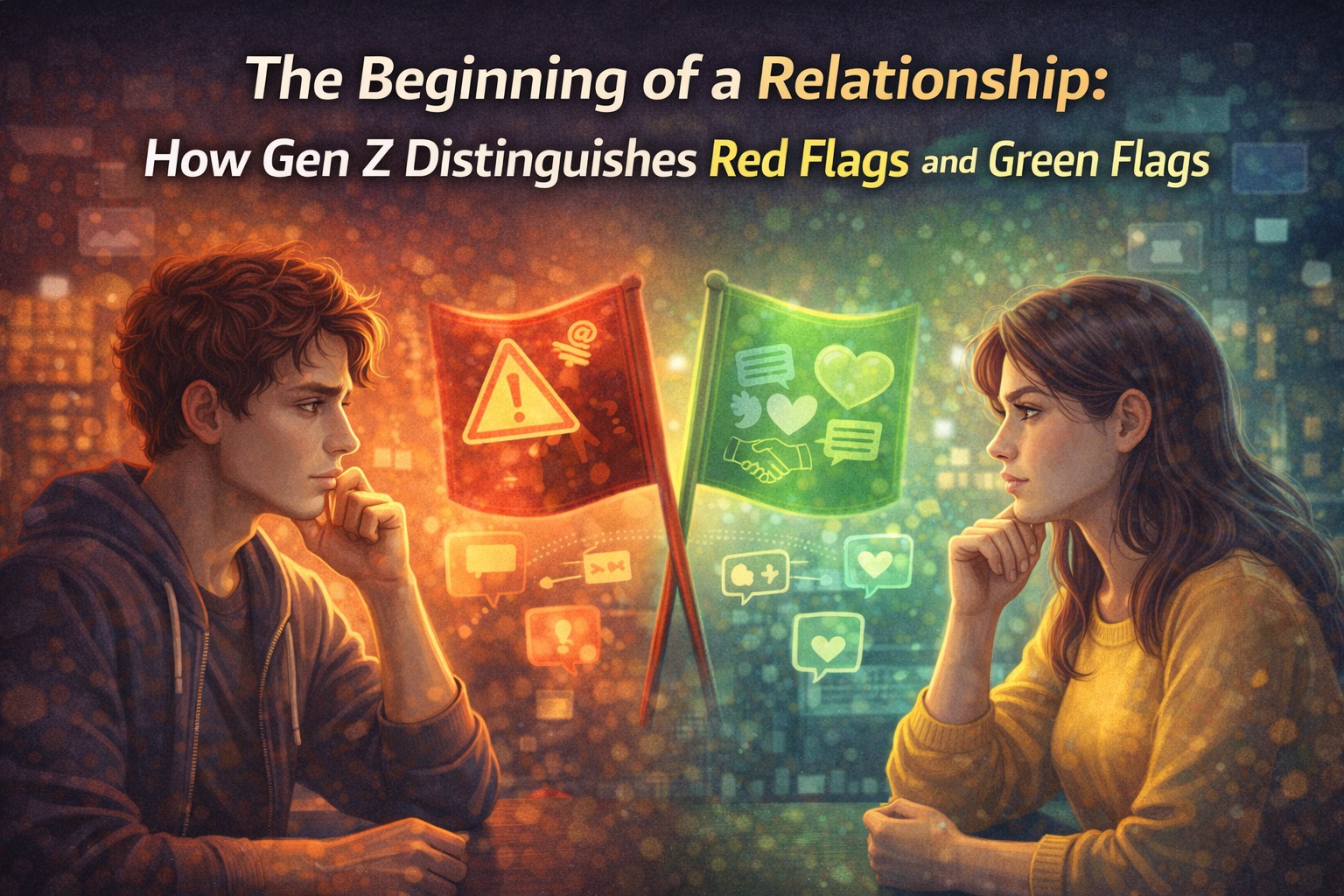
Starting a new relationship often brings curiosity, excitement, and caution. For Gen Z, the early stage of a relationship is not only about attraction but also about recognizing a partner’s character and values. The terms *red flag* and *green flag* have become essential in determining whether a relationship is worth continuing or should be reconsidered from the start.
Gen Z’s awareness of mental health and healthy relationships makes them more critical in reading early signs. So, how does Gen Z distinguish red flags and green flags at the beginning of a relationship?
Shifts in Gen Z’s Relationship Mindset
Growing up in an era of open information and discussions about mental health, boundaries, and equality, Gen Z views relationships not only through emotions but also through self-awareness.
A relationship is considered healthy when it provides safety, mutual respect, and personal growth. Therefore, Gen Z is more willing to observe and evaluate relationships from the very beginning.
Understanding Red Flags in Relationships
Red flags are warning signs that indicate potential problems. For Gen Z, red flags are not always major conflicts but can be small, repeated behaviors that feel uncomfortable.
Common red flags noticed by Gen Z include:
- Disrespecting personal boundaries
- Dishonest or manipulative communication
- Excessive possessiveness
- Dismissing a partner’s feelings
- Inconsistency between words and actions
Gen Z tends not to normalize behaviors that make them feel undervalued, even in the early stages of a relationship.
Green Flags: Signs of a Healthy Relationship
On the other hand, green flags are positive indicators that suggest a relationship has the potential to be healthy and sustainable. These signs are often simple but consistent.
Green flags valued by Gen Z include:
- Open communication and active listening
- Respect for boundaries and decisions
- Honesty and transparency
- Allowing space for individual growth
- Handling differences maturely
Green flags create comfort and emotional safety, making the relationship feel calming rather than draining.
The Role of Communication in Early Relationships
Communication is the key factor in helping Gen Z recognize red and green flags. How someone responds to differing opinions, expresses feelings, or handles minor conflicts often reflects their true character.
Gen Z values partners who communicate honestly without blaming or belittling. Healthy relationships are not about avoiding conflict, but about managing it respectfully.
The Influence of Social Media on Relationship Awareness
Social media plays a role in increasing Gen Z’s awareness of relationship dynamics. Educational content, shared experiences, and open discussions make them more sensitive to unhealthy relationship signs.
However, wise Gen Z individuals understand that every relationship has its own context. Red flags and green flags are not solely measured by social media standards, but by their impact on personal emotional well-being.
Balancing Emotion and Logic
One defining trait of Gen Z in evaluating relationships is their ability to balance emotions and logic. Emotional attraction remains important, but it does not overshadow warning signs that could be harmful in the long term.
This approach allows Gen Z to confidently continue healthy relationships or end those that show red flags early on.
Closing
Distinguishing red flags and green flags early is a crucial step for Gen Z in building healthy relationships. Awareness of boundaries, effective communication, and mutual respect form the foundation of meaningful relationships.
This reflective and selective approach shows that Gen Z is not afraid of relationships—they simply want to ensure that those relationships contribute positively to their emotional well-being.
**Keywords:**
About the Author
Gusti Ayu Tita P
Author — STEKOM University
An active author focused on academic issues, educational technology, and human resource development in the campus environment.