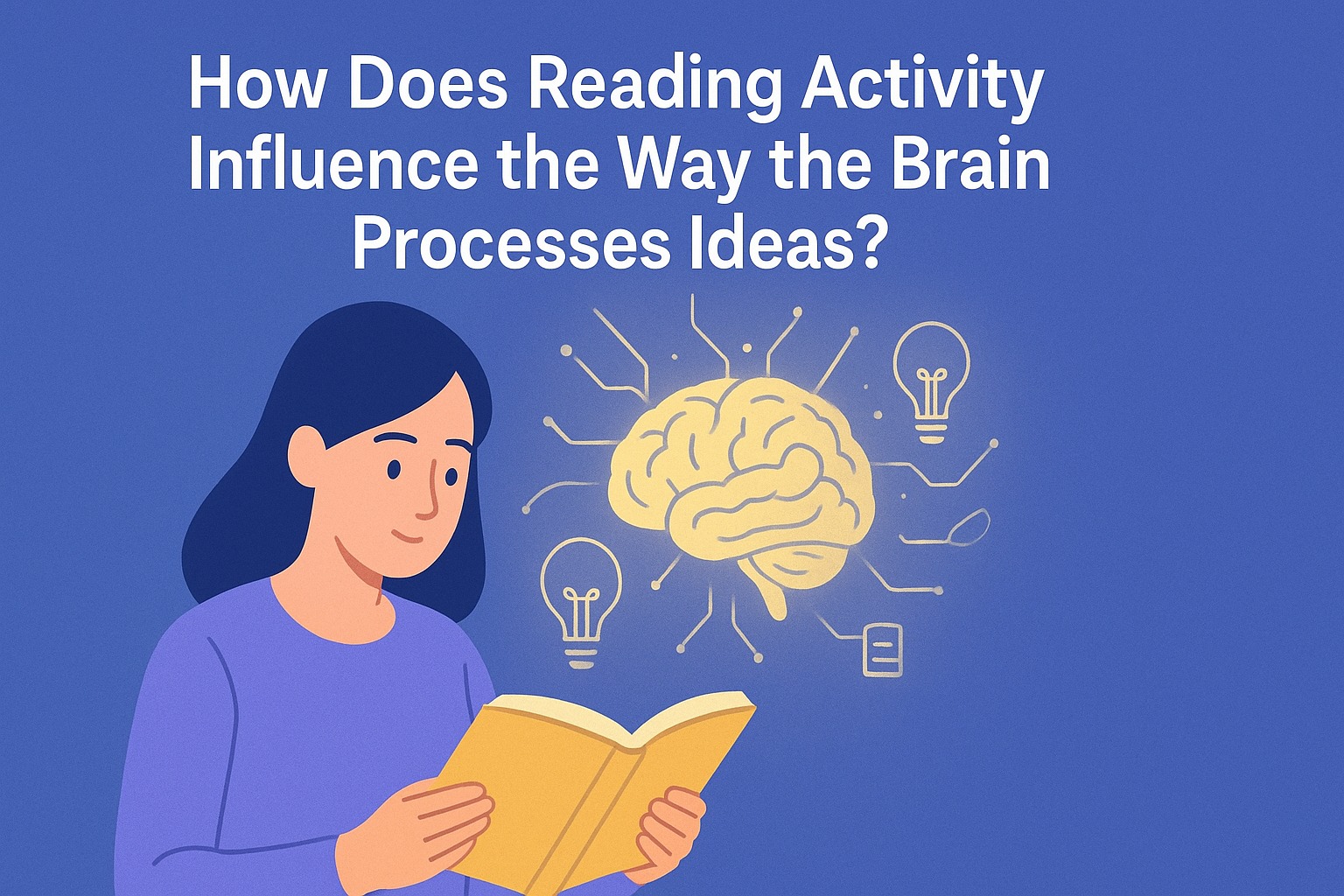
Amid the ever-rising flow of information, reading is no longer just a quiet activity. It works like a small door that opens new spaces in our minds, shaping how the brain organizes, weighs, and interprets ideas. The question is: to what extent does reading influence the way we think?
THE IMPORTANCE OF READING IN SHAPING COGNITIVE PROCESSES
Reading encourages the brain to form more structured patterns of thinking. Every paragraph we explore keeps the brain active in connecting concepts, mapping information, and constructing meaning. This activity involves multiple regions of the brain, from language processing to memory centers.
The brain works like a machine room with wheels constantly turning — the more often it is used, the more agile it becomes in breaking down and assembling new ideas.
DEVELOPING ANALYTICAL AND REASONING SKILLS
When we read, we don’t simply absorb information passively. The brain compares ideas, searches for logical gaps, and checks their consistency with prior knowledge. This is what sharpens analytical skills.
Regular readers usually find it easier to evaluate arguments, reject biased information, or assess the accuracy of a claim. Reading helps the brain deconstruct ideas into smaller pieces before reconstructing them in a more refined form.
ENRICHING PERSPECTIVES THROUGH NARRATIVE EXPOSURE
Every text carries a new perspective. When the brain absorbs various viewpoints, it learns to see problems from multiple angles. This trains cognitive flexibility and intellectual tolerance.
Exposure to narratives—especially fiction—also strengthens empathy. The brain walks alongside the characters’ experiences, learning their motives, choices, and emotions that shape the journey of the story.
IMPROVING MEMORY AND FORMING CONNECTIONS
Reading forces the brain to remember plots, details, and concepts. This stimulates both short-term and long-term memory. Over time, the brain becomes more skilled at managing new information and linking it with existing knowledge.
The ability to process ideas increases as well, because the brain has more “anchors” it can connect and rearrange in various contexts.
CONCLUSION: READING IS A WORKOUT FOR THE BRAIN
Reading is not just about understanding words. It is a mental exercise that shapes how the brain operates—from critical thinking to the ability to interpret meaning. The more often we read, the more mature our thinking becomes, and the richer our understanding of the world grows.
About the Author
Gusti Ayu Tita
Author — STEKOM University
An active author focused on academic issues, educational technology, and human resource development in the campus environment.