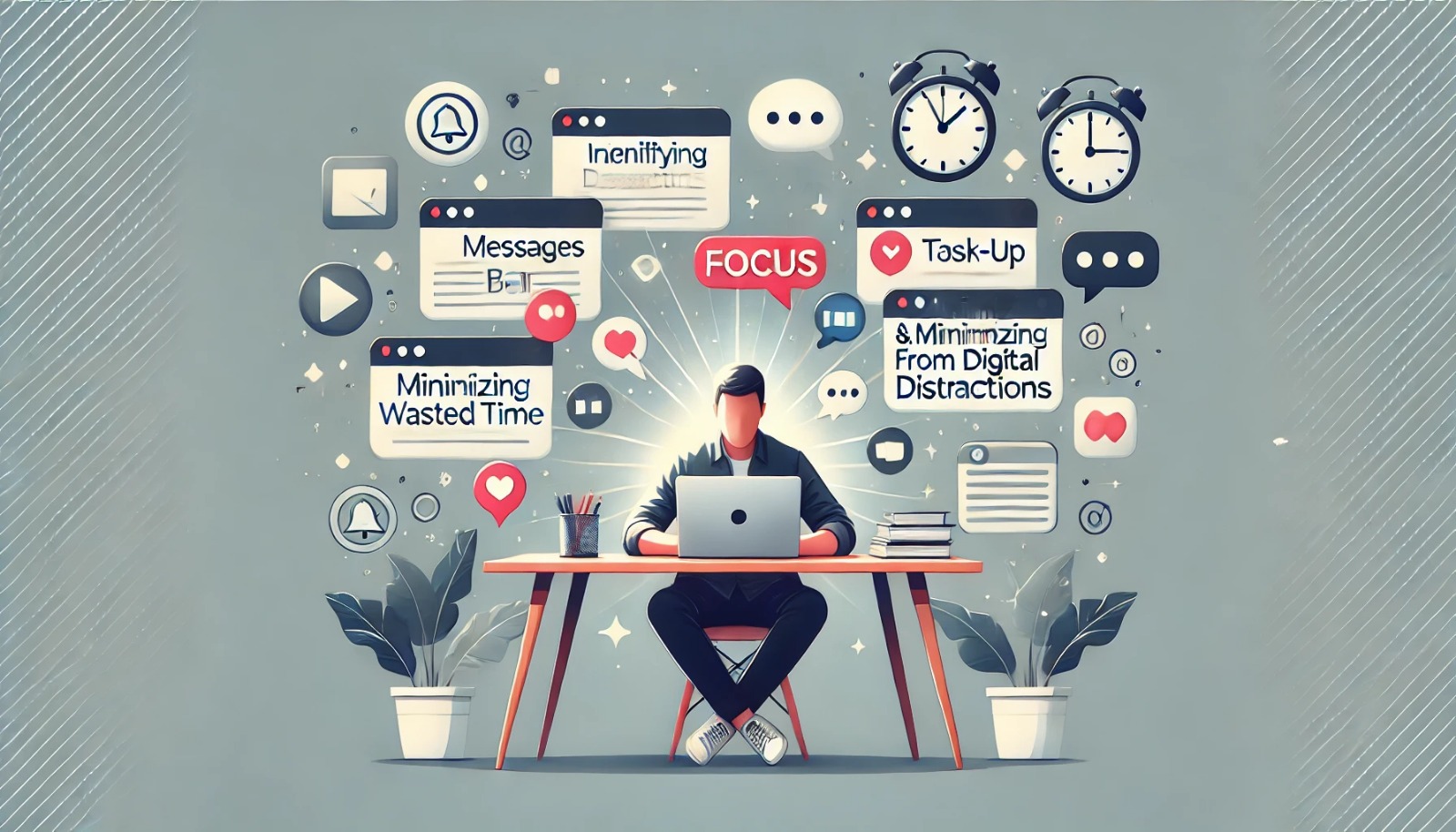
In this era of high connectivity, digital distractions and the endless stream of small tasks have become major enemies of productivity. We often feel busy, yet rarely truly productive, because our work time is fragmented by notifications, chats, and those “just one minute” scrolls on social media.
This article provides practical guidance on identifying where your time really goes — and strategies to seal the leaks.
1. IDENTIFICATION: WHERE IS YOUR TIME ACTUALLY GOING?
The first step to minimizing wasted time is to objectively understand where that time is being spent. We tend to overestimate how much we work and underestimate how much time we lose to distractions.
A. USE HONEST TIME TRACKING
Track your time for several days. Record every task switch.
- Instead of simply noting *“Work on Report,”* write:
- *“Work on Report (30 minutes) → Check Instagram (5 minutes) → Quick Email Reply (10 minutes) → Continue Report (20 minutes).”*
- This data will reveal your true patterns. You may be surprised to find that a 5-minute distraction occurs every 15–20 minutes, meaning you rarely achieve a full hour of true focus.
B. ANALYZE DIGITAL DISTRACTIONS
After tracking, identify the main triggers. Your phone’s screen time feature or browser extensions can help.
Is Instagram, Twitter, or your email inbox the one you check most frequently? Recognizing these “weak spots” allows you to apply highly targeted solutions.
2. MINIMIZING DIGITAL DISTRACTIONS: CREATING SPACE FOR FOCUS
Digital distractions must be managed by establishing clear physical and mental boundaries.
A. APPLY THE DEEP WORK MODE
Set specific periods (e.g., 90–120 minutes) for **Deep Work**. During this period:
1. Turn Off Notifications: Put your phone on Do Not Disturb mode — ideally, place it out of sight.
2. Close Unnecessary Browser Tabs: Use extensions that block social media or entertainment sites during work sessions.
3. Use Headphones: This sends a visual signal to others (in an office setting) that you don’t want to be disturbed and helps block background noise.
B. SCHEDULE TIME FOR DISTRACTIONS
Instead of reacting to distractions, assign them specific times.
- Batch Communication: Set aside 30 minutes in the morning, 30 minutes after lunch, and 30 minutes before leaving to respond to emails and messages.
- Outside of these windows, ignore notifications.
This prevents quick tasks from stealing your attention during important work.
3. MANAGING THE CONSTANT STREAM OF SMALL TASKS
Small tasks (like taking out the trash, tidying your desk, or looking for documents) often create the illusion of productivity but drain mental energy.
A. THE TWO-MINUTE RULE
Apply David Allen’s Two-Minute Rule:
“If a task takes less than two minutes, do it immediately.”
Tasks like replying to short messages, moving a file, or washing a dish should not be added to a task list. Doing them right away prevents pile-ups and reduces mental clutter.
B. TASK BATCHING
For tasks that take more than two minutes but are similar in nature — such as paying online bills, organizing cloud folders, or entering data — use **Batching**.
Instead of handling them whenever they appear, group these tasks and assign one dedicated time slot (e.g., 45 minutes every Friday afternoon) to complete them all at once.
This reduces *switch-cost*, the productivity loss caused by constantly shifting between tasks.
Conclusion
Wasted time caused by digital distractions and small tasks is not an inevitability — it is the result of unclear boundaries. By applying honest time tracking, scheduling distraction time, and using the Two-Minute Rule, you can reclaim your focus and dramatically improve your productivity.
About the Author
Gusti Ayu Tita
Author — STEKOM University
An active author focused on academic issues, educational technology, and human resource development in the campus environment.