
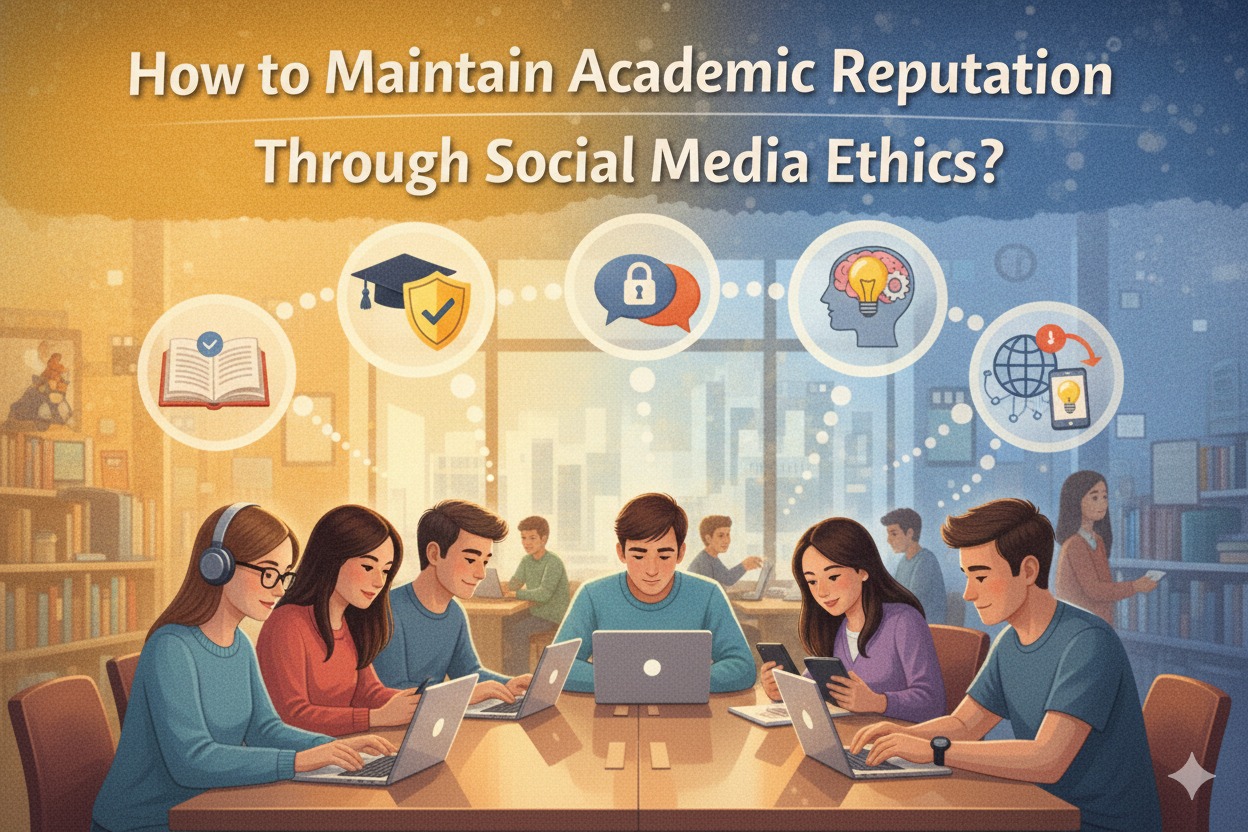
SOCIAL MEDIA AND ACADEMIC REPUTATION: HOW TO MAINTAIN IT
In today’s digital era, social media has become an essential part of students’ and academic communities’ lives. From sharing information, engaging in discussions, to building professional networks — all can be done through social media. However, if used unwisely, social media can damage one’s academic reputation. So, how can students maintain a strong academic reputation while using social media ethically?
UNDERSTAND THAT DIGITAL FOOTPRINTS ARE REAL
Anything you post on social media — photos, comments, or opinions — leaves a digital footprint. Once published, it is difficult to completely remove. This is why it is crucial to think twice before posting. Avoid hate speech, offensive content, or false information that could negatively affect your academic image.
USE SOCIAL MEDIA FOR POSITIVE PURPOSES
Leverage social media platforms to build a positive academic image. For example:
* Share your written work or research.
* Participate respectfully in academic discussions.
* Support social or educational movements relevant to your field of study.
By doing this, social media can serve as a digital portfolio that demonstrates your professionalism and credibility in academia.
MAINTAIN ETHICS IN ONLINE INTERACTIONS
Online interactions reflect your personality and professionalism. Key points to remember:
* Use polite and respectful language, even when disagreeing.
* Respect others’ opinions.
* Do not share personal data or confidential campus information.
Remember, digital ethics is part of academic ethics.
SEPARATE PERSONAL AND PROFESSIONAL ACCOUNTS
Having separate personal and professional social media accounts can help maintain boundaries. Professional accounts can be used for academic purposes such as publications, networking, and education. Personal accounts can remain a private space, as long as norms and courtesy are observed.
BUILD A STRONG ACADEMIC BRAND
Academic reputation is built not only through grades and achievements but also through digital branding. Use platforms like LinkedIn, ResearchGate, or X (Twitter) to showcase research interests, publications, or academic contributions. With consistency, you can be recognized as an individual with integrity and broad knowledge in your field.
CONCLUSION
Maintaining an academic reputation on social media does not mean limiting self-expression, but learning to take responsibility for what you share. By understanding social media ethics, students, faculty, and educators can create a healthy, smart, and ethical academic environment in the digital world.
About the Author
Gusti Ayu Tita
Author — STEKOM University
An active author focused on academic issues, educational technology, and human resource development in the campus environment.



