
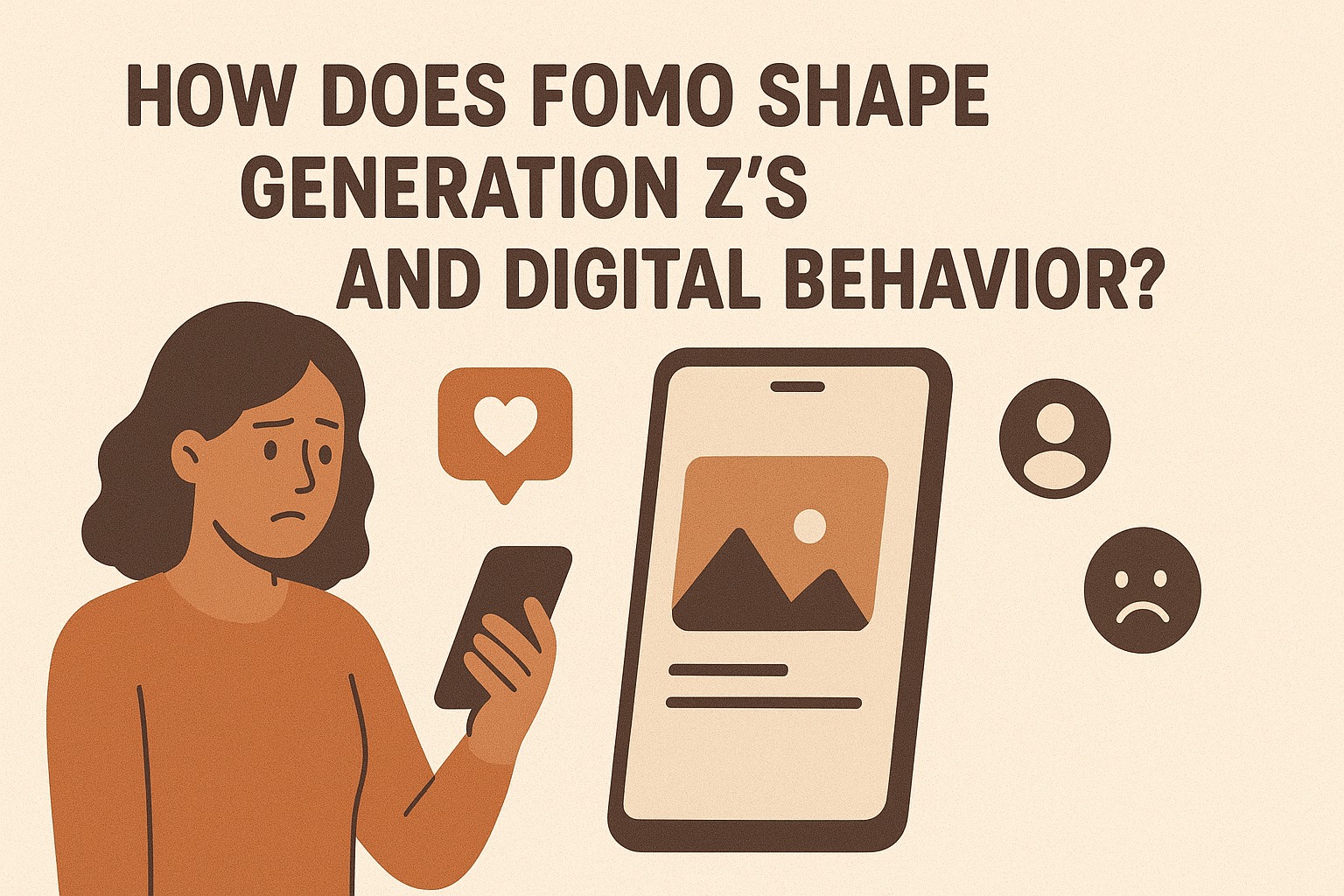
Fear of Missing Out (FOMO) as a Behavioral Driver in Gen Z
The phenomenon known as *Fear of Missing Out* or FOMO is more than just a popular psychological term. For Generation Z—who grew up with the internet and social media—FOMO has become a psychological force that shapes how they interact, make decisions, and even build their sense of identity. This article explores how FOMO influences the social and digital behavior of Gen Z: more connected than ever, yet increasingly vulnerable to modern social pressure.
THE INFLUENCE OF FOMO ON SOCIAL INTERACTION
Socially, FOMO pushes Gen Z to stay involved in conversations, trends, and activities that are widely discussed. They feel the need to participate to remain relevant among peers and online communities.
Examples of how FOMO affects social interaction include:
* The urge to attend events—online or offline—to avoid missing important experiences.
* Tendency to follow popular opinions even when they do not align with personal values.
* Heightened anxiety when seeing peers appear more active, productive, or fulfilled.
FOMO turns social interaction into subtle competition as Gen Z compares their lives with what others display online.
DIGITAL BEHAVIOR SHAPED BY FOMO
FOMO strongly influences digital habits, especially as Gen Z spends most of their time on platforms like TikTok, Instagram, and YouTube.
Some digital behavior patterns formed by FOMO include:
* Frequently checking notifications out of fear of missing updates or messages.
* Quickly engaging in viral trends—challenges, fashion styles, or trending topics.
* Creating content for validation, prioritizing likes and comments.
* Excessive content consumption, especially of idealized lifestyles and achievements.
This makes Gen Z highly reactive to digital changes, yet more prone to digital fatigue.
PSYCHOLOGICAL AND SOCIAL IMPACTS OF FOMO-DRIVEN BEHAVIOR
FOMO doesn’t only shape behavior—it also affects emotional and social well-being. Gen Z may experience:
* Social anxiety from struggling to keep up with rapid digital culture.
* Lower self-esteem due to constant social comparison.
* Difficulty focusing because attention shifts with every trend or notification.
* Shifts in relationships, where online presence outweighs emotional connection.
These effects show that FOMO can become psychologically draining if unmanaged.
THE ROLE OF ONLINE COMMUNITIES IN SHAPING GEN Z BEHAVIOR
Online communities help Gen Z explore identity, but they also reinforce FOMO-based behavior. When a group establishes certain trends as the norm, members feel pressured to adapt to avoid exclusion.
In this fast-changing digital environment, social norms form quickly and disappear just as fast. Gen Z tends to adapt rapidly, fearing disconnection or missed social opportunities.
STRATEGIES FOR MANAGING FOMO IN THE DIGITAL AGE
While FOMO is inevitable, Gen Z can manage it through:
* Setting screen-time limits to reduce excessive exposure.
* Prioritizing real-world experience over online validation.
* Filtering trends—because not every trend is worth following.
* Building self-awareness to resist unhealthy comparison.
With healthy digital habits, FOMO can be controlled rather than controlling them.
CONCLUSION
FOMO shapes the social and digital behavior of Gen Z by pressuring them to stay connected, trend-aware, and visible. This affects how they interact, consume content, and perceive themselves. However, with awareness and mindful digital management, Gen Z can remain active online without being trapped in the cycle of FOMO.
About the Author
Gusti Ayu Tita
Author — STEKOM University
An active author focused on academic issues, educational technology, and human resource development in the campus environment.



