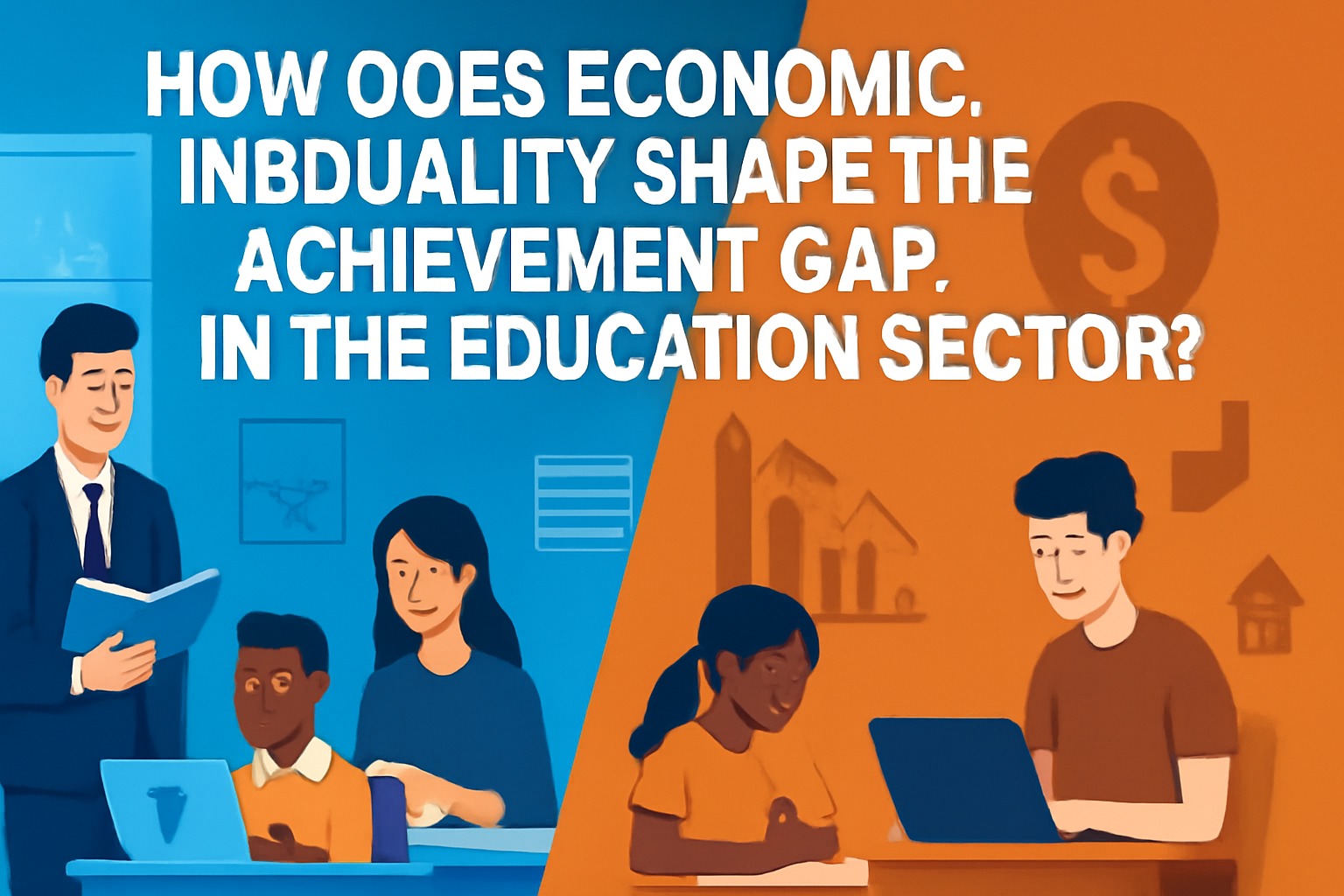
Education is the key to creating a just, prosperous, and thriving society. However, while education is considered the pathway to achieving social equality, in reality, economic inequality often creates a significant gap in educational achievement. This phenomenon is a major issue in many countries, including Indonesia, where disparities in access to and the quality of education are often influenced by economic factors. This article will discuss how economic inequality shapes achievement gaps in education and its impact on the future of the younger generation.
1. THE IMPACT OF ECONOMIC INEQUALITY ON ACCESS TO EDUCATION
One of the primary factors contributing to the achievement gap in education is the inequality in access to quality education. In areas with high poverty rates, many children are forced to drop out of school or cannot continue their education to higher levels due to economic limitations. Rising education costs, including tuition, books, and other supporting facilities, make it difficult for many families to provide adequate education for their children.
On the other hand, families with better financial means can offer a higher quality education, from choosing top-tier schools, enrolling in additional tutoring, to providing extra learning support outside school hours. This creates a significant difference in the quality of education received by students, which ultimately directly impacts their academic performance.
2. DISPARITIES IN THE QUALITY OF EDUCATIONAL FACILITIES
Economic inequality also affects the quality of educational facilities available in schools. Schools in urban areas or wealthier regions tend to have better facilities, such as comfortable classrooms, well-stocked libraries, and sufficient internet access. In contrast, schools in rural or economically disadvantaged areas often lack basic facilities, such as damaged classrooms, insufficient textbooks, or even a shortage of qualified teachers.
This leads to disparities in the quality of education received by students, which in turn affects their academic achievement. Children who attend schools with limited resources often have fewer opportunities to develop their potential compared to those attending schools in more conducive environments.
3. THE IMPACT OF ECONOMIC INEQUALITY ON STUDENT PSYCHOLOGY
In addition to access and the quality of facilities, economic inequality also affects student psychology. Children from poor families often experience psychological stress that can hinder their concentration in learning. They may feel inferior, insecure, or anxious about their future, knowing that there is a significant disparity in opportunities compared to their wealthier peers.
Another contributing factor is the stress experienced by parents in meeting basic living needs. When parents are focused on securing the family’s economic survival, they often lack the time or energy to support their children’s learning. This negatively affects the motivation and enthusiasm of these children to study.
4. ACADEMIC ACHIEVEMENT GAPS BETWEEN STUDENTS FROM DIFFERENT SOCIAL CLASSES
As a result of economic inequality, significant academic achievement gaps arise between students from wealthy and poor families. Students from affluent families often have more resources to support their learning, such as access to private tutoring, additional reference books, and advanced educational technology. They are also better equipped to handle psychological pressures due to stronger family support.
Conversely, students from less affluent families often struggle with limitations, both in terms of access to educational resources and psychological challenges that affect their focus. This results in uneven academic achievement, which will impact their future opportunities, both in continuing their education to higher levels and securing decent jobs.
5. SOLUTIONS TO REDUCE ACHIEVEMENT GAPS IN EDUCATION
To address the economic inequality that causes achievement gaps in education, systematic and structured steps need to be taken. Some solutions include:
- Improving Access to Free and Quality Education: The government must ensure that every child, without exception, has access to quality education, regardless of their economic background. This can be done by increasing the education budget and providing subsidies or financial aid to families in need.
- Improving the Quality of Educational Facilities in Remote Areas: The government and private sector should work together to improve educational facilities in remote or economically disadvantaged areas, so that all children have an equal opportunity to learn in well-equipped environments.
- raining and Improving Teacher Quality: Teachers are a key factor in the success of education. Therefore, it is essential to provide training and improve the quality of teachers, particularly in areas with limited resources.
- Scholarship Programs and Educational Assistance: Scholarship programs that help students from low-income families continue their education to higher levels should be expanded. Additionally, other forms of educational assistance, such as providing school supplies, textbooks, and technological devices, can help reduce existing disparities.
CONCLUSION
Economic inequality has a profound impact on education, which is reflected in the academic achievement gaps between students from wealthy and poor families. While education should be the path to achieving equality, in reality, economic inequality creates significant barriers for many children to reach their full potential. Therefore, serious efforts are required from the government, society, and the private sector to address this issue and create a more equitable and inclusive education system for all children, regardless of their economic background. Only by reducing these disparities can we create a brighter future for the next generation.
About the Author
Gusti Ayu Tita
Author — STEKOM University
An active author focused on academic issues, educational technology, and human resource development in the campus environment.