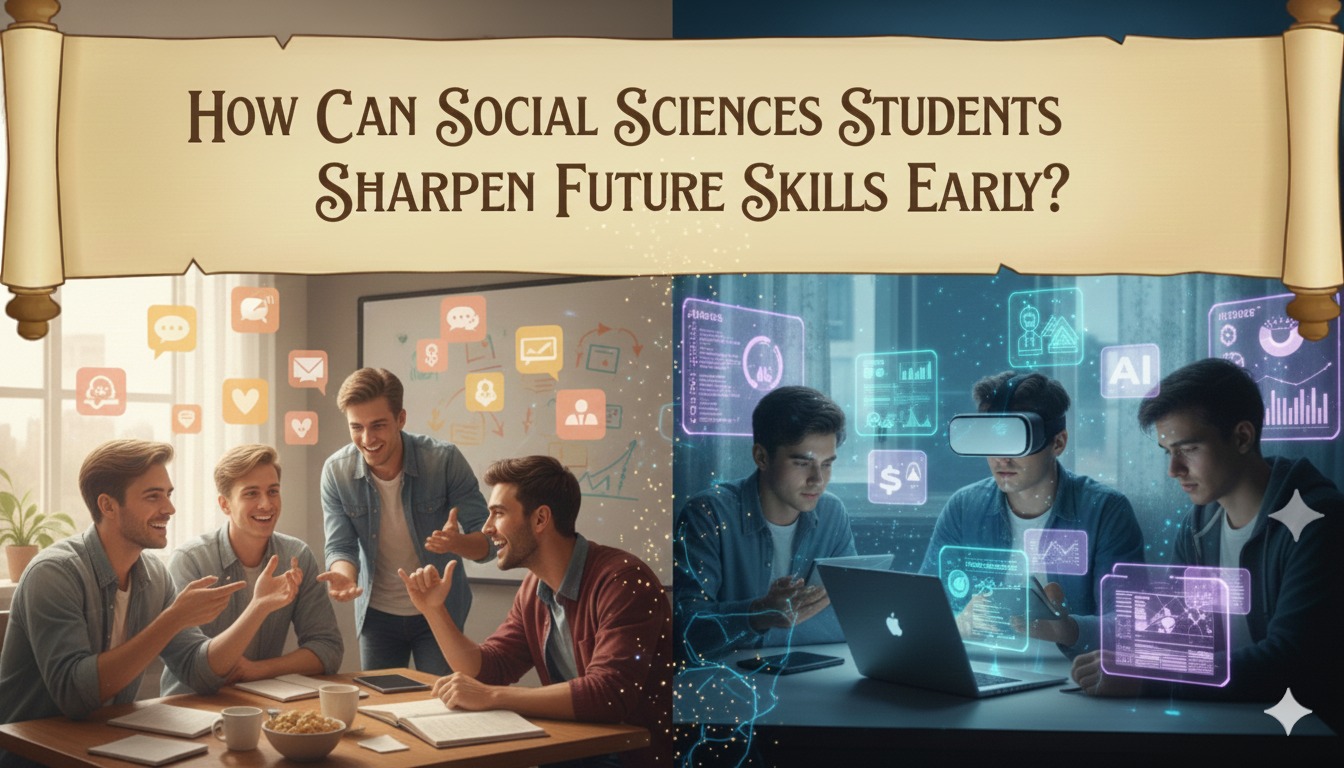
In the midst of the Industrial Revolution 4.0 and an increasingly interconnected world, the skills required to succeed in the future workforce continue to evolve. For students in the Social Sciences and Humanities (Soshum), this situation presents both challenges and opportunities. Skills that were once considered “luxuries” or mere complements have now become essential. In the digital era, Soshum students are expected not only to master theory but also to develop practical skills that align with fast-paced global dynamics. So, how can Soshum students start developing future-ready skills from an early stage? Below are several strategic steps that can be taken.
1. DEVELOPING DIGITAL LITERACY FROM AN EARLY STAGE
Digital literacy is one of the core skills that every individual must possess in the 21st century, including Soshum students. The ability to access, analyze, and communicate information through digital media is non-negotiable. For Soshum students, digital literacy includes a wide range of competencies, from mastering data analysis software to using social media responsibly.
Steps That Can Be Taken:
* Learning Data Analysis Tools: Soshum students who focus on social, economic, or political research need to master data analysis tools such as Excel, SPSS, or even R. These skills enable them to process large datasets and draw meaningful conclusions for research or policymaking.
* Using Online Learning Platforms: Many online platforms offer free or paid courses to enhance digital skills, such as Coursera, edX, or Khan Academy. Soshum students can use these platforms to strengthen their technology- and data-related competencies.
* Understanding Digital Security and Cyber Ethics: Students must understand the basics of cybersecurity, from protecting personal data to identifying misinformation and hoaxes. In an information-rich world, the ability to evaluate and manage data wisely is crucial.
2. ENHANCING EFFECTIVE COMMUNICATION SKILLS
Communication lies at the heart of almost all disciplines in the social sciences and humanities. Soshum students, who frequently interact with individuals and groups, must be able to convey ideas, arguments, and analyses clearly and persuasively. Communication today is not limited to face-to-face interaction but also takes place through digital platforms such as social media and online collaboration tools.
Steps That Can Be Taken:
* Improving Writing Skills: Strong writing skills are essential for producing research reports, academic articles, and even social media content that can influence public opinion. Students can practice by writing essays, articles, or blogs and joining creative or academic writing workshops.
* Practicing Public Speaking: Public speaking is a highly valued skill in the professional world. Students can develop this ability through class discussions, seminars, or organizational activities.
* Communicating in the Digital Era: The ability to communicate effectively through email, video conferencing, and social media is vital. Students need to understand digital communication ethics and how to tailor messages for different platforms.
3. BUILDING CRITICAL THINKING AND PROBLEM-SOLVING SKILLS
Critical thinking is the ability to analyze, evaluate, and synthesize information objectively. In the future workforce—especially within social and humanities fields—this skill is indispensable, as many roles involve analyzing complex issues, formulating policies, or conducting social research.
Steps That Can Be Taken:
* Participating in Discussions and Debates: Engaging in debates and discussions, both inside and outside the classroom, helps students sharpen critical thinking, strengthen arguments, and understand diverse perspectives.
* Analyzing Real-World Cases: Reading and analyzing news articles or case studies related to social, political, or economic issues can enhance analytical and problem-solving skills, which are essential for research and policymaking.
* Designing Practical Solutions: Students should practice developing practical and applicable solutions when faced with problems, whether in academic research or broader social contexts.
4. SHARPENING COLLABORATION AND TEAMWORK SKILLS
In the era of globalization and digitalization, almost all professional work involves teamwork. Soshum students must master effective collaboration skills, both locally and internationally. The modern workplace increasingly demands individuals who can work in diverse teams, either in person or through digital platforms.
Steps That Can Be Taken:
* Joining Organizations or Communities: Participation in student organizations, social activities, or community projects helps students develop teamwork skills and learn how to work toward shared goals.
* Using Digital Collaboration Tools: Many modern projects are conducted remotely. Students can familiarize themselves with platforms such as Google Drive, Slack, or Trello to collaborate effectively in group projects.
* Learning Collaborative Leadership: Leadership in the 21st century emphasizes inclusivity and collaboration. Students can develop this skill by taking active roles in team projects or organizations and learning how to lead by involving all members.
5. DEVELOPING ADAPTABILITY AND LIFELONG LEARNING SKILLS
Skills in the future workforce continue to evolve alongside technological advancements and global market changes. Therefore, adaptability and lifelong learning are essential competencies. Soshum students who can keep up with change and continuously update their skills will have a competitive advantage in a dynamic job market.
Steps That Can Be Taken:
* Joining Advanced Training and Courses: Students can take advantage of online courses to learn new skills, such as big data analysis, project management, or basic programming.
* Seeking Practical Experience: Internships or part-time work related to their field of study provide hands-on experience and help students understand real-world workplace demands.
* Developing a Lifelong Learning Mindset: Students should embrace the idea that learning does not stop after graduation. Continuously acquiring new knowledge and skills will help them remain relevant and competitive.
CONCLUSION: START EARLY, PREPARE FOR THE FUTURE
Developing future-ready skills from an early stage is a crucial step for Soshum students. Skills such as digital literacy, effective communication, critical thinking, collaboration, and adaptability will greatly influence their success in an increasingly connected and rapidly changing global workforce. By cultivating these skills through practical experience, online training, and active involvement in various activities, Soshum students will be better prepared to face future challenges and become competent professionals in the fields of social sciences, politics, and humanities.
About the Author
Gusti Ayu Tita
Author — STEKOM University
An active author focused on academic issues, educational technology, and human resource development in the campus environment.