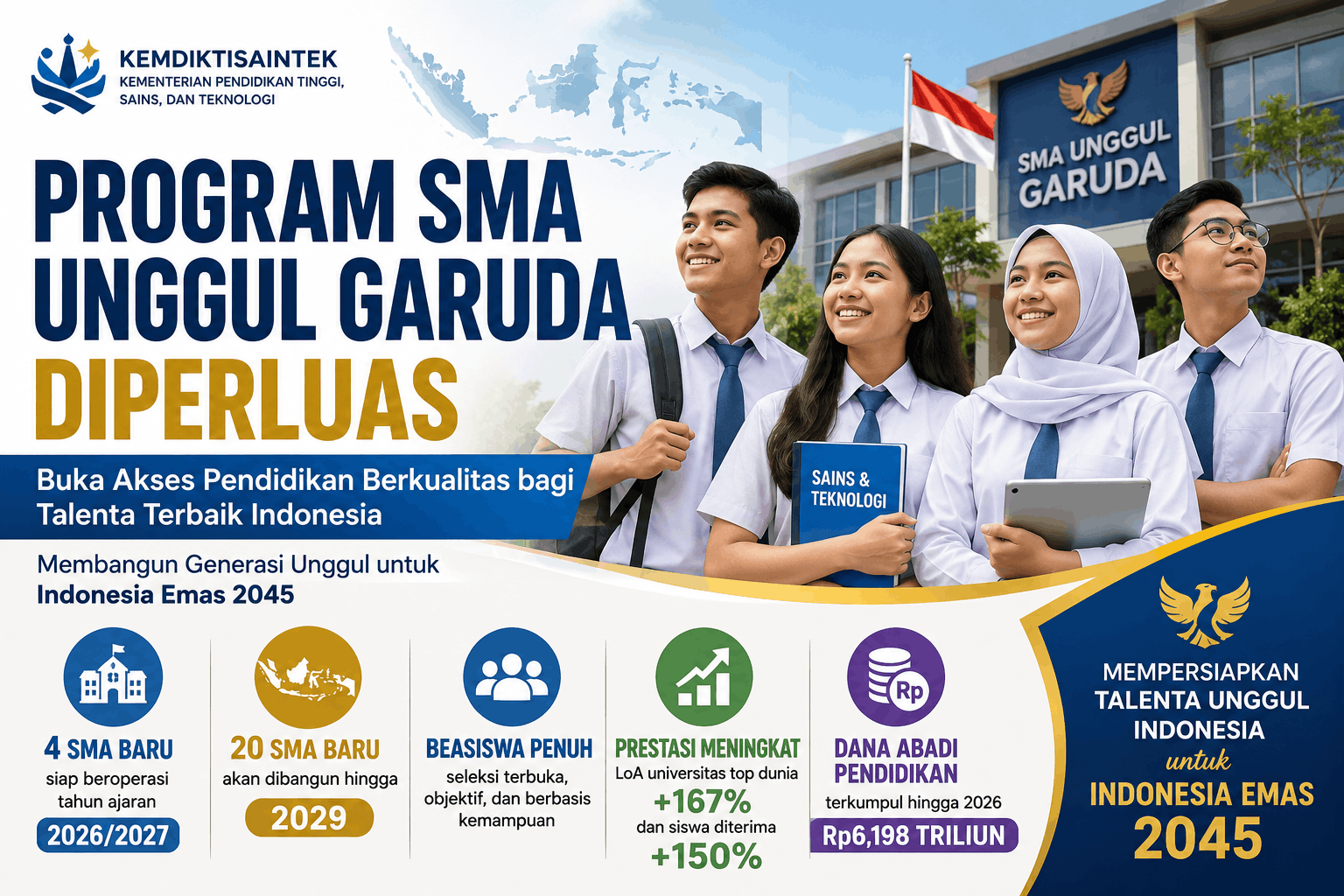
Indonesia Emas 2045 is a grand vision that must be achieved through hard work and collaboration among all parties, including the education sector. Higher education reform is one of the most effective ways to prepare excellent human resources capable of competing globally, innovating, and making significant contributions to national progress.
1. HIGHER EDUCATION AS A PILLAR FOR DEVELOPING EXCELLENT HUMAN RESOURCES
Higher education is one of the main pillars in shaping high-quality human resources. In Indonesia, the challenges faced by higher education institutions vary widely, from teaching quality and curriculums that are not aligned with industry needs to low levels of research and innovation. Therefore, higher education reform must be able to address these challenges in a more integrated and sustainable manner.
2. CURRICULUM REFORM THAT RESPONDS TO INDUSTRY NEEDS
One important step in higher education reform is aligning the curriculum with industry developments and workforce demands. Currently, many university graduates in Indonesia struggle to find jobs that match their fields of study. This issue arises from the lack of relevance between what is taught in universities and the skills required in the workplace.
Curriculum reform must involve key stakeholders, including the government, universities, and industry sectors. One approach is introducing competency-based education programs, where students are trained to master practical skills directly applicable in real-world settings. Additionally, curriculums should emphasize the development of soft skills such as leadership, communication, and collaboration—skills that are essential in professional environments.
3. IMPROVING THE QUALITY OF LECTURERS AND RESEARCHERS
Human resources who teach in universities play a crucial role in education reform. Lecturers are not only responsible for teaching but also serve as agents of change who shape the mindsets and perspectives of students. Therefore, improving lecturer quality through training and professional development is non-negotiable. Competent lecturers with deep understanding of scientific developments will teach more effectively and prepare students to face global challenges.
Research must also be strengthened within higher education. Indonesia needs to invest more in research to develop technologies, social solutions, and innovations that improve national competitiveness. Collaboration between universities and industry in research and technological development is vital to create innovative products that support Indonesia’s future economy.
4. ADEQUATE EDUCATIONAL FACILITIES AND INFRASTRUCTURE
Higher education reform also includes improving educational facilities and infrastructure. Many universities in Indonesia still face limitations in their learning environments. Poor infrastructure can hinder the teaching and learning process, especially in science and technology fields that require specialized equipment and laboratories.
Furthermore, the development of digital-based education systems must be prioritized. In the era of the Industrial Revolution 4.0, the use of information technology in education is crucial. Online learning, e-learning platforms, and efficient learning management systems can help expand access to higher education for people across all regions, including remote areas.
5. ENCOURAGING INTERNATIONAL COLLABORATION
Higher education reform in Indonesia must also include expanding international collaboration. Studying abroad or partnering with foreign universities provides valuable global perspectives needed to face current and future challenges. Student exchange programs, international scholarships, and cross-country research collaborations are some steps that can enhance the quality of Indonesian higher education.
Through international partnerships, Indonesian universities can broaden their academic networks and strengthen their global reputation. This opens more opportunities for students to gain international experiences that enrich their knowledge and provide stronger competitiveness in the global job market.
6. INCREASING ACCESS AND EDUCATIONAL EQUITY
Inclusive and equitable higher education is also a critical part of reform. In Indonesia, gaps in access still exist between urban and rural regions, and between economically advantaged and disadvantaged families. Higher education reform must ensure that quality education is accessible to everyone.
Scholarship programs, financial assistance, and affirmative policies supporting students from low-income families must be strengthened. Universities should also be more proactive in reaching students from underdeveloped regions and developing flexible learning systems—such as distance learning—to improve access for all.
CONCLUSION: WELCOMING INDONESIA EMAS 2045
By improving curriculum quality, supporting the development of lecturers and researchers, enhancing educational facilities and infrastructure, encouraging international collaboration, and ensuring access and equity in higher education, Indonesia can be well-prepared to achieve a bright future in 2045.
Higher education reform cannot be accomplished overnight. Strong commitment from the government, universities, industry sectors, and society is essential to realize Indonesia Emas2045 through high-quality education. With concrete and well-planned steps, excellent human resources for Indonesia Emas 2045 are not merely a dream—they are a reality that can be achieved.
About the Author
Gusti Ayu Tita
Author — STEKOM University
An active author focused on academic issues, educational technology, and human resource development in the campus environment.