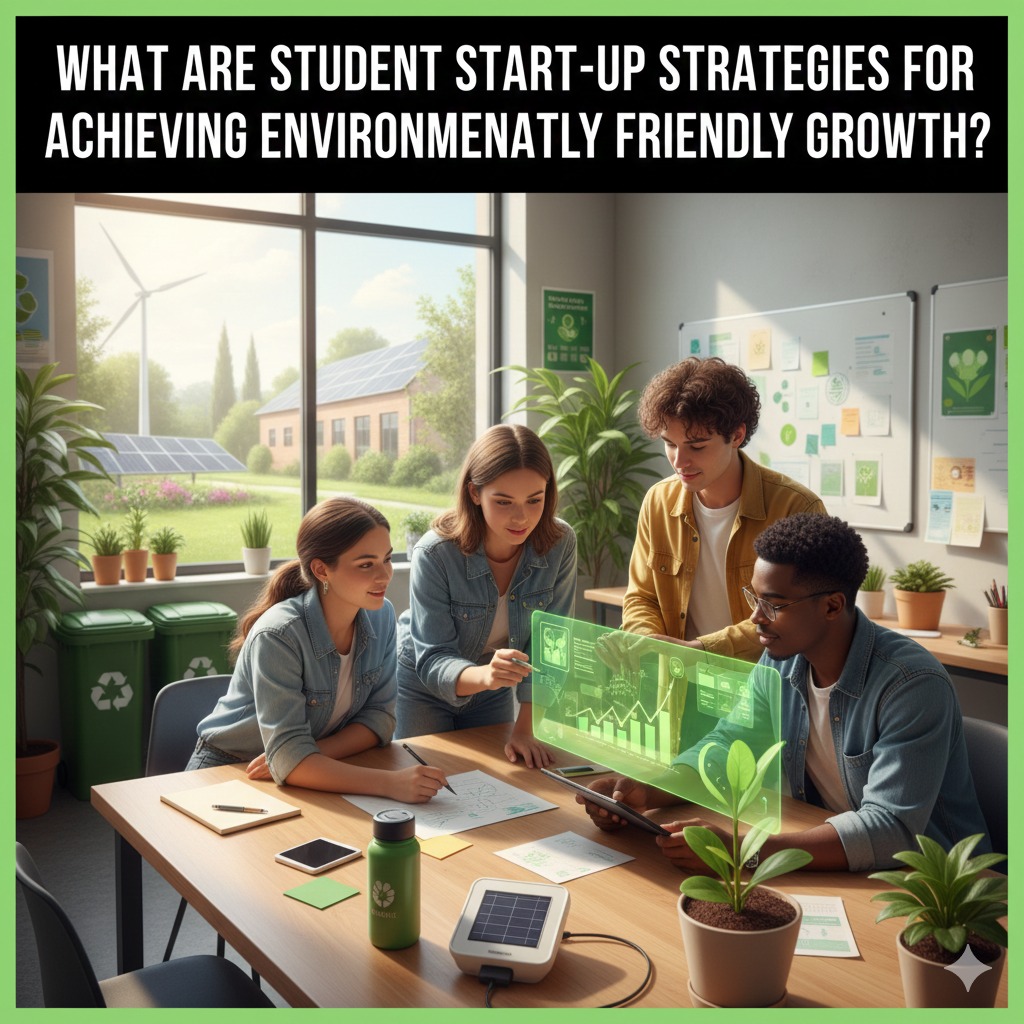
Student start-ups are becoming a rising trend in Indonesia. Many focus not only on innovation and business growth but also on environmentally friendly development. With limited resources, creativity, and concern for sustainability, students have great potential to create real positive impact.
Why Environmentally Friendly Growth Matters
Business growth is no longer measured only in profit, but also environmental impact. Eco-focused start-ups can:
- Reduce carbon footprint through efficient production,
- Support circular economy,
- Build strong brand reputation among eco-conscious consumers.
Strategies for Sustainable Start-Up Growth
1. Using Green Technology
Students can use eco-friendly technologies such as:
- Renewable energy (solar panels, biomass),
- Urban farming systems (hydroponics, aquaponics),
- Digital tools to improve resource efficiency.
2. Adopting a Circular Business Model
This helps start-ups to:
- Reduce waste through recycling or upcycling,
- Sell products made from sustainable materials,
- Create value from previously unused waste.
3. Collaborating with Communities and Institutions
Partnerships with universities, NGOs, and environmental groups help to:
- Access research and modern tech,
- Educate consumers about sustainability,
- Expand eco-focused networks.
4. Consumer Education and Green Branding
Start-ups need strong eco-branding by:
- Providing transparent production information,
- Promoting sustainable product use,
- Raising awareness about circular economy benefits.
Challenges Faced by Student Start-Ups
- Limited capital for green technology,
- Small production scale,
- Lack of business experience,
- Consumer awareness that is still growing.
Inspirational Student Start-Ups
Examples include:
- HydroGrow — hydroponic vegetable production for campus and local markets,
- EcoPack — biodegradable packaging innovation,
- GreenCycle — waste-management app platform.
Conclusion
Environmentally friendly growth is not just a trend — it is the future of business. With creativity and sustainability awareness, student start-ups can achieve profitable and eco-friendly growth through the right strategies in technology, circular models, collaboration, and educatio
About the Author
Gusti Ayu Tita
Author — STEKOM University
An active author focused on academic issues, educational technology, and human resource development in the campus environment.