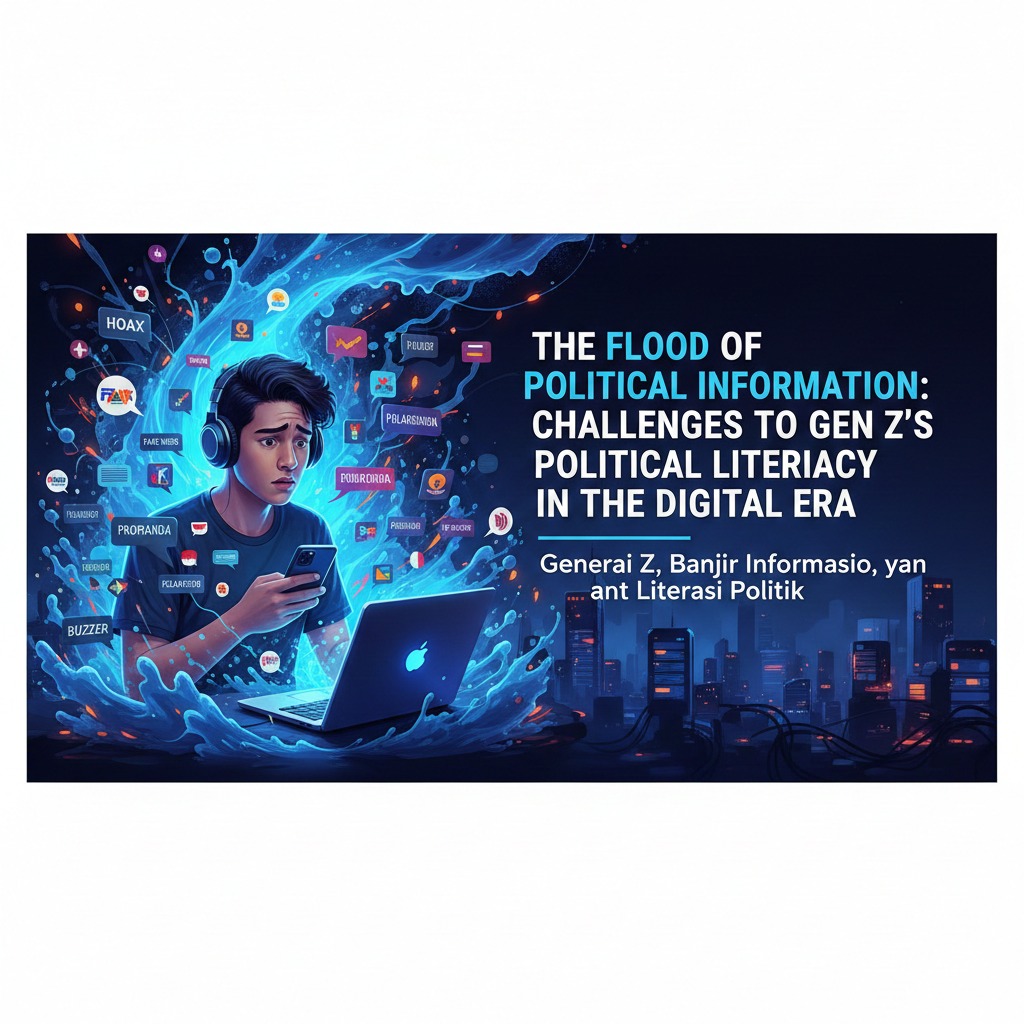
The development of digital technology has significantly changed how people access political information. For Generation Z, social media and digital platforms have become the primary sources for following current political issues. However, this convenience also presents new challenges in the form of an overwhelming flood of political information that is not always accurate or high-quality. This condition demands strong political literacy skills so that Gen Z does not become trapped in misleading information flows.
The Digital Era and the Explosion of Political Information
The digital era allows political information to spread rapidly and massively. Every individual can act as both a producer and consumer of information through social media. Political issues that were once discussed only in mainstream media now appear in various forms, including short news updates, personal opinions, and viral content.
This information explosion provides Generation Z with numerous sources but also increases the risk of confusion. Without the ability to filter information, Gen Z may struggle to distinguish between facts, opinions, and political manipulation.
Generation Z as Active Consumers of Digital Media
Generation Z is known for being highly active and responsive to digital developments. They are accustomed to consuming information quickly and in visually engaging formats. This makes emotionally charged or sensational political content more appealing than in-depth and analytical information.
This habit poses a challenge to political literacy. When information is consumed rapidly without reflection, political understanding tends to be shallow and easily influenced by certain narratives.
Hoaxes and Disinformation as Real Threats
One of the most serious consequences of the political information flood is the widespread circulation of hoaxes and disinformation. False information is often spread using provocative headlines and attractive visuals to trigger emotional reactions. Generation Z, which is highly active on social media, becomes a prime target for the spread of political hoaxes.
Without strong verification skills, hoaxes can shape distorted political perceptions and trigger polarization. Therefore, political literacy is not only about political knowledge but also about the ability to evaluate the accuracy of information.
The Role of Political Literacy in Responding to Information Overload
Political literacy plays a crucial role in helping Generation Z respond wisely to the flood of political information. With strong literacy skills, Gen Z can understand the context of political issues, recognize interests behind certain information, and adopt a critical attitude toward circulating narratives.
Political literacy education also encourages Gen Z to avoid provocation and to be more responsible when sharing information. This attitude is essential for maintaining the quality of public discourse in digital spaces.
Building a Critical Generation Z in the Digital Era
Addressing the flood of political information requires collaboration among formal education institutions, families, and digital environments. Strengthening political literacy from an early age will help Generation Z become conscious, critical, and participatory citizens.
With the ability to filter information and think critically, Generation Z can use the digital era as a healthy medium for political learning. Information overload will no longer be a threat, but an opportunity to enrich knowledge and strengthen democracy.
About the Author
Gusti Ayu Tita
Author — STEKOM University
An active author focused on academic issues, educational technology, and human resource development in the campus environment.