
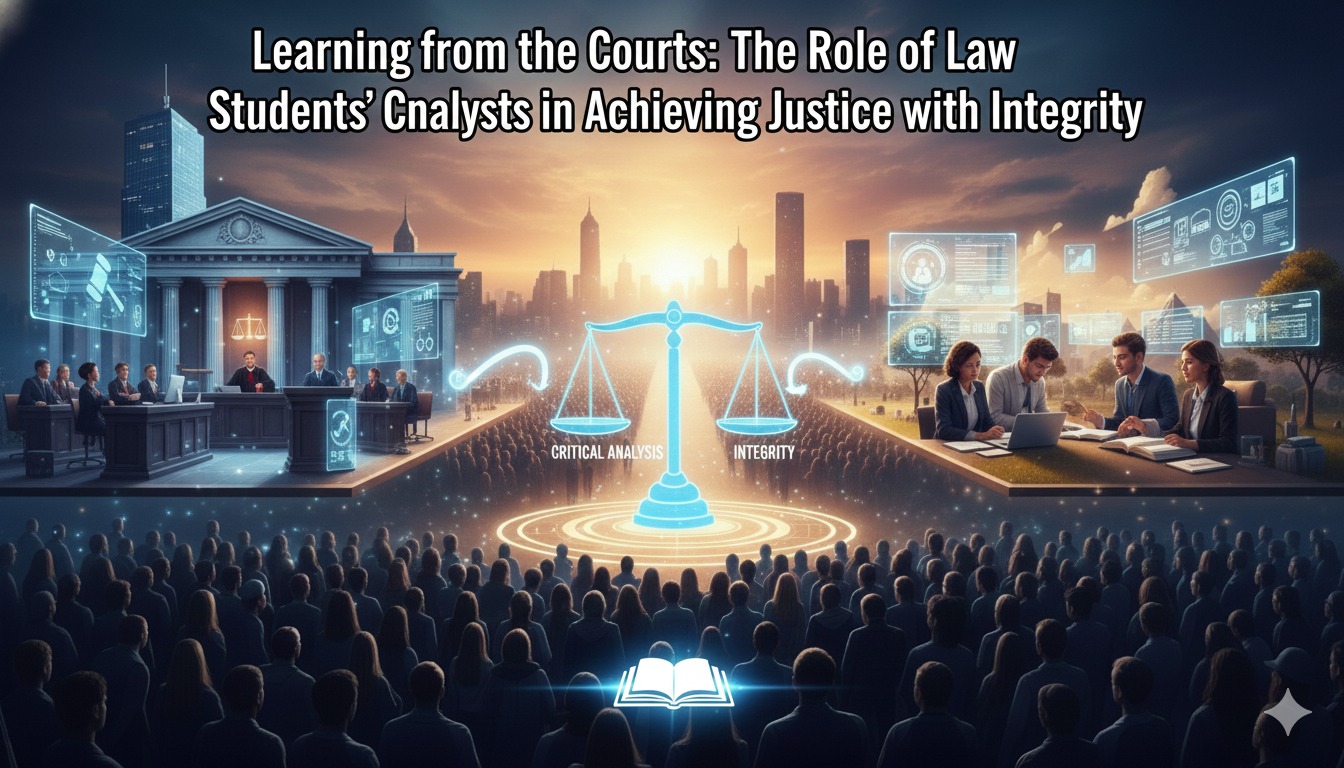
Critical Analysis and the Role of Law Students in Building an Integrity-Based Judiciary
Critical analysis is a core skill for law students. When studying the judicial system, this ability becomes an essential tool for evaluating the quality and fairness of legal institutions. This article discusses how law students’ critical analysis contributes to the development of a judiciary grounded in integrity.
1. Critical Analysis as an Academic Process
Through court decision analyses, classroom discussions, and case studies, law students develop intellectual capacity to assess whether judicial decisions and legal processes align with principles of justice. This academic process trains them to think logically, systematically, and critically when examining legal issues.
2. The Role of Law Students in Safeguarding Justice
Law students are often involved in activities such as:
* Legal clinics
* University-based legal aid institutions
* Legal research
* Social and legal advocacy
These activities bring students closer to real-world legal issues that are often overlooked in theoretical discussions. As a result, they gain a deeper understanding of how the law operates in society.
3. Integrity as the Foundation of the Judiciary
Law students learn that integrity is the fundamental pillar of the judicial system. Without integrity, the law risks becoming merely an instrument of power. Therefore, students are trained to become legal professionals who are ethical, objective, and committed to truth and justice.
Analysis
The role of law students in both academic and social spheres contributes significantly to the realization of justice. Critical analysis serves as a means to evaluate and guide the legal system toward continuous improvement.
Law students’ critical analysis is a vital asset in building an integrity-based judiciary. They are agents of change with the intellectual capacity to encourage legal reform and strengthen the justice system.
About the Author
Gusti Ayu Tita
Author — STEKOM University
An active author focused on academic issues, educational technology, and human resource development in the campus environment.



