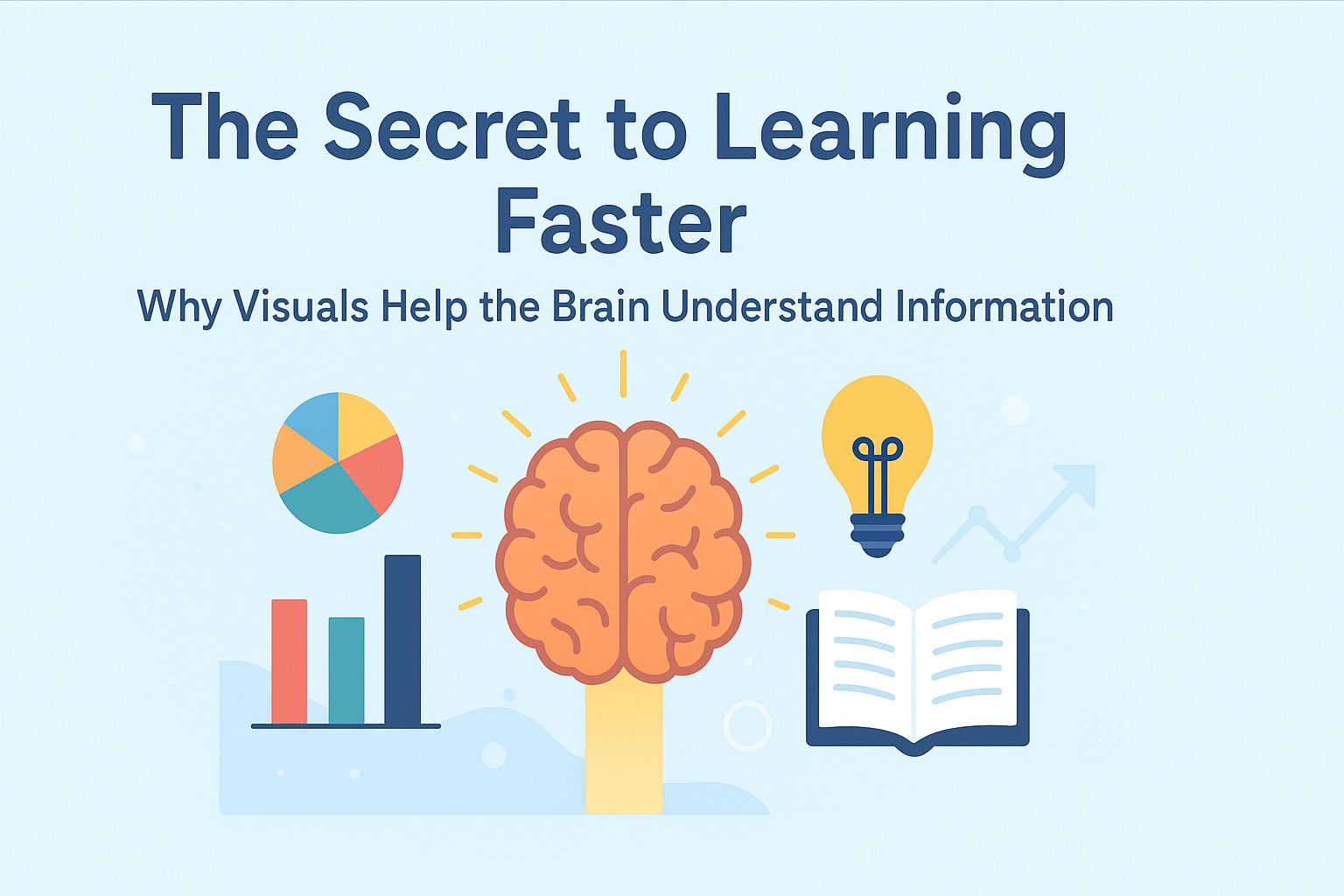
Learning through visuals has become a favorite method for many people. From diagrams and illustrations to infographics and animated videos—visuals have proven to make the learning process faster and easier to understand. But what exactly makes visuals so effective?
HOW THE BRAIN PROCESSES VISUAL INFORMATION
The human brain is designed to process images much faster than text. Most brain areas are responsible for interpreting shapes, colors, and patterns. As a result, visual information is immediately “captured” without needing to be translated into words first.
VISUALS TURN ABSTRACT INFORMATION INTO SOMETHING CLEARER
Many difficult concepts are hard to explain with text alone. Visuals help transform complex ideas into more concrete forms. For example, graphs can show trends more clearly, and anatomical illustrations are easier to understand than long text descriptions.
VISUALS TRIGGER EMOTION AND FOCUS
Certain colors and images can spark curiosity, making learning more engaging. When a person is emotionally involved, the brain retains the information more easily.
CONCLUSION: VISUAL LEARNING ACCELERATES COMPREHENSION
Visual learning is not just a trend. It aligns with how the brain works. By combining text and visuals, the learning process becomes faster, easier, and more enjoyable.
About the Author
Gusti Ayu Tita
Author — STEKOM University
An active author focused on academic issues, educational technology, and human resource development in the campus environment.