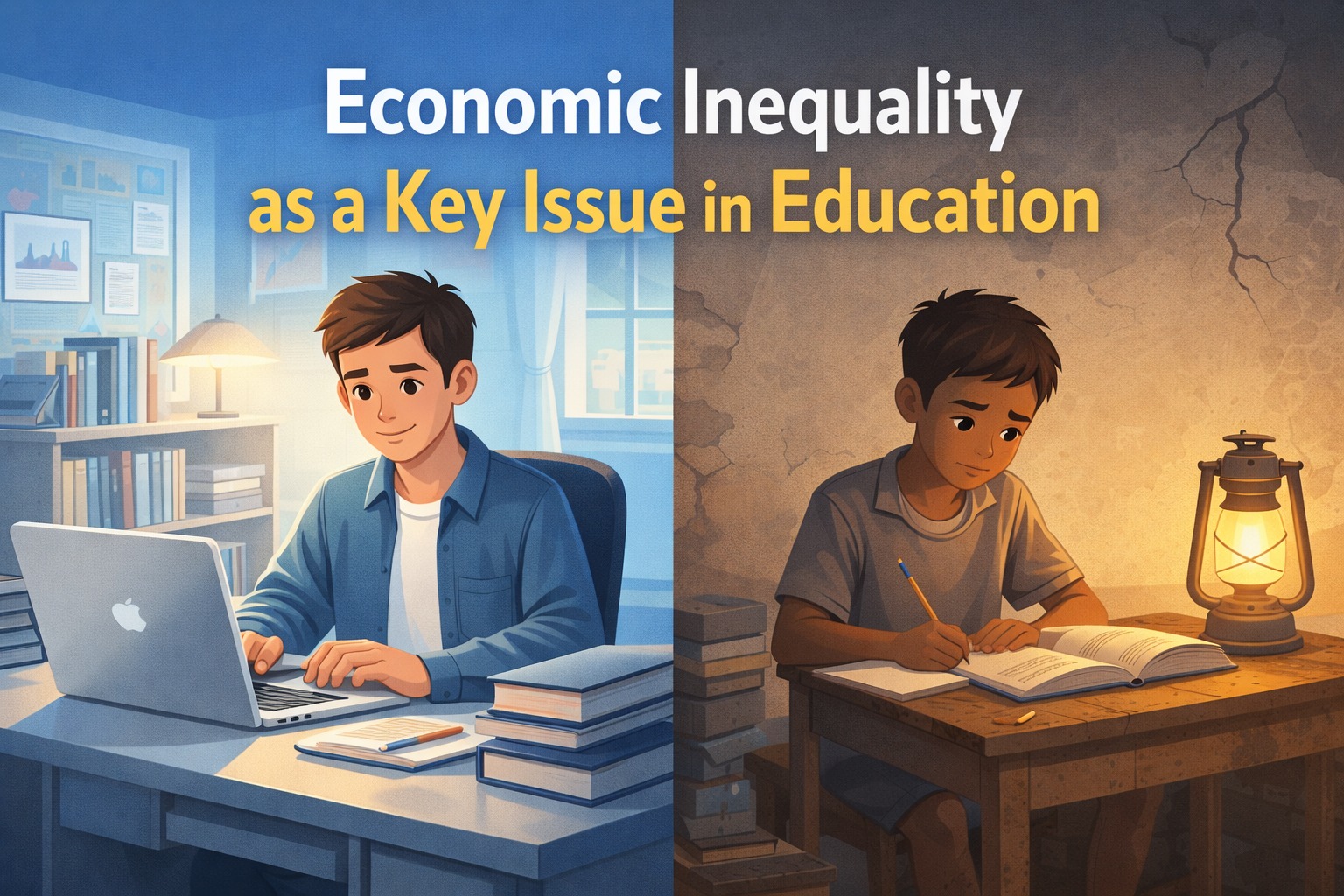
Economic inequality has become one of the most important issues in the field of education. Numerous studies show that a family’s economic condition can significantly affect the quality of a student’s learning experience. But how great is this impact? Does economic inequality truly contribute to declining academic achievement in schools? This article discusses the issue in detail.
Why Can Economic Inequality Affect Academic Achievement?
Economic inequality creates significant differences in access to education, learning facilities, and parental support. Several key factors influence academic performance:
1. Access to Learning Facilities
Students from low-income families generally have limited access to learning facilities such as:
- Supplementary books
- Technological devices (laptops, smartphones, internet access)
- Comfortable study spaces
The lack of adequate facilities makes the learning process less effective.
2. School and Teacher Quality
Economic inequality often forces students from disadvantaged backgrounds to attend schools with:
- Limited educational facilities
- Overcrowded classrooms
- A shortage of teachers or high teaching workloads
These conditions reduce the effectiveness of learning.
3. Psychological Pressure and Economic Burden
Students from economically disadvantaged families are more vulnerable to:
- Stress caused by financial difficulties
- The need to work while attending school
- Difficulty meeting basic needs such as proper nutrition and healthcare
These psychological factors can reduce concentration and learning motivation.
The Impact of Economic Inequality on Academic Achievement
Economic inequality has both direct and indirect effects on students’ academic performance, including:
1. Declining Academic Performance
Students with limited learning resources tend to struggle to understand lessons and complete assignments.
2. Lower Learning Motivation
Economic limitations can cause some students to feel restricted, leading to a loss of motivation to pursue high academic achievement.
3. Higher School Dropout Rates
Financial difficulties are often the main reason students leave school early to help support their families.
Do All Students from Low-Income Families Have Poor Academic Performance?
Not necessarily. Many students from modest backgrounds achieve high academic success due to:
- Strong perseverance and motivation
- Support from teachers or the surrounding environment
- Educational assistance programs
However, statistically, economic inequality remains a significant barrier for the majority of students.
Efforts to Reduce the Impact of Economic Inequality
To reduce achievement gaps caused by economic factors, several measures can be taken:
1. Equalizing Access to Education
Assistance programs such as:
- Scholarships
- Educational assistance programs (KIP for schools and universities)
- Free internet access or digital libraries
can help expand learning opportunities.
2. Improving School Quality
Governments and educational institutions must ensure equal quality of education, including teachers, curricula, and facilities.
3. Strengthening the Role of Parents and Communities
Educating parents about the importance of education and encouraging community support can create a more positive learning environment.
Conclusion
Economic inequality does contribute significantly to declining academic achievement among students. While it is not the sole determining factor, economic conditions play a crucial role in shaping access to education, learning motivation, and student well-being. Through collaboration among governments, schools, parents, and communities, the negative impact of economic inequality can be reduced, paving the way for more equitable education.
About the Author
Gusti Ayu Tita
Author — STEKOM University
An active author focused on academic issues, educational technology, and human resource development in the campus environment.