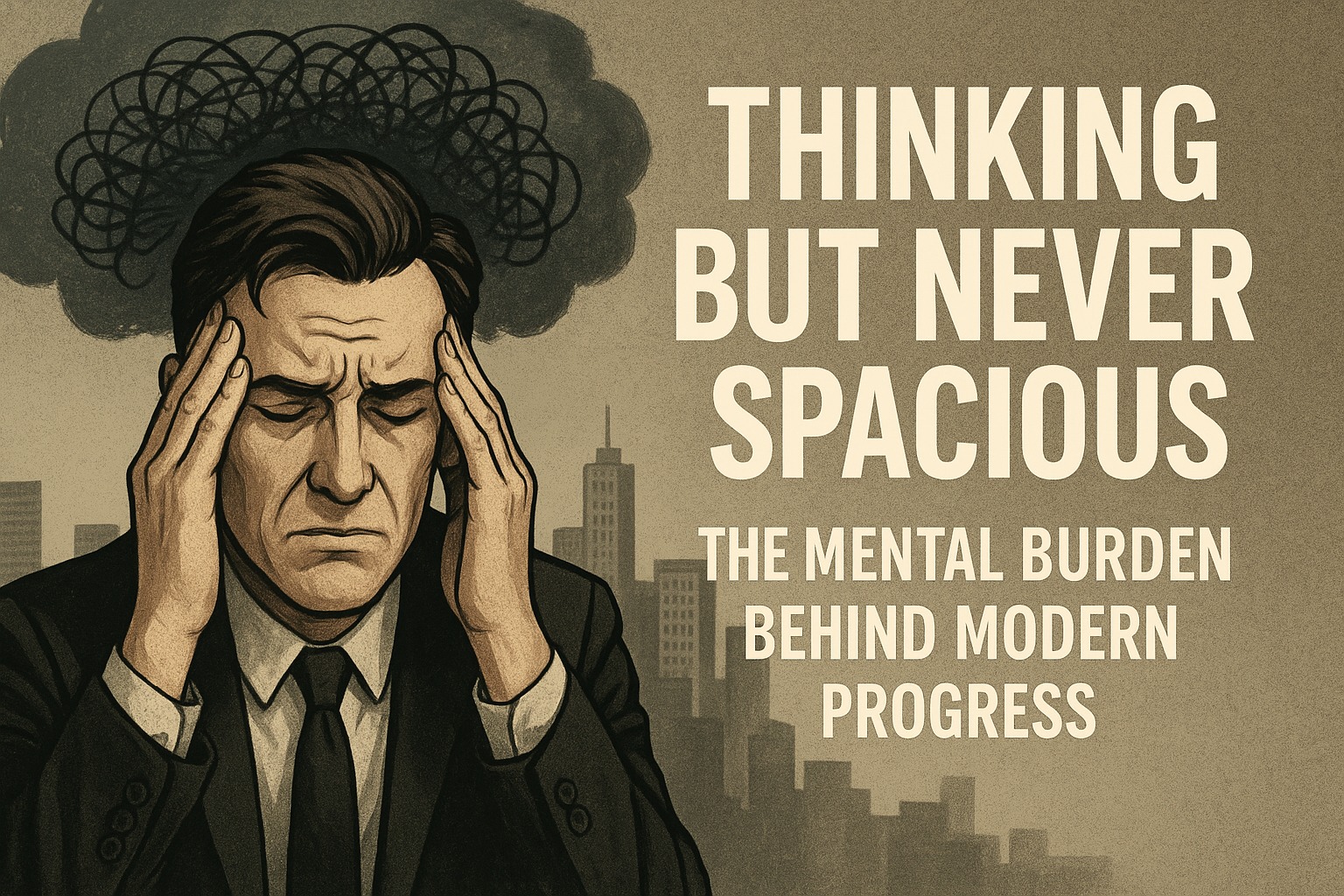
We live in a time when everything seems faster, easier, and more advanced. Yet behind all this convenience, many people find their minds crowded, their sleep restless, and their hearts uneasy. Progress that should have given us breathing room often ends up adding invisible emotional burdens.
This phenomenon didn’t appear out of nowhere. There are major shifts in how we work, communicate, and view life—shifts that slowly change the rhythm of our minds. To understand it, let’s explore how modern progress can become a quiet yet real source of psychological fatigue.
PROGRESS THAT ACCELERATES THE MIND
Technological advances have created a nonstop flow of information. In a single day, we may receive hundreds of messages, notifications, news, and demands for responses. The brain is forced to switch rapidly between tasks without enough pause to process any of it.
This pace shapes new habits: thinking fast, deciding fast, reacting fast. Unfortunately, the human brain was never designed to operate continuously without rest. When pauses disappear, the mind loses its space to recover, and mental fatigue slowly creeps in.
THE WEIGHT OF MULTIPLE ROLES AT ONCE
The Pressure of Social Roles
In the modern era, one person may carry multiple roles simultaneously: employee, partner, parent, child, and an individual who must appear “successful” on social media. These roles exist not only physically but also psychologically.
When all these expectations come at the same time, the mind becomes crowded with fears of failing in at least one role. Guilt, fear of disappointing others, and anxiety about the future become daily companions.
Never-Ending Standards of Success
Progress also raises expectations. What once felt sufficient now feels inadequate. Careers must rise, income must grow, and life must look more “impressive.”
These constantly shifting standards create internal pressure. Instead of enjoying the journey, many people rush from one achievement to the next, never feeling satisfied with what they already have.
AN INFORMATION FLOOD, BUT LITTLE STILLNESS
Every day, we are exposed to information from all directions—global news, other people’s opinions, and even trivial online drama. The brain is forced to digest too much, most of which has nothing to do with our personal lives.
The result is cognitive fatigue: difficulty focusing, mental exhaustion, and a sense of boredom. Ironically, despite being surrounded by information, many people feel empty and disconnected from meaning.
WHEN PRODUCTIVITY BECOMES A BURDEN
The Culture of Busyness
Busyness is often treated as a status symbol. The busier you are, the more “valuable” you seem. Without realizing it, this culture teaches us that resting is a sign of weakness.
But the body and mind both need adequate breaks. When rest is sacrificed repeatedly, productivity actually decreases, and mental health becomes the cost.
Guilt in Stillness
Many people feel guilty when they do “nothing.” Even during breaks, their minds stay preoccupied with work or the next goal.
This shows that the mind no longer returns home to itself. The body may be still, but the mind keeps working.
FINDING SPACE IN THE MIDST OF SPEED
Modern life is unavoidable, but our response to it can change. Practicing self-awareness becomes essential for understanding our mental limits.
Creating moments of quiet, reducing unnecessary information, and learning to say “enough” are gentle acts of resistance against the pressure of the times. When we dare to slow down, spaciousness begins to return.
CONCLUSION
Modern progress brings countless conveniences, yet it also carries mental burdens that often go unnoticed. A mind pushed nonstop will lose clarity, and a heart pressured too long will lose its calm.
Recognizing that we are human—not machines—is the key to surviving in a rapidly moving era. By maintaining our rhythm, allowing space for silence, and limiting our self-imposed demands, we can reclaim a sense of ease amid the noise of modern life.
About the Author
Gusti Ayu Tita
Author — STEKOM University
An active author focused on academic issues, educational technology, and human resource development in the campus environment.