
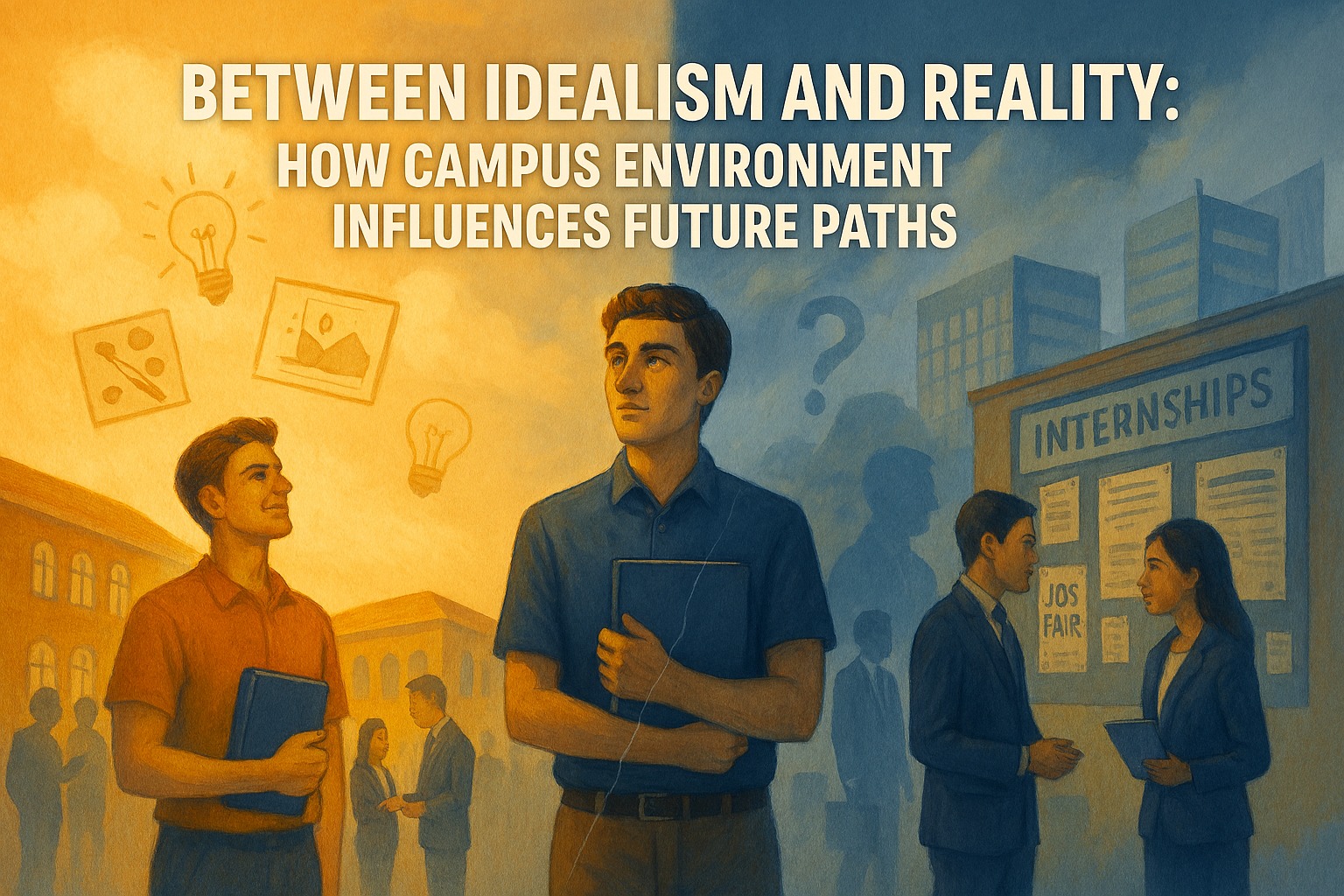
For many students, university life begins with idealism. They arrive on campus carrying dreams, personal values, and a strong sense of purpose. Some want to change the world, others aim to innovate, create, or serve. However, as semesters pass, reality begins to shape those aspirations. The campus environment its culture, expectations, and social dynamics plays a powerful role in influencing future paths.
Understanding how campus environment influences career decisions and long-term goals is essential for students who want to make intentional, fulfilling choices. This article explores the tension between idealism and reality and how university culture subtly redirects future trajectories.
THE IDEALISM STUDENTS BRING TO CAMPUS
At the beginning of their academic journey, students often have clear visions of what they want to achieve. Their idealism may be shaped by family values, personal experiences, or passions developed during high school. Many believe that higher education will refine their talents and lead them directly toward their dream careers.
This phase is marked by optimism and openness. Students are eager to explore different subjects, meet diverse peers, and participate in activities aligned with their interests. Idealism provides motivation and a sense of identity.
However, idealism rarely exists in isolation. Once students enter a structured academic and social system, new influences begin to emerge.
THE REALITY OF CAMPUS CULTURE
Every campus has its own ecosystem. Some universities emphasize academic excellence and research output. Others highlight entrepreneurship, leadership, or global competitiveness. These institutional priorities create a shared definition of success.
Students quickly learn which achievements are celebrated. High GPAs, prestigious internships, leadership roles, and competitive scholarships become visible markers of accomplishment. Over time, these markers shape students’ perceptions of what is realistic and desirable.
The campus environment can subtly communicate that certain career paths are more valuable than others. As a result, students may adjust their ambitions to align with what appears achievable or socially rewarded.
PEER INFLUENCE AND SOCIAL COMPARISON
Beyond institutional culture, peer influence significantly affects future planning. Students constantly observe their classmates’ progress. Conversations about internships, exchange programs, or job offers can create pressure to keep up.
Social comparison often accelerates decision-making. Instead of deeply reflecting on personal goals, students may feel compelled to follow popular trends. If many peers pursue careers in finance, technology, or consulting, these fields may begin to seem like the most rational options.
In this context, future paths are shaped not only by passion but also by collective momentum.
THE SHIFT FROM PASSION TO PRACTICALITY
As graduation approaches, practicality becomes more prominent. Financial stability, job security, and market demand influence career choices. While idealism focuses on meaning and purpose, reality emphasizes sustainability and opportunity.
This shift is not inherently negative. In fact, exposure to real-world conditions can help students make informed decisions. The challenge arises when practicality completely overshadows personal values.
When students abandon their core motivations entirely, they risk building careers that look successful externally but feel disconnected internally.
BALANCING IDEALISM AND REALITY
The key to navigating campus influence lies in balance. Idealism provides direction, while reality offers structure. Students who successfully integrate both perspectives are more likely to choose future paths that are both meaningful and viable.
Self-reflection is essential. Regularly revisiting personal goals, strengths, and values helps prevent unconscious drift. Seeking mentors, engaging in diverse experiences, and exploring multiple industries can also broaden understanding without forcing premature commitment.
Universities can support this balance by fostering environments that value diverse definitions of success. Encouraging exploration rather than rigid comparison allows students to develop authentic professional identities.
CONCLUSION
The campus environment is more than a physical space for education. It is a social and cultural system that shapes how students define success, assess opportunities, and envision their future paths. Between idealism and reality, each student must navigate external influences while preserving internal clarity.
By recognizing how campus culture influences decision-making, students can make more conscious choices. Instead of passively absorbing expectations, they can actively design futures that align with both their aspirations and the realities of the world beyond university.
About the Author
Gusti Ayu Tita
Author — STEKOM University
An active author focused on academic issues, educational technology, and human resource development in the campus environment.



