
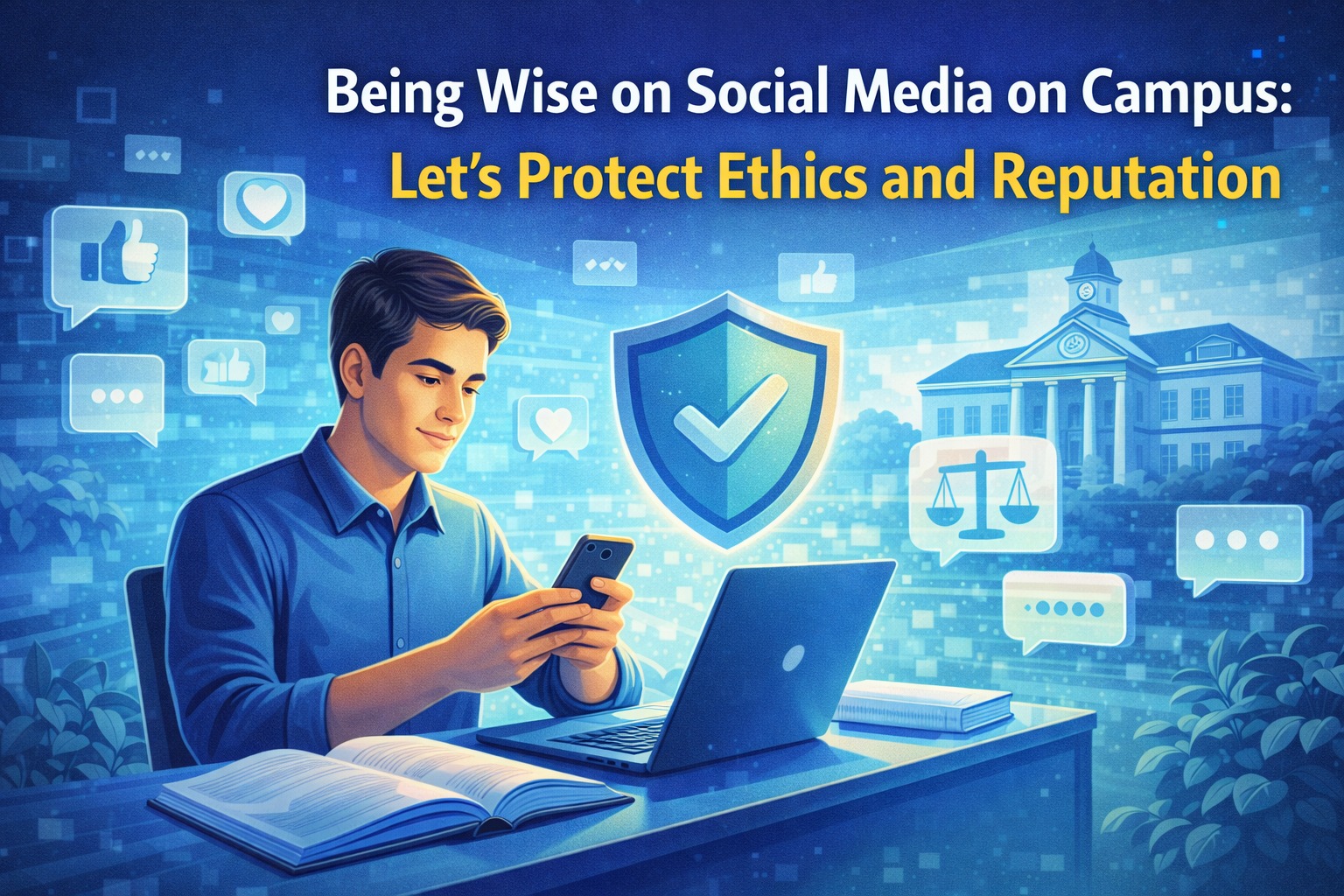
In today’s highly connected digital era, social media has become an integral part of student life. It is not only a space for sharing stories or entertainment, but also a platform for networking, expanding knowledge, and influencing academic and professional careers. However, with these benefits comes a significant responsibility to maintain ethics and personal reputation, especially in a campus environment.
1. Recognize the Power of Social Media in Shaping Your Image
What you post on social media influences how others perceive you, including lecturers, classmates, and future employers. Every status, photo, or comment contributes to a digital footprint that can last a long time.
Tip: Ensure that everything you post reflects your true self—academically, personally, and professionally. Don’t share content just because it’s trending; consider its long-term impact on your reputation.
2. Maintain Ethical Communication Online
One of the biggest challenges of social media is communication without direct interaction, which can easily lead to misunderstandings.
Tip: Always use polite and respectful language, especially when interacting with people you do not know personally. When opinions differ, respond with respect and avoid unproductive arguments.
3. Avoid Posting Content That Could Harm Your University’s Reputation
Students represent their universities. What you share online can indirectly reflect the values and image of your campus.
Tip: Avoid posting harmful or controversial content related to your university or lecturers. If issues arise, resolve them through appropriate channels rather than social media.
4. Understand the Risks of Oversharing and Protect Your Privacy
The freedom of social media often encourages people to share too much personal information, which can be risky for both security and reputation.
Tip: Limit the amount of personal information you share. Make sure only appropriate audiences can view your posts and avoid sharing sensitive content.
5. Don’t Get Caught Up in Social Media Drama
Social media is often filled with drama—political debates, campus gossip, or personal conflicts. While it may attract attention, involvement can damage your reputation and distract you from academic goals.
Tip: Choose not to engage in irrelevant or unproductive debates. Focus instead on positive and meaningful topics, such as self-development or academic information.
6. Be Careful When Responding to Sensitive Issues
In a diverse campus environment, sensitive topics such as race, religion, or politics can easily lead to conflict if handled carelessly.
Tip: Before commenting on sensitive issues, consider whether your words might hurt others or create tension. Use thoughtful language and maintain tolerance and respect for differences.
7. Use Social Media as a Tool for Self-Development
One of the best ways to maintain a positive reputation online is by using social media for growth and knowledge sharing.
Tip: Share academic achievements, research outcomes, or useful articles. Follow accounts that support learning and professional development.
**Keywords:**
About the Author
Gusti Ayu Tita
Author — STEKOM University
An active author focused on academic issues, educational technology, and human resource development in the campus environment.



