
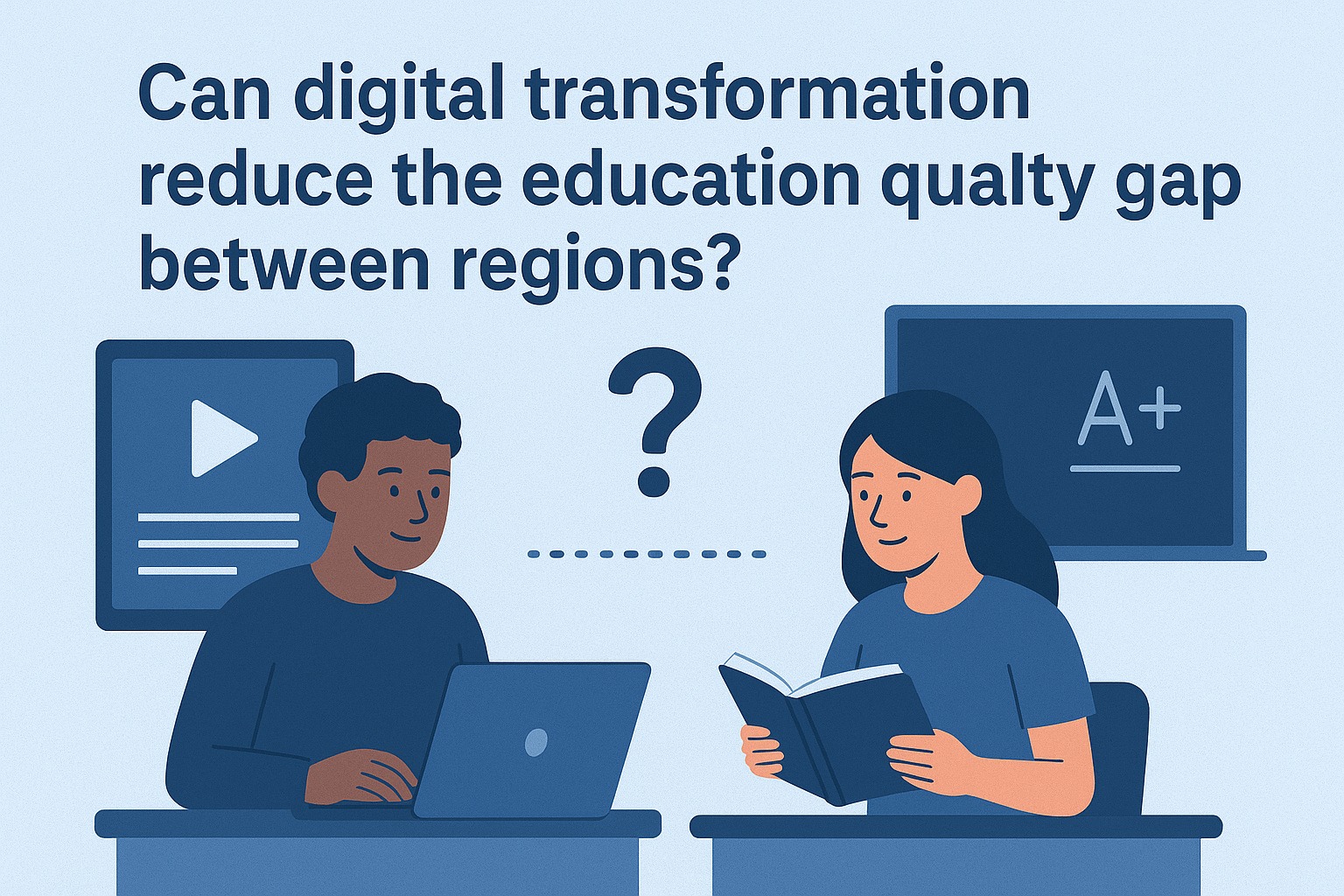
Educational quality disparities between regions—especially between urban areas and remote regions—remain one of Indonesia’s biggest challenges. However, in recent years, digital transformation has continued to grow and has brought new hope for advancing education. So, can digital transformation truly reduce these educational quality gaps? Let’s explore the topic in depth.
WHAT IS DIGITAL TRANSFORMATION IN EDUCATION?
Digital transformation is the process of integrating technology into all aspects of learning, from teaching methods to access to digital learning resources.
Examples include:
* Online learning (e-learning and hybrid learning)
* Digital education platforms such as learning videos and study apps
* Utilizing the internet as a source of knowledge
* Technology-based school management systems
With proper implementation, digital education provides more flexible and equitable learning opportunities.
HOW DOES DIGITAL TRANSFORMATION REDUCE EDUCATION GAPS?
Technology enables all learners to access the same quality of education, regardless of geographical location.
The Key Roles of Digital Transformation:
Access to High-Quality Learning Materials
Students in remote areas can access the same content as students in big cities.
Interaction with Professional Educators
Webinars, virtual classes, and learning communities connect students with experts from various fields.
Equalizing Digital Literacy
Equips learners with essential technological skills for the modern era.
Innovative Learning Methods
Digital media makes learning more interactive, engaging, and easier to understand.
More Accurate Learning Analysis
Teachers can track student progress through digital systems.
Through technology, more equal learning opportunities can be realized.
CHALLENGES IN IMPLEMENTING DIGITAL TRANSFORMATION
Despite its great potential, education digitalization faces several obstacles.
Key Challenges:
* Unequal internet access across regions
* Limited digital devices for students from low-income families
* Teachers not fully prepared to use digital teaching tools
* Digital literacy gaps between regions
If these issues are not addressed, digitalization may create new disparities instead of solving the old ones.
STRATEGIC STEPS TO OPTIMIZE DIGITAL TRANSFORMATION
To ensure digital transformation successfully promotes equitable education quality, the right and collaborative strategies are needed.
Potential Solutions:
* Equal distribution of internet networks, especially in 3T (frontier, outermost, underdeveloped) regions
* Device assistance programs for students in need
* Teacher training on the use of educational technology
* Development of easy-to-access, data-efficient learning platforms
* Collaboration between government, schools, and the private sector for funding
With structured planning, technology can become a highly effective equalization tool.
CONCLUSION
So, can digital transformation reduce educational quality disparities across regions?
The answer: **yes, very possible**, as long as it is supported by adequate infrastructure, teacher competence, and equal access for all Indonesian learners.
Digital transformation is not just a trend—it is a real solution to creating inclusive, competitive, and accessible education for all generations, without exception
About the Author
Gusti Ayu Tita
Author — STEKOM University
An active author focused on academic issues, educational technology, and human resource development in the campus environment.



