
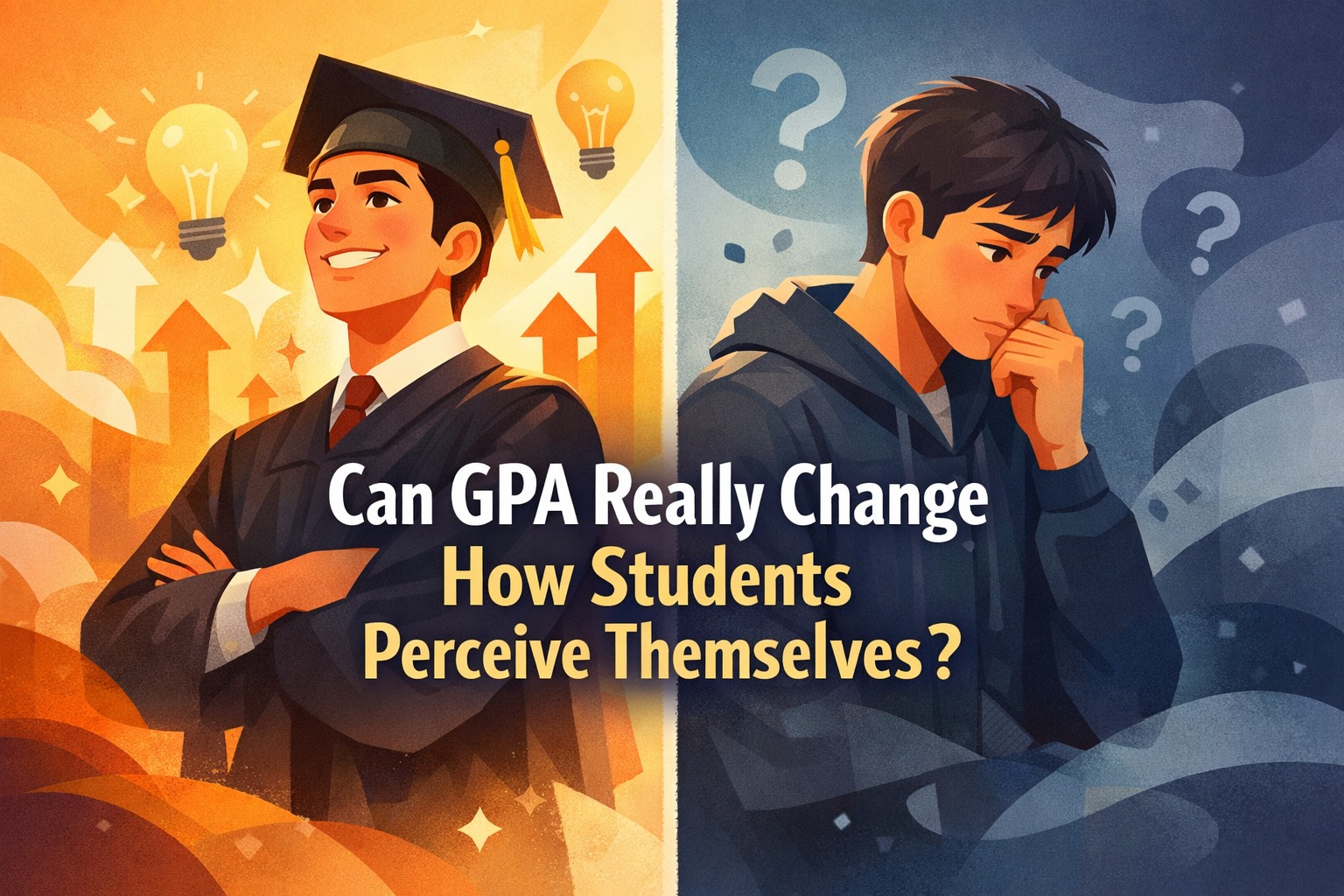
In higher education, the Grade Point Average (GPA) is often used as the primary indicator of a student’s academic success. This numerical measure does not only function as a formal assessment but also frequently influences how students evaluate their abilities and self-worth. Many students feel more confident when they achieve a high GPA, while others experience insecurity when their grades decline. This raises an important question: can GPA truly change how students perceive themselves?
GPA AS A SYMBOL OF ACADEMIC SUCCESS
For many students, GPA is perceived as a representation of intelligence and hard work. An education system that emphasizes numerical achievement often positions GPA as concrete proof of academic success. When students obtain a high GPA, they tend to feel more confident in their academic abilities.
However, this interpretation can also create pressure, particularly for students whose academic outcomes do not meet expectations.
THE IMPACT OF GPA ON SELF-CONFIDENCE
GPA can significantly affect students’ levels of self-confidence. Students with high GPAs are generally more willing to express opinions, participate actively in class, and face academic challenges with confidence. In contrast, a low GPA often causes students to doubt their own abilities.
If not managed wisely, this situation can trigger feelings of insecurity and reduce learning motivation.
SOCIAL COMPARISON IN THE CAMPUS ENVIRONMENT
The campus environment often becomes a space for academic comparison, both directly and indirectly. Information about peers’ GPAs can influence how students evaluate themselves.
Excessive comparison may shift the focus of learning away from personal development toward merely chasing numerical results.
A HIGH GPA DOES NOT ALWAYS GUARANTEE SELF-CONFIDENCE
Interestingly, not all students with high GPAs possess stable self-confidence. Pressure to maintain academic performance and environmental expectations can instead lead to academic anxiety.
This demonstrates that self-confidence is not determined solely by GPA, but also by how students interpret and internalize their academic achievements.
BUILDING A BALANCED SELF-PERCEPTION
It is essential for students to view GPA as one academic indicator rather than the sole determinant of self-worth. Critical thinking skills, social competencies, and consistent learning processes also play a crucial role in shaping students’ identities.
With a more balanced perspective, students can maintain self-confidence without becoming overly dependent on GPA.
THE ROLE OF THE ENVIRONMENT IN SHAPING STUDENTS’ MINDSETS
Support from lecturers, peers, and the campus environment greatly influences how students perceive themselves. An environment that values the learning process helps students develop healthier self-confidence.
Such an approach encourages both academic and personal growth.
CONCLUSION
GPA can indeed influence how students perceive themselves, particularly in terms of self-confidence and learning motivation. However, GPA is not the sole reflection of a student’s abilities or personal value. With proper understanding and positive environmental support, students can develop a more holistic and sustainable self-perception.
About the Author
Gusti Ayu Tita
Author — STEKOM University
An active author focused on academic issues, educational technology, and human resource development in the campus environment.



