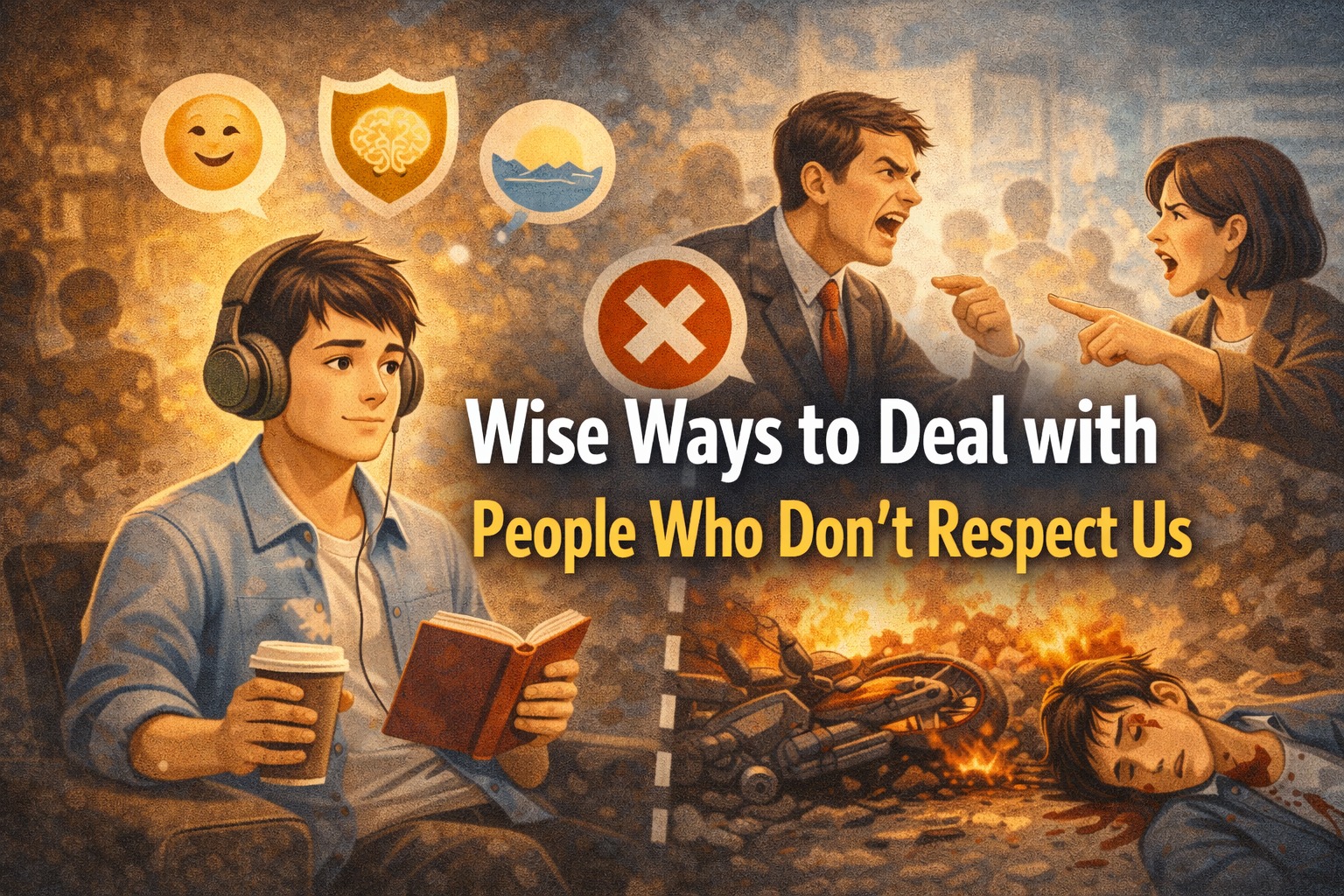
In everyday life, we may encounter people who do not respect our presence, feelings, or opinions. This behavior can appear in the form of excessive jokes, ignoring our views, or forcing their will on us. If left unaddressed, such situations can disrupt our sense of comfort and negatively affect mental well-being.
RECOGNIZING FORMS OF DISRESPECTFUL BEHAVIOR
Disrespectful behavior is not always obvious. Examples include constantly belittling opinions, not listening when we speak, violating personal privacy, or dismissing our feelings as exaggerated. Recognizing these patterns is important so we understand that the issue does not lie within ourselves.
UNDERSTANDING THAT WE DESERVE RESPECT
Everyone deserves to be treated with dignity. Respecting ourselves means acknowledging that our feelings, time, and boundaries are just as important as those of others.
COMMUNICATING BOUNDARIES CALMLY AND CLEARLY
When dealing with people who do not respect us, it is important to express boundaries using polite yet firm language. Use feeling-based statements such as, “I feel uncomfortable when I am treated that way.” This approach is more effective than placing blame.
MANAGING EMOTIONS WHEN RESPONDING
Uncontrolled emotions can escalate the situation. Remaining calm helps us think clearly and maintain our position without being perceived as reactive or overly sensitive.
DECIDING ON THE NEXT STEP
If the behavior continues, it may be necessary to create distance or limit interaction. This is not an act of selfishness, but a form of self-protection.
About the Author
Gusti Ayu Tita
Author — STEKOM University
An active author focused on academic issues, educational technology, and human resource development in the campus environment.