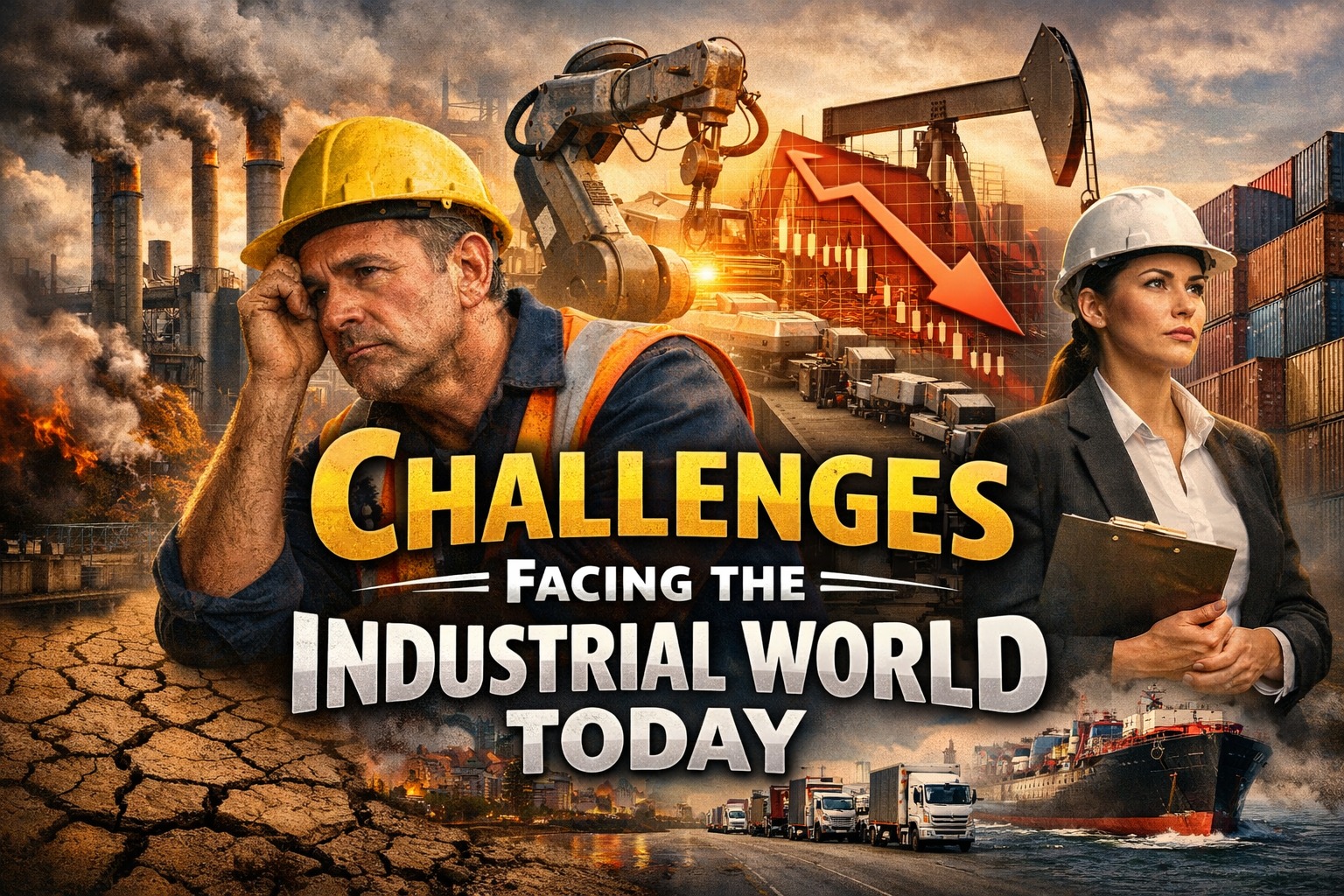
The industrial world continues to grow rapidly alongside technological development and global economic changes. Industries today are no longer only focused on production but also on innovation, sustainability, and efficiency. Many companies are competing to survive in a highly competitive market while adapting to modern consumer demands. Although industrial growth creates many opportunities, it also brings serious challenges that cannot be ignored. Understanding these challenges is important for businesses, workers, and governments to create a stronger and more sustainable industrial future.
TECHNOLOGICAL TRANSFORMATION AND AUTOMATION
One of the biggest challenges in the industrial world today is the rapid growth of automation and advanced technology. Many factories now use robots, artificial intelligence, and automated systems to increase productivity and reduce operational costs. While these technologies improve efficiency, they also reduce the need for human labor in certain sectors. Workers who lack digital skills may struggle to compete in the modern industrial environment.
Industries must continuously adapt to technological advancements to remain competitive. Companies that fail to adopt new technology may experience slower production and reduced market relevance. At the same time, businesses need to invest heavily in employee training and digital transformation. Balancing technology adoption with workforce stability has become a major concern for industrial leaders worldwide.
GLOBAL ECONOMIC UNCERTAINTY
The global economy significantly affects industrial performance in many countries. Economic instability, inflation, and fluctuating currency values often create uncertainty for manufacturers and suppliers. Rising production costs can reduce company profits and force businesses to increase product prices. This situation may weaken consumer purchasing power and slow industrial growth.
International trade conflicts and geopolitical tensions also impact industrial operations. Many industries depend on imported raw materials and global supply chains to maintain production. When disruptions occur, companies may face delays, shortages, and increased operational expenses. As a result, industries must develop stronger risk management strategies to survive economic uncertainty.
ENVIRONMENTAL AND SUSTAINABILITY ISSUES
Environmental concerns are becoming more important in the modern industrial era. Industrial activities often contribute to pollution, carbon emissions, and excessive resource consumption. Governments and environmental organizations are pushing industries to adopt cleaner and more sustainable production methods. Companies that ignore environmental responsibilities may face legal penalties and negative public perception.
Sustainable industrial practices require significant investment in renewable energy, waste management, and eco-friendly technology. Although these changes can be expensive initially, they help industries achieve long-term stability and environmental protection. Consumers are also becoming more aware of environmental issues and prefer products from responsible companies. Therefore, sustainability is no longer optional but a necessary part of industrial success.
LABOR SHORTAGES AND SKILL GAPS
Another major challenge in the industrial world is the shortage of skilled workers. Many industries struggle to find employees with expertise in technology, engineering, and digital systems. The rapid development of industrial technology has created a growing gap between industry needs and workforce capabilities. Without proper training, many workers may become unprepared for future industrial demands.
Educational institutions and industries need stronger collaboration to prepare skilled professionals. Vocational training programs and technical education can help workers improve their abilities and adapt to changing industrial trends. Companies must also provide continuous learning opportunities for employees to remain productive and competitive. Developing a highly skilled workforce is essential for long-term industrial growth.
SUPPLY CHAIN DISRUPTIONS
Modern industries heavily rely on global supply chains to distribute materials and products efficiently. However, recent global events have shown how vulnerable supply chains can be during crises. Natural disasters, pandemics, and transportation problems often interrupt production and delivery schedules. These disruptions can lead to shortages, delayed shipments, and financial losses for companies.
To overcome these challenges, industries are seeking more flexible and resilient supply chain systems. Many companies now diversify suppliers and increase local production to reduce dependence on foreign markets. Digital tracking systems and advanced logistics technology are also being used to improve supply chain management. Stronger supply chain strategies help industries maintain stability during uncertain conditions.
CYBERSECURITY THREATS IN INDUSTRY
As industries become more digitalized, cybersecurity threats continue to increase. Industrial systems connected to the internet are vulnerable to hacking, data theft, and cyberattacks. A successful cyberattack can disrupt production, damage company reputation, and cause significant financial losses. Protecting industrial data and systems has become a critical priority for modern businesses.
Companies must invest in strong cybersecurity systems and employee awareness programs. Regular system updates, secure networks, and advanced monitoring technology are important for preventing cyber threats. Workers also need proper training to recognize digital security risks and avoid harmful online activities. Effective cybersecurity protection helps industries maintain safe and stable operations.
THE FUTURE OF THE INDUSTRIAL WORLD
Despite many challenges, the industrial world still holds great potential for future growth. Technological innovation, sustainable practices, and digital transformation can create more efficient and competitive industries. Businesses that adapt quickly to change are more likely to survive and succeed in the modern market. Cooperation between governments, companies, and educational institutions is also important for building a stronger industrial ecosystem.
The future industrial sector will depend on adaptability, innovation, and responsible business practices. Industries must focus not only on profit but also on workforce development and environmental sustainability. By addressing current challenges effectively, the industrial world can continue contributing to economic growth and global progress. Strong preparation today will determine industrial success in the future.
About the Author
Gusti Ayu Tita
Author — STEKOM University
An active author focused on academic issues, educational technology, and human resource development in the campus environment.