The rapid development of technology and globalization has significantly transformed the world of education. Modern education is no longer limited to traditional classrooms and printed books, as digital technology has introduced online learning platforms, virtual classrooms, and interactive educational tools. While these advancements provide many opportunities, they also create various challenges that affect students, teachers, and educational institutions.
In the modern era, education must adapt to technological progress, changing social values, and global competition. Therefore, finding effective solutions to educational challenges has become essential in creating a better and more inclusive learning system for future generations.
THE DEVELOPMENT OF EDUCATION IN THE MODERN ERA
Education has evolved rapidly over the past few decades. Technology has changed how students access information and how teachers deliver lessons. Learning can now take place anytime and anywhere through digital platforms, video conferences, and online resources.
This transformation has made education more flexible and accessible. Students can improve their skills through various digital learning methods, while teachers can use interactive media to make lessons more engaging.
However, the fast pace of educational development also creates new issues that require serious attention from governments, schools, and society.
TECHNOLOGY AND DIGITAL LEARNING CHALLENGES
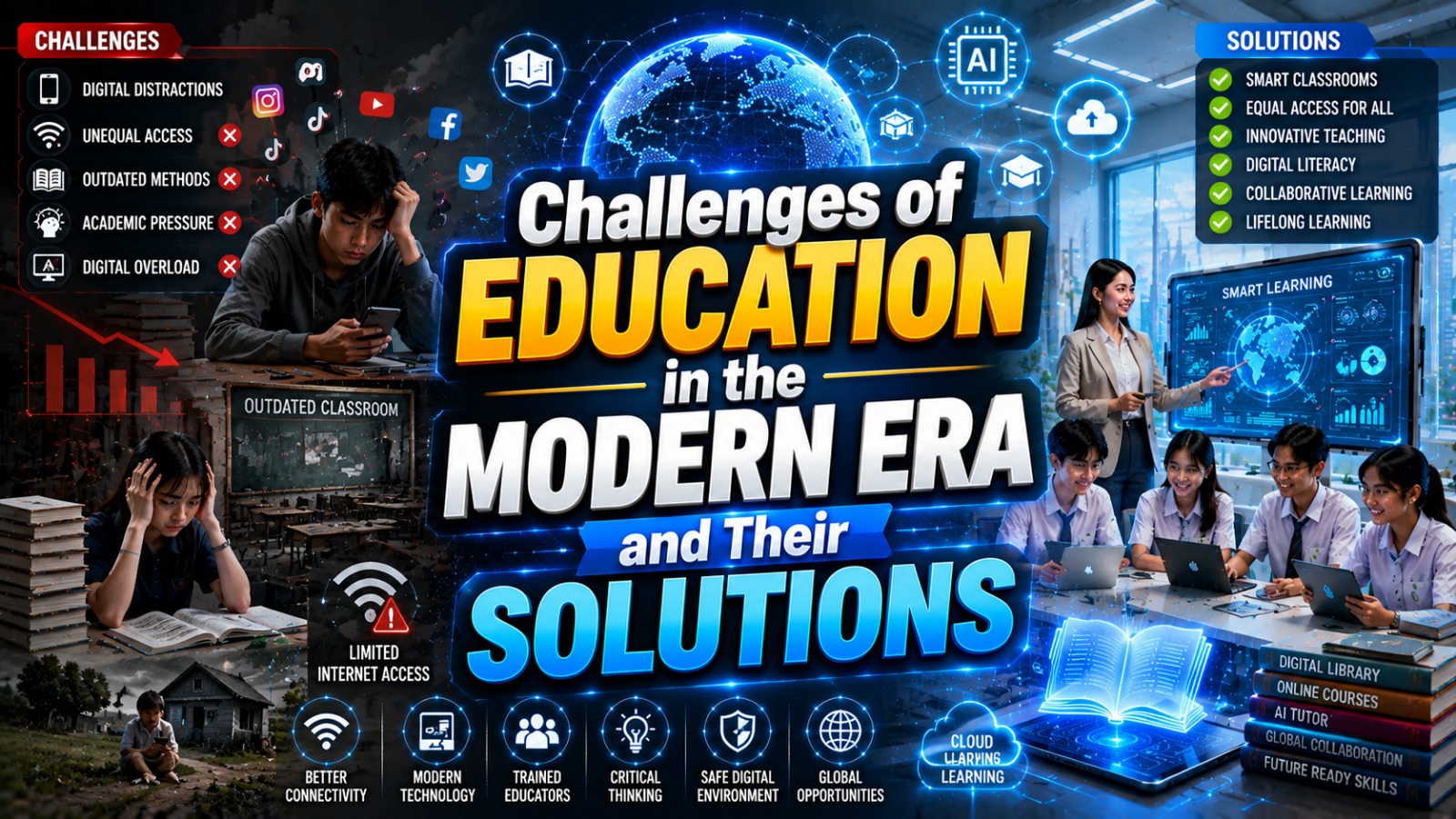
One of the biggest challenges in modern education is the unequal access to technology. Many students in rural or underdeveloped areas still struggle with limited internet connections and lack of digital devices.
In addition, excessive use of technology can distract students from learning. Social media, online games, and entertainment platforms often reduce students’ concentration and productivity.
Teachers also face difficulties adapting to digital teaching methods. Some educators still need training to effectively use technology in the classroom.
DECLINING STUDENT MORAL AND CHARACTER
Modern education is not only facing academic challenges but also moral and character issues. The influence of social media and global culture can affect students’ attitudes and behavior.
Cases of cyberbullying, dishonesty, plagiarism, and lack of discipline have become more common in the digital era. Without proper guidance, students may misuse technology and lose important moral values.
Therefore, character education has become increasingly important in modern schools to help students develop responsibility, honesty, and respect for others.
EDUCATIONAL INEQUALITY
Educational inequality remains a major problem in many countries. Students from economically disadvantaged families often have fewer educational opportunities compared to those with better financial support.
Differences in school facilities, teacher quality, and access to technology create gaps in educational outcomes. As a result, not all students can receive the same quality of education.
Addressing educational inequality requires cooperation between governments, schools, communities, and private organizations.
THE ROLE OF TEACHERS IN MODERN EDUCATION
Teachers continue to play an essential role despite technological advancements. In addition to delivering lessons, teachers guide students, motivate them, and help shape their character.
Modern educators must improve their digital skills and adopt creative teaching methods to keep students engaged. Teachers should also encourage critical thinking, collaboration, and problem-solving abilities.
Continuous professional training is necessary to help teachers adapt to the changing educational environment.
THE IMPORTANCE OF DIGITAL LITERACY
Digital literacy is one of the most important skills in the modern era. Students must understand how to use technology safely, responsibly, and effectively.
Digital literacy helps students identify reliable information, avoid misinformation, and use the internet productively. Schools should include digital literacy programs in their curriculum to prepare students for future challenges.
By improving digital literacy, students can maximize the benefits of technology while avoiding its negative impacts.
SOLUTIONS TO MODERN EDUCATIONAL CHALLENGES
Several strategies can help overcome educational challenges in the modern era. Governments should improve internet infrastructure and provide equal access to technology for all students.
Schools need to develop innovative learning systems that combine technology with interactive teaching methods. Teacher training programs should also be strengthened to improve digital teaching skills.
In addition, character education and parental involvement are essential for supporting students’ personal and academic development.
THE FUTURE OF EDUCATION
The future of education will continue to be influenced by technological innovation. Artificial intelligence, virtual learning, and digital collaboration are expected to become more common in schools and universities.
However, technology should not replace human interaction entirely. Education must continue to focus on creativity, emotional intelligence, ethics, and social skills.
A balanced approach between technology and character development will create a stronger and more effective education system for future generations.
CONCLUSION
Challenges in modern education are becoming more complex as technology and globalization continue to grow. Issues such as digital inequality, declining moral values, and technological adaptation require immediate attention and effective solutions.
Through collaboration between governments, educators, parents, and communities, education can become more inclusive, innovative, and future-oriented. By improving digital literacy, strengthening character education, and providing equal learning opportunities, modern education can prepare students to face global challenges successfully.
About the Author
Gusti Ayu Tita
Author — STEKOM University
An active author focused on academic issues, educational technology, and human resource development in the campus environment.