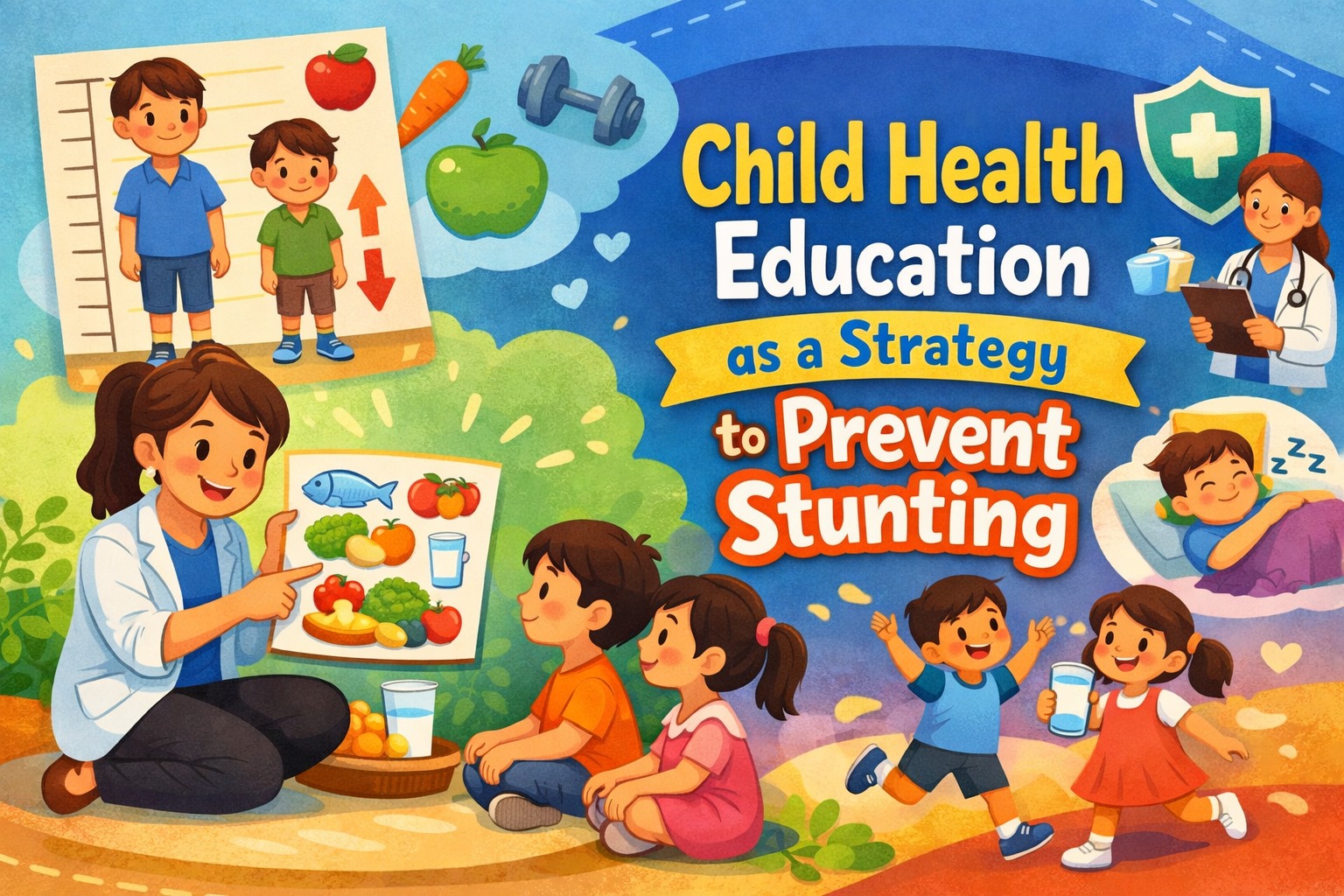
Stunting remains one of the most serious health challenges affecting children worldwide. This condition occurs when a child experiences impaired growth and development due to chronic malnutrition, repeated infections, and inadequate psychosocial stimulation. Stunting not only affects physical growth but also impacts cognitive development, learning ability, and future productivity. Therefore, child health education plays a crucial role in preventing stunting and creating a healthier generation.
UNDERSTANDING STUNTING AND ITS IMPACT
Stunting is a condition where a child’s height is lower than the standard height for their age. It usually develops during the first 1,000 days of life, starting from pregnancy until a child reaches two years old. Poor nutrition, lack of proper healthcare, and unhealthy living environments are major factors contributing to stunting.
Children who experience stunting often face long-term consequences. They may have weaker immune systems, delayed cognitive development, and lower academic performance. In adulthood, stunted children are more likely to experience reduced productivity and increased risk of chronic diseases. This is why preventing stunting should become a priority for families, communities, and governments.
THE ROLE OF CHILD HEALTH EDUCATION
Child health education is one of the most effective strategies to reduce stunting rates. Through proper education, parents and caregivers can better understand the importance of balanced nutrition, hygiene, and regular health monitoring for children.
Health education programs help parents learn about exclusive breastfeeding, nutritious complementary feeding, and proper childcare practices. Many cases of stunting occur because parents lack access to accurate information regarding child nutrition and health. Educational campaigns can bridge this gap and encourage healthier behaviors within families.
In addition, schools and community health centers can become important platforms for spreading awareness about stunting prevention. Health workers, teachers, and community leaders can collaborate to educate parents about healthy lifestyles and child development.
IMPORTANCE OF BALANCED NUTRITION
Balanced nutrition is the foundation of healthy child growth. Children need adequate intake of protein, carbohydrates, healthy fats, vitamins, and minerals to support physical and mental development. Pregnant women also require sufficient nutrition to ensure healthy fetal growth.
Exclusive breastfeeding for the first six months is highly recommended because breast milk contains essential nutrients and antibodies that protect infants from infections. After six months, children should receive complementary foods that are rich in nutrients and suitable for their age.
Parents should also pay attention to food diversity. Consuming vegetables, fruits, fish, eggs, milk, and other nutritious foods can help prevent nutrient deficiencies that contribute to stunting.
THE IMPORTANCE OF CLEANLINESS AND SANITATION
Good sanitation and hygiene practices are closely linked to stunting prevention. Poor sanitation can expose children to infections and diseases that interfere with nutrient absorption. Frequent diarrhea and intestinal infections can significantly affect a child’s growth.
Health education should therefore include information about handwashing, safe drinking water, clean food preparation, and proper waste disposal. Families who practice good hygiene are more likely to raise healthy children with stronger immune systems.
Communities also need access to proper sanitation facilities. Government support in improving clean water systems and public sanitation infrastructure can greatly reduce the risk of stunting.
COMMUNITY PARTICIPATION IN STUNTING PREVENTION
Preventing stunting is not only the responsibility of parents but also the entire community. Community participation can strengthen health education programs and create a supportive environment for child development.
Local health campaigns, parenting classes, and nutrition workshops can increase public awareness about the dangers of stunting. Community health workers can monitor children’s growth regularly and provide guidance for families in need.
Moreover, collaboration between governments, healthcare institutions, schools, and non-governmental organizations can improve the effectiveness of stunting prevention programs. Sustainable efforts and continuous education are key to achieving long-term success.
CONCLUSION
Child health education is a powerful strategy to prevent stunting and improve the quality of future generations. By increasing awareness about nutrition, hygiene, breastfeeding, and proper childcare, families can provide better support for children’s growth and development.
Preventing stunting requires cooperation from parents, communities, healthcare providers, and governments. Through consistent education and healthy lifestyle practices, children can grow healthier, smarter, and more productive in the future.
About the Author
Gusti Ayu Tita
Author — STEKOM University
An active author focused on academic issues, educational technology, and human resource development in the campus environment.