
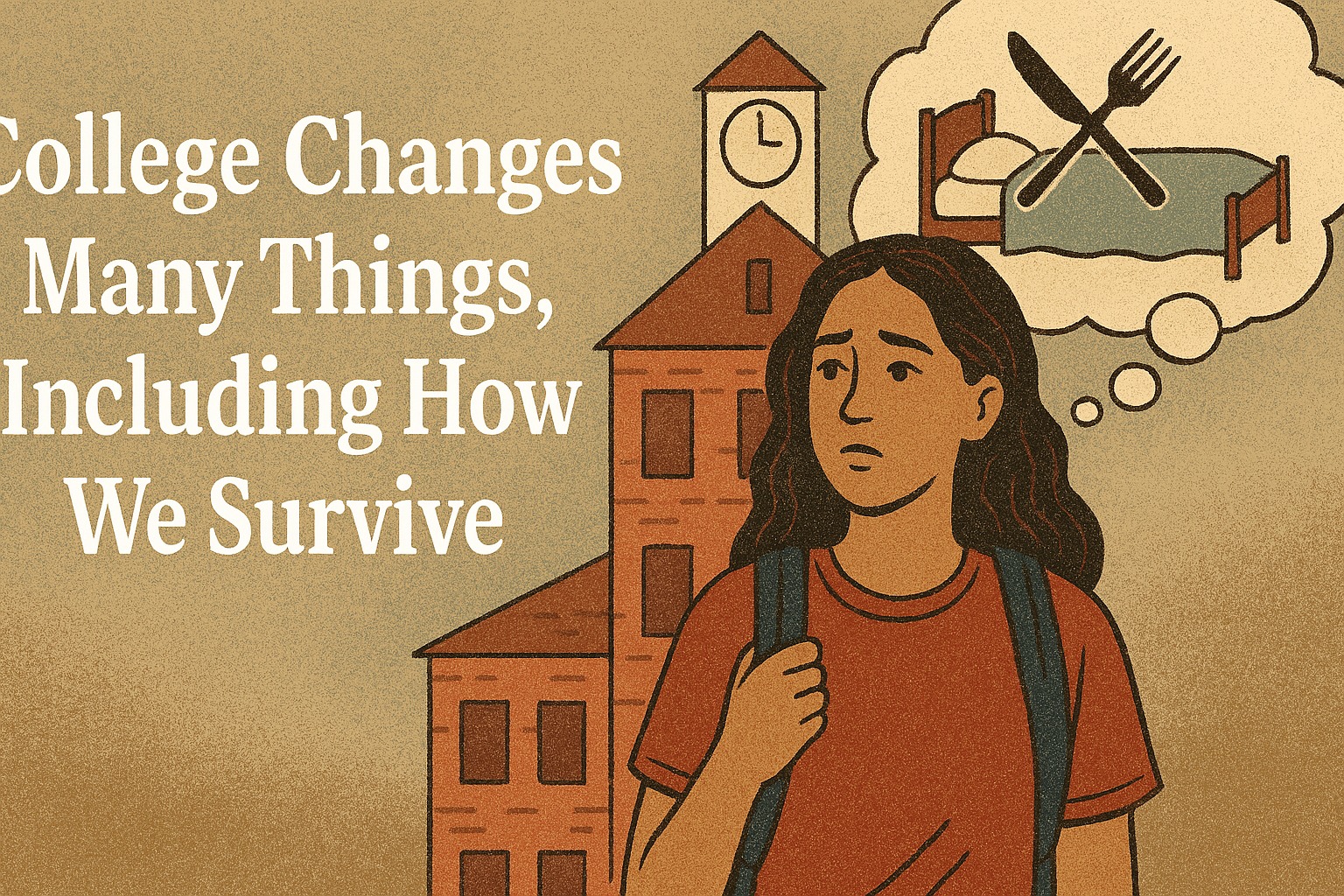
College does more than provide education—it changes how students survive in the real world. Beyond academic knowledge, students learn how to endure pressure, adapt to challenges, and keep moving forward despite uncertainty.
ADAPTING TO NEW ENVIRONMENTS
College introduces students to unfamiliar environments, routines, and expectations. Adjusting to new systems and social dynamics becomes a daily challenge.
This adaptation strengthens flexibility and prepares students to handle change beyond campus life.
SURVIVING ACADEMIC AND PERSONAL PRESSURE
Balancing coursework, personal responsibilities, and emotional challenges can be overwhelming. College teaches students how to survive under pressure without giving up.
Through this process, students build endurance and persistence.
LEARNING TO MANAGE LIMITED RESOURCES
Time, energy, and finances are often limited during college years. Students must learn to manage what they have effectively.
This lesson teaches prioritization and resourcefulness, skills that are essential for long-term survival.
DEVELOPING PROBLEM-SOLVING SKILLS
Unexpected problems arise frequently in college. Students learn to analyze situations, seek solutions, and take action.
Problem-solving becomes a survival skill rather than an academic exercise.
BUILDING MENTAL RESILIENCE
Facing repeated challenges strengthens mental resilience. Students learn how to recover from setbacks and continue forward.
This resilience becomes a critical asset in both personal and professional life.
CONCLUSION
College changes many aspects of life, including how students survive. Through adaptation, pressure, and problem-solving, students develop resilience that prepares them for real-world challenges beyond graduation.
About the Author
Gusti Ayu Tita
Author — STEKOM University
An active author focused on academic issues, educational technology, and human resource development in the campus environment.



