
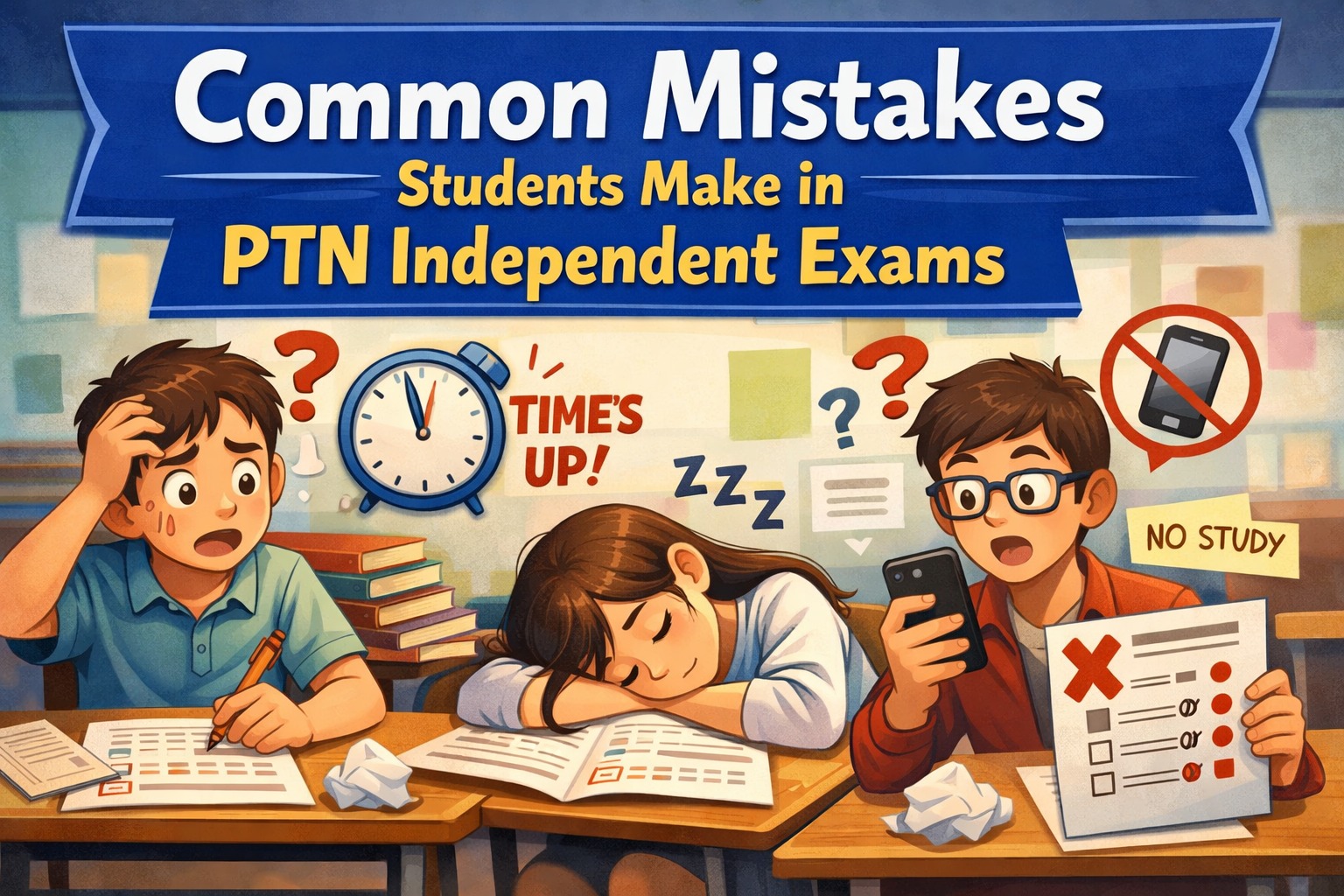
Entering a PTN Independent Exam can be a challenging experience for many students. Competition is extremely tight, and every participant wants to secure a seat at their dream university. Unfortunately, many students fail not because they lack intelligence, but because they make common mistakes during preparation and the exam process itself. Understanding these mistakes can help students improve their strategies and increase their chances of success.
LACK OF PROPER STUDY PLANNING
One of the biggest mistakes students make is studying without a clear plan. Many students only start preparing a few weeks before the exam, which leads to ineffective learning and unnecessary stress.
A proper study schedule helps students manage their time efficiently. Dividing subjects into daily or weekly targets allows better understanding and retention of materials. Students who study consistently over time usually perform better than those who rely on last-minute preparation.
Creating a balanced study routine also helps avoid burnout. Students should include breaks, exercise, and enough sleep to maintain concentration and productivity.
IGNORING PREVIOUS EXAM QUESTIONS
Another common mistake is ignoring previous PTN Independent Exam questions. Many students focus only on textbooks without understanding the actual exam format.
Practicing past questions helps students recognize patterns, understand the level of difficulty, and improve time management skills. It also helps identify weak areas that need more attention.
Mock tests are especially useful because they simulate real exam conditions. Students become more familiar with pressure and can train themselves to stay calm during the actual test.
POOR TIME MANAGEMENT DURING THE EXAM
Time management is a crucial factor in PTN Independent Exams. Some students spend too much time answering difficult questions and eventually run out of time before finishing the exam.
A smart strategy is to answer easy questions first. This approach helps students collect points quickly while building confidence. Difficult questions can be revisited later if there is remaining time.
Students should also practice answering questions under timed conditions during preparation. This habit improves speed and accuracy at the same time.
OVERCONFIDENCE AND LACK OF EVALUATION
Overconfidence can become a serious obstacle. Some students believe they already understand the materials well enough and stop practicing regularly.
Without evaluation, students may not realize their weaknesses. Regular self-assessment is important to measure progress and identify areas that still require improvement.
Joining study groups or discussing questions with teachers can also provide valuable feedback. Constructive criticism often helps students develop better learning strategies.
NEGLECTING PHYSICAL AND MENTAL HEALTH
Many students focus entirely on studying while ignoring their physical and mental health. Lack of sleep, unhealthy eating habits, and excessive stress can negatively affect exam performance.
A healthy body supports a healthy mind. Students should maintain proper nutrition, exercise regularly, and get enough rest before the exam day.
Mental preparation is equally important. Positive thinking and stress management techniques can help students remain calm and focused during the test.
FAILING TO READ EXAM INSTRUCTIONS CAREFULLY
Some students lose points simply because they do not read instructions carefully. Misunderstanding directions can lead to unnecessary mistakes, even when students know the correct answers.
Before starting the exam, students should take a few minutes to understand all instructions clearly. Paying attention to details such as answer formats and time limits can prevent avoidable errors.
Carefulness and patience are often just as important as academic ability.
CONCLUSION
PTN Independent Exams require more than just intelligence. Success depends on preparation, discipline, strategy, and mental readiness. Common mistakes such as poor planning, ignoring practice questions, weak time management, overconfidence, unhealthy habits, and carelessness can reduce the chances of achieving good results.
By recognizing these mistakes early, students can improve their preparation and perform more confidently during the exam. Consistent effort and smart strategies will greatly increase the opportunity to enter a dream university through the PTN Independent Exam pathway.
About the Author
Gusti Ayu Tita
Author — STEKOM University
An active author focused on academic issues, educational technology, and human resource development in the campus environment.



