
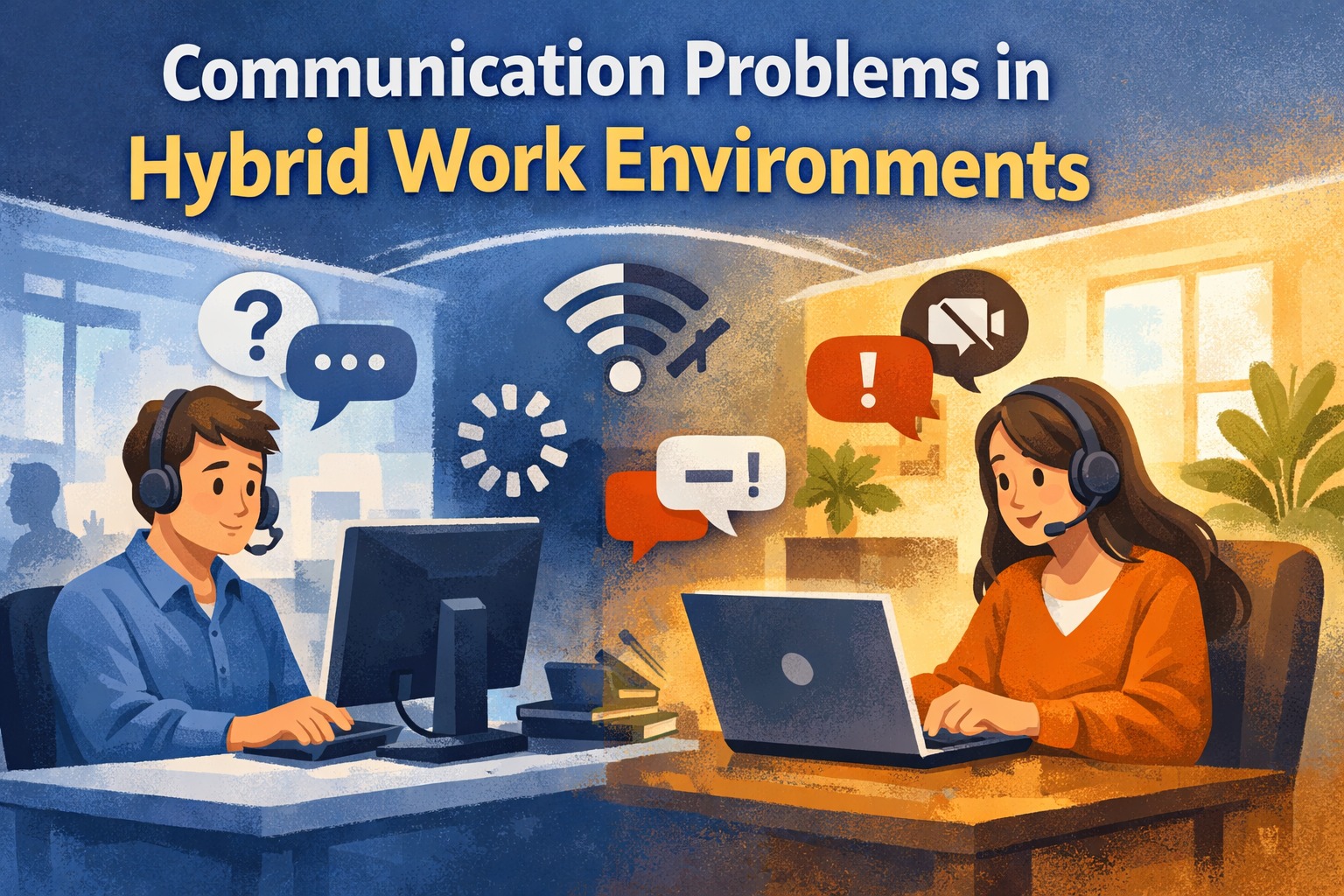
The hybrid work model has become a popular solution for modern companies seeking flexibility and productivity. Employees can divide their time between working remotely and working in the office, creating a balance between professional and personal life. However, despite its advantages, hybrid work also introduces several communication problems that can negatively affect teamwork, collaboration, and organizational performance.
Effective communication is essential for every business. When employees work from different locations and schedules, misunderstandings and coordination issues can easily occur. Understanding the communication challenges in hybrid work environments is important for companies that want to maintain strong collaboration and employee engagement.
LACK OF DIRECT INTERACTION
One of the biggest communication problems in hybrid work environments is the reduced amount of face-to-face interaction. Employees who work remotely may feel disconnected from their colleagues because they cannot participate in spontaneous office conversations or informal discussions.
In traditional workplaces, employees can quickly ask questions, share updates, or solve problems in person. In hybrid settings, communication often depends on digital tools such as emails, messaging applications, and video calls. This can make conversations less natural and sometimes lead to misunderstandings.
The lack of direct interaction may also weaken relationships among team members. Employees who rarely meet in person may struggle to build trust and teamwork, which can affect overall collaboration.
MISCOMMUNICATION THROUGH DIGITAL CHANNELS
Hybrid work environments rely heavily on digital communication platforms. While these tools improve accessibility, they can also create communication barriers. Messages sent through email or chat applications may be interpreted differently because there are no facial expressions, gestures, or voice tones to provide context.
For example, a short message intended to be efficient may appear rude or unfriendly to another employee. Delayed responses can also create confusion and frustration, especially when urgent tasks require quick coordination.
Technical problems such as unstable internet connections, audio issues during virtual meetings, and software disruptions can further reduce communication effectiveness. Employees may miss important information or struggle to participate actively in discussions.
INFORMATION GAPS BETWEEN REMOTE AND OFFICE EMPLOYEES
Another major issue in hybrid workplaces is the unequal distribution of information. Employees who work in the office often receive updates more quickly through direct conversations or impromptu meetings. Meanwhile, remote workers may feel excluded from important discussions and decision-making processes.
This information gap can create feelings of inequality and reduce employee motivation. Remote workers may believe they have fewer opportunities to contribute ideas or receive recognition compared to office-based employees.
To avoid this problem, companies need to ensure that all important updates, meeting notes, and announcements are shared equally through centralized communication systems.
DIFFICULTIES IN TEAM COLLABORATION
Collaboration becomes more complicated when employees work from different locations and time zones. Scheduling meetings that accommodate everyone can be challenging, especially when some employees work flexible hours.
Hybrid teams may also experience difficulties during brainstorming sessions and project coordination. Remote employees can sometimes feel less involved in discussions, while office employees may dominate conversations during meetings.
Without clear communication guidelines, tasks may become unclear, deadlines may be missed, and productivity can decline. Strong leadership and structured collaboration strategies are necessary to keep hybrid teams aligned.
STRATEGIES TO IMPROVE COMMUNICATION IN HYBRID WORK
Companies can reduce communication problems in hybrid work environments by implementing effective strategies. First, organizations should use reliable communication platforms that support video conferencing, messaging, and file sharing.
Second, managers should encourage transparent communication and ensure all employees have equal access to information. Regular virtual meetings and team check-ins can help employees stay connected and informed.
Third, businesses should establish clear communication rules regarding response times, meeting participation, and project updates. These guidelines can minimize misunderstandings and improve teamwork.
Finally, companies should promote a strong organizational culture that values inclusion and collaboration. Team-building activities, both online and offline, can strengthen relationships between remote and office employees.
CONCLUSION
Hybrid work environments offer flexibility and convenience, but they also create several communication challenges that organizations cannot ignore. Problems such as limited face-to-face interaction, digital miscommunication, information gaps, and collaboration difficulties can affect employee performance and workplace relationships.
To succeed in a hybrid work model, companies must prioritize effective communication strategies and create an inclusive work culture. By improving communication systems and encouraging collaboration, organizations can maximize productivity while maintaining strong connections among employees.
About the Author
Gusti Ayu Tita
Author — STEKOM University
An active author focused on academic issues, educational technology, and human resource development in the campus environment.



