
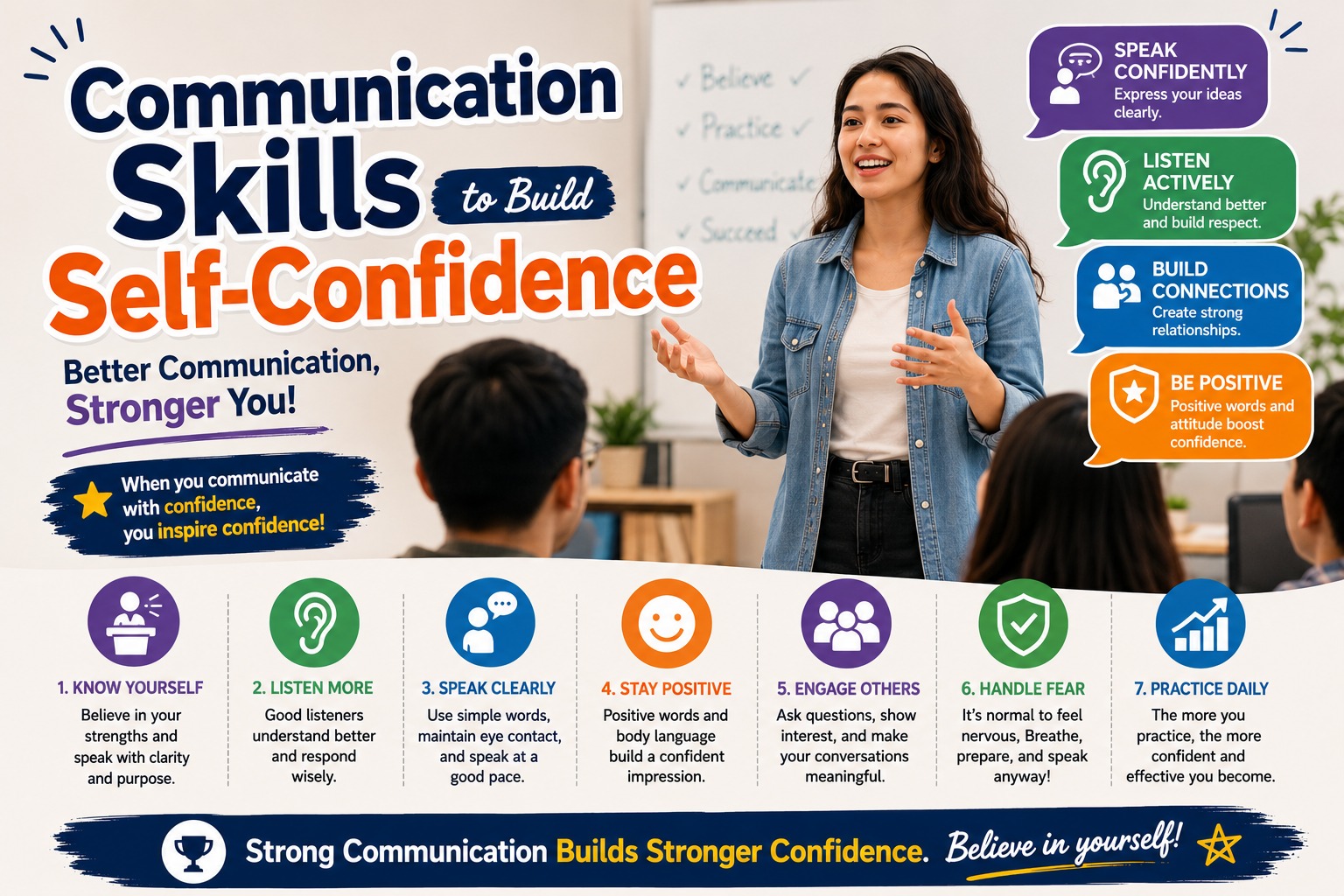
Communicationskills and self-confidence are closely connected. People who communicate clearly and effectively often feel more confident in social, academic, and professional situations. Good communication helps individuals express ideas, share opinions, and interact comfortably with others.
Many people struggle with low confidence because they feel nervous during conversations or fear making mistakes. However, communication skills can be improved through practice and positive habits. As communication abilities grow, self-confidence also increases naturally.
Developing strong communication skills can help people become more confident, active, and successful in everyday life.
WHY COMMUNICATION SKILLS AFFECT SELF-CONFIDENCE
Communication is an important part of daily interaction. When people can express themselves clearly, they usually feel more comfortable and valued during conversations.
Strong communication skills can help individuals:
- Express opinions confidently
- Build better relationships
- Reduce social anxiety
- Improve public speaking abilities
- Handle conversations calmly
- Create positive impressions
People who communicate effectively often feel more prepared and confident in different situations.
PRACTICE SPEAKING REGULARLY
Confidence grows through experience. One of the best ways to improve communication skills is by speaking regularly in daily life.
Simple speaking practice can include:
- Talking with friends and family
- Joining discussions at school or work
- Asking questions during conversations
- Sharing ideas during meetings
- Practicing presentations
The more often people communicate, the more natural and comfortable speaking becomes.
IMPROVE ACTIVE LISTENING
Good communication is not only about speaking. Listening carefully is equally important for building confidence during conversations.
Active listening helps people understand discussions better and respond more appropriately. It also creates stronger connections with others.
To practice active listening:
- Focus on the speaker
- Maintain eye contact
- Avoid interrupting
- Respond thoughtfully
- Show genuine interest
People who listen well often feel more confident because conversations become smoother and more meaningful.
DEVELOP POSITIVE BODY LANGUAGE
Body language strongly affects confidence and communication. Positive body language can make people appear more confident even if they feel nervous inside.
Helpful body language habits include:
- Standing or sitting with good posture
- Maintaining eye contact
- Smiling naturally
- Using hand gestures appropriately
- Avoiding nervous movements
Confident body language improves both self-image and how others respond during conversations.
LEARN TO SPEAK CLEARLY
Speaking clearly can improve communication effectiveness and boost confidence. Using simple language and organized thoughts helps people communicate ideas more easily.
To improve speaking clarity:
- Speak at a calm pace
- Pronounce words clearly
- Avoid speaking too quickly
- Think before responding
- Use simple and direct sentences
Clear communication helps reduce misunderstandings and increases confidence during discussions.
OVERCOME FEAR OF MAKING MISTAKES
Fear of making mistakes often prevents people from speaking confidently. In reality, mistakes are a normal part of learning communication skills.
Even experienced communicators sometimes forget words or feel nervous. The important thing is to continue practicing and learning from experience.
Accepting mistakes as part of personal growth can help people become more relaxed and confident during conversations.
JOIN SOCIAL ACTIVITIES
Participating in social activities is an effective way to improve communication skills and build self-confidence. Joining clubs, organizations, or community events allows people to interact with different individuals and practice communication naturally.
Social interaction helps improve speaking abilities, listening skills, and comfort in group environments. Over time, these experiences strengthen confidence significantly.
Being socially active also helps reduce fear and anxiety during communication.
PRACTICE PUBLIC SPEAKING
Public speaking is one of the most powerful ways to build confidence. Speaking in front of groups may feel difficult at first, but regular practice can improve both communication skills and self-confidence.
Students and professionals can practice by:
- Giving short presentations
- Joining speaking clubs
- Participating in classroom discussions
- Practicing speeches in front of a mirror
Preparation and repetition help reduce nervousness and improve speaking performance.
USE POSITIVE THINKING
Mindset plays an important role in confidence. Negative thoughts such as fear of failure or embarrassment can weaken communication abilities.
Positive thinking helps people focus on improvement instead of fear. Encouraging yourself and recognizing small progress can increase confidence gradually.
Confidence develops faster when people believe in their ability to improve.
STAY CONSISTENT IN PRACTICE
Communication skills and confidence do not improve instantly. Consistent practice is necessary for long-term growth.
Daily conversations, social interaction, and speaking practice can create steady improvement over time. Every communication experience becomes an opportunity to learn and gain confidence.
Patience and persistence are essential for becoming a confident communicator.
CONCLUSION
Communication skills are very important for building self-confidence. Speaking regularly, improving listening abilities, using positive body language, and practicing public speaking can help people feel more comfortable during interactions.
Confidence grows through practice, experience, and positive habits. By developing strong communication skills, individuals can improve relationships, perform better in social situations, and create greater opportunities in life.
About the Author
Gusti Ayu Tita
Author — STEKOM University
An active author focused on academic issues, educational technology, and human resource development in the campus environment.



