
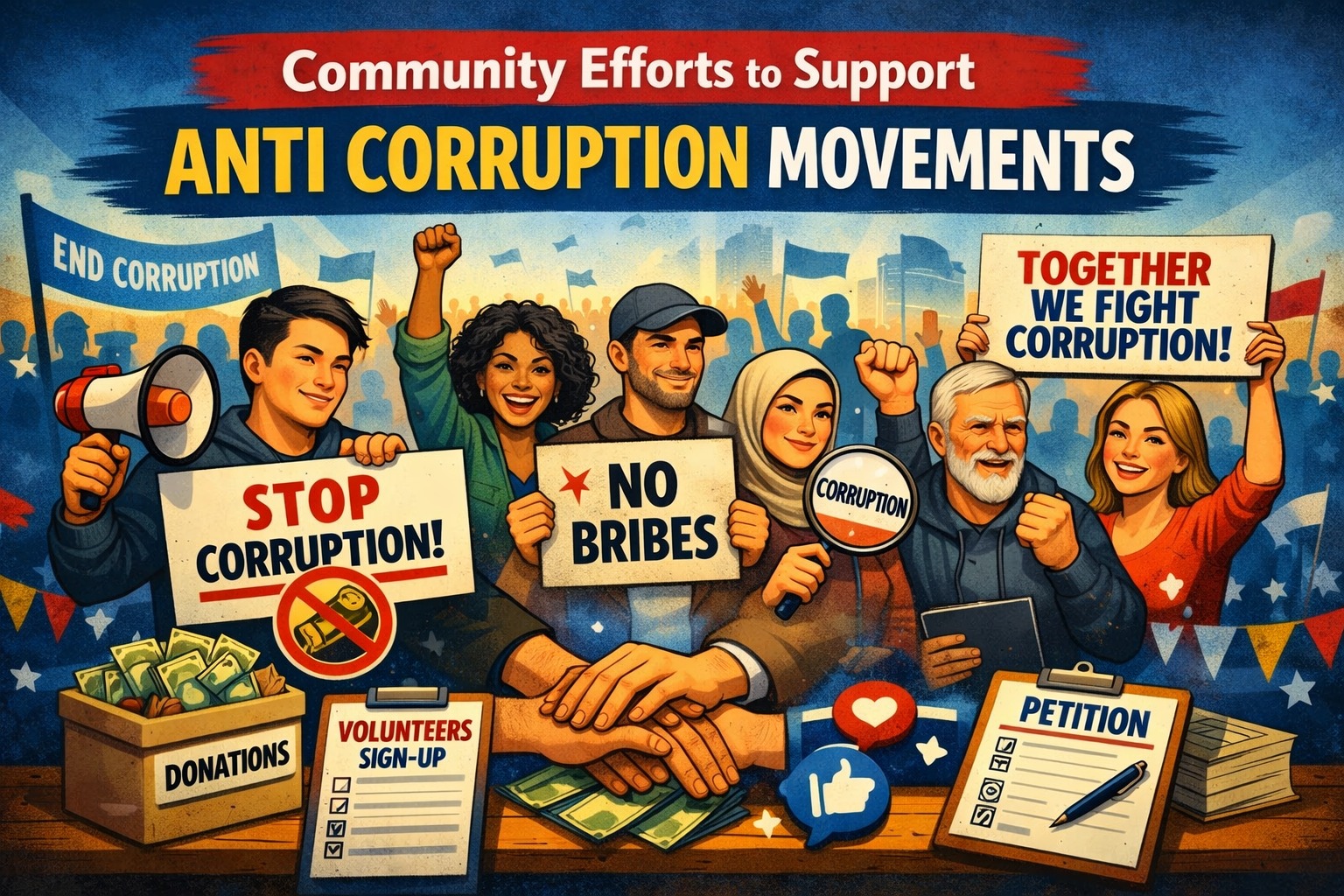
Corruption remains one of the biggest challenges faced by many countries around the world. It weakens public trust, damages economic growth, and creates inequality in society. Governments alone cannot eliminate corruption without active support from citizens. This is why community involvement plays a major role in strengthening anti corruption movements and creating a more transparent society.
Communities that actively promote honesty, accountability, and fairness can help reduce corrupt practices in both public and private sectors. Through education, public participation, and social awareness, people can become powerful agents of change.
THE IMPORTANCE OF COMMUNITY PARTICIPATION
Community participation is essential in fighting corruption because citizens are often the first to witness unethical behavior. When people are aware of their rights and responsibilities, they are more likely to report corruption and support transparent systems.
Public involvement also increases pressure on institutions to maintain integrity. Communities that actively monitor government programs, public spending, and social services can reduce opportunities for misuse of power.
In addition, strong public participation encourages leaders to act responsibly. Officials who know that society is watching are more likely to avoid corrupt actions.
EDUCATION AS A TOOL AGAINST CORRUPTION
Education is one of the most effective ways to build anti corruption values. Schools, universities, and community organizations can teach the importance of honesty, discipline, and responsibility from an early age.
Educational campaigns can help people understand the negative effects of corruption on daily life. When citizens realize that corruption affects healthcare, education, infrastructure, and economic stability, they become more motivated to support reform.
Workshops, seminars, and public discussions are also useful in spreading awareness about ethical behavior and legal consequences related to corruption.
THE ROLE OF YOUTH IN ANTI CORRUPTION MOVEMENTS
Young people have an important role in creating a corruption free future. Youth organizations, student groups, and volunteers often become leaders in social campaigns that promote transparency and accountability.
Social media has also become a powerful platform for younger generations to share information and encourage public awareness. Online campaigns, educational videos, and digital activism can reach millions of people quickly.
By participating in community service and advocacy programs, young people can inspire positive social change and strengthen anti corruption values in society.
COMMUNITY MONITORING AND PUBLIC TRANSPARENCY
Communities can help prevent corruption by monitoring public projects and government activities. Citizens who pay attention to budget allocation and development programs can identify irregularities more easily.
Public transparency encourages open communication between authorities and citizens. Access to public information allows communities to evaluate whether government programs are implemented fairly and effectively.
Community based monitoring groups can also collaborate with journalists and non governmental organizations to expose corrupt practices and support accountability.
BUILDING A CULTURE OF INTEGRITY
Creating a culture of integrity requires cooperation from all levels of society. Families, schools, religious institutions, businesses, and local communities all contribute to shaping ethical values.
Simple actions such as refusing bribery, reporting illegal practices, and promoting fairness can create long term positive impacts. When honesty becomes a shared value, corruption becomes more difficult to sustain.
Communities that prioritize integrity help build stronger institutions and encourage sustainable national development.
CONCLUSION
Community efforts are essential in supporting anti corruption movements. Through education, youth participation, public monitoring, and ethical values, society can play a significant role in reducing corruption and promoting transparency.
Fighting corruption is not only the responsibility of governments or law enforcement agencies. Every individual has the power to contribute to a cleaner, fairer, and more accountable society. By working together, communities can help create a future built on honesty and justice.
About the Author
Gusti Ayu Tita
Author — STEKOM University
An active author focused on academic issues, educational technology, and human resource development in the campus environment.



