
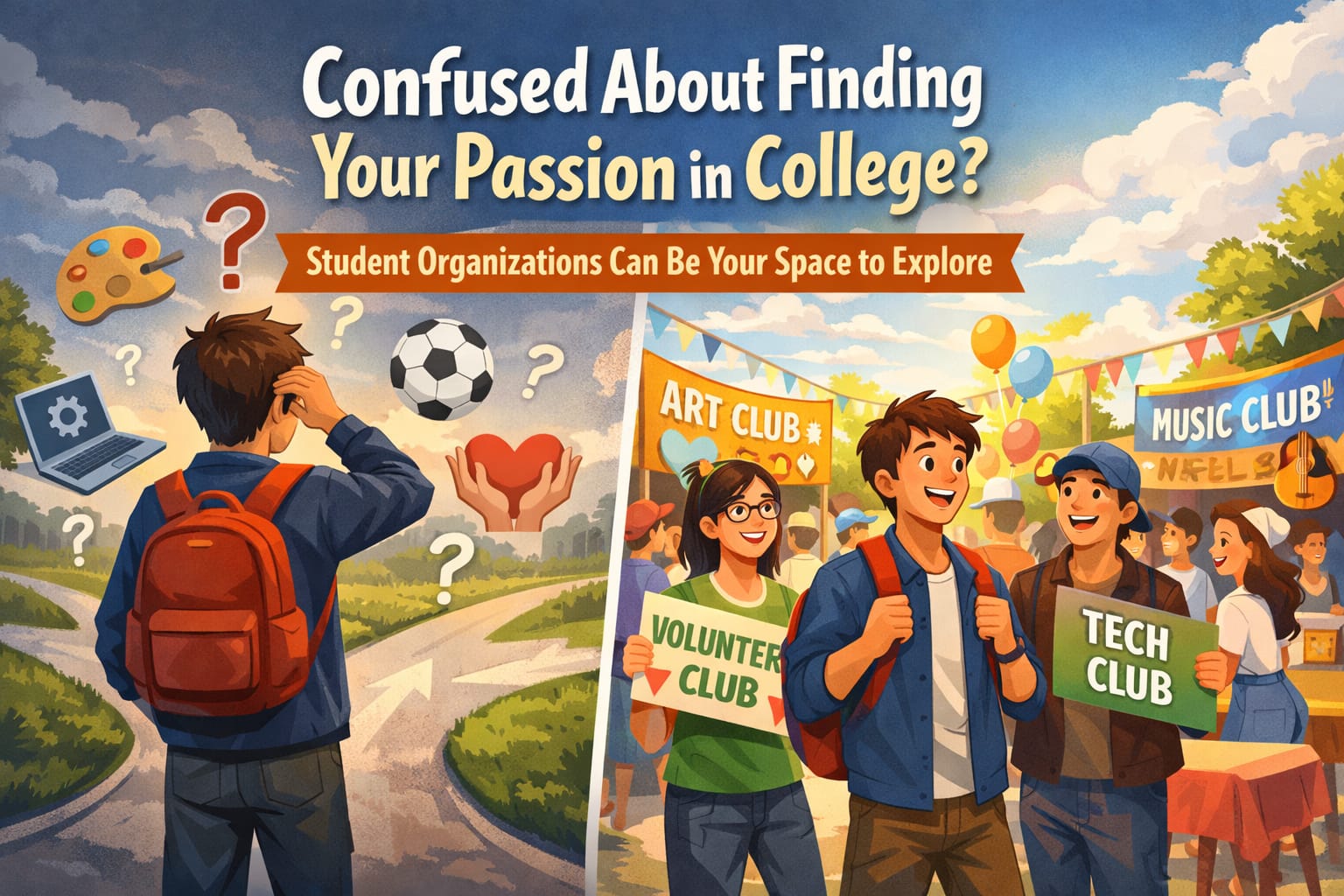
Many students enter college with big hopes and expectations. Some already know what they want to become, but many others feel unsure about their true interests. It is common to feel confused about your passion, especially when you are surrounded by new subjects, different environments, and various life choices. Instead of feeling lost, college should be seen as a time to explore. One of the best ways to do that is by joining student organizations. These communities can help students discover their interests, talents, and future directions.
WHY MANY STUDENTS STRUGGLE TO FIND THEIR PASSION
Not every student enters college with a clear dream. Some choose their major because of family expectations, limited information, or simply following their friends. As a result, they may feel uncertain about what they truly enjoy.
Academic routines can also make things more confusing. Students often focus only on lectures, assignments, and exams. Without exploring activities outside the classroom, they have limited chances to discover what they really like.
This situation can create pressure and anxiety, especially when students start thinking about their future careers.
STUDENT ORGANIZATIONS AS A SPACE FOR EXPLORATION
Student organizations offer a safe and supportive environment for exploration. They provide opportunities for students to try new activities, meet different people, and experience various roles.
There are many types of organizations on campus. Some focus on arts, sports, leadership, technology, social issues, or entrepreneurship. Each organization offers unique experiences that can help students learn more about themselves.
By joining these communities, students can step out of their comfort zones and explore interests they may never have considered before.
DISCOVERING HIDDEN TALENTS AND INTERESTS
Many students find their true passions through experiences, not just academic subjects. A student who joins a photography club might discover a love for visual storytelling. Another who joins a debate team may realize they enjoy public speaking and critical thinking.
These experiences help students recognize their strengths and preferences. Sometimes, a simple activity can open doors to new career paths or lifelong hobbies.
Student organizations give students the chance to experiment without fear of failure. They can try different roles, learn from mistakes, and grow along the way.
BUILDING CONFIDENCE THROUGH ACTIVE PARTICIPATION
Exploring new activities also helps build confidence. When students participate in events, lead projects, or contribute ideas, they start to believe in their abilities.
Confidence grows from experience. The more students try new things, the more they understand what they can do. This self-awareness makes it easier to identify passions and goals.
Student organizations create a supportive environment where members encourage each other. This positive atmosphere helps students feel more comfortable expressing themselves.
CONNECTING PASSION WITH FUTURE OPPORTUNITIES
Finding your passion in college is not only about enjoyment. It can also influence your future career and personal growth.
Through student organizations, students gain real experiences that can guide their career choices. For example, someone active in a business club may develop an interest in entrepreneurship. A student involved in social activities may discover a passion for community work.
These experiences make it easier for students to connect their interests with real-world opportunities.
MAKING COLLEGE A TIME OF SELF-DISCOVERY
College is not just about earning a degree. It is also a time to discover who you are and what you truly care about. Feeling confused about your passion is a normal part of this journey.
Student organizations provide the space, experience, and support needed for exploration. They help students try new things, build confidence, and find direction. By joining these communities, students can turn confusion into clarity and make their college years more meaningful.
About the Author
Gusti Ayu Tita
Author — STEKOM University
An active author focused on academic issues, educational technology, and human resource development in the campus environment.



