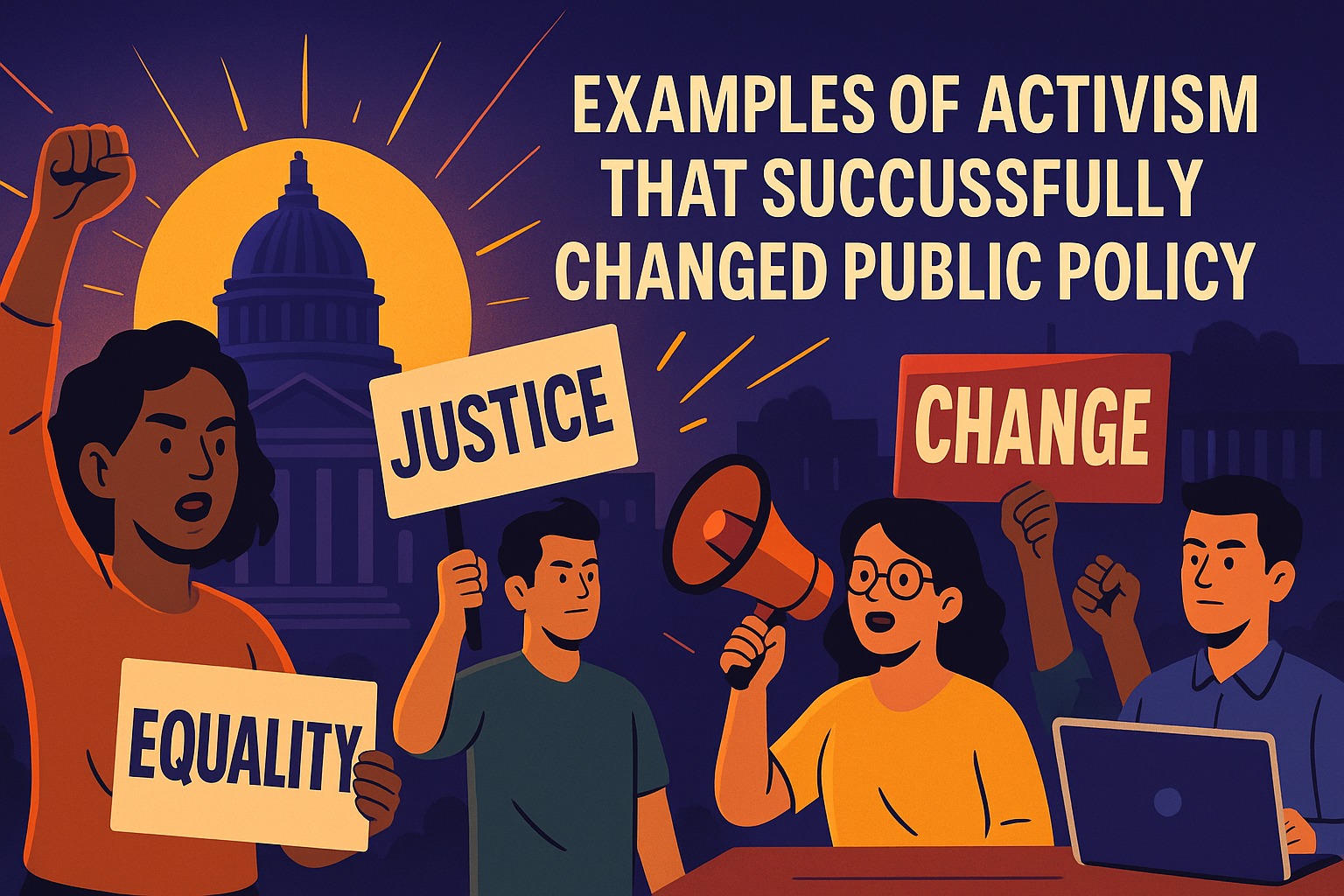
Examples of Activism That Successfully Changed Public Policy
Activism is more than just an act of protest—it is a powerful force that can reshape public policy and drive social progress. Around the world, numerous social movements have proven that the collective voice of the people can pressure governments and institutions to revise or even repeal unjust laws. This article explores several powerful examples of activism that led to meaningful policy change.
What is Activism?
Activism is the proactive effort by individuals or groups to bring about social, political, economic, or environmental change. It can take many forms, including peaceful protests, digital campaigns, petitions, legal advocacy, and cultural movements. The primary goal is to raise awareness and push for policy reform.
Why is Activism Important in Public Policy?
Public policies do not always reflect the interests of all segments of society. This is where activism plays a crucial role—it serves as a balancing voice between the people and those in power. Activism promotes transparency, accountability, and ensures that policies are fair and people-centered.
Successful Examples of Activism That Changed Public Policy
1. The 1998 Reform Movement – Indonesia
This student- and citizen-led movement brought down the New Order regime in Indonesia. One of its greatest achievements was the resignation of President Suharto and the dawn of the reform era. It led to major policy changes such as the amendment of the 1945 Constitution, direct presidential elections, and press freedom.
2. Black Lives Matter Movement – United States
Originating in 2013 and gaining momentum in 2020, this movement demanded justice for Black victims of police violence. As a result, many U.S. states enacted police reforms, including bans on chokeholds and increased funding for community welfare programs.
3. Kamisan Action – Indonesia
Started in 2007, this silent protest is held every Thursday in front of the Presidential Palace, demanding justice for human rights violations. While not all demands have been met, the movement pressured the government to form a Truth and Reconciliation Commission and influenced political discourse during elections.
4. Fridays for Future – Global Climate Movement
Led by Greta Thunberg, this youth-driven climate movement mobilized millions around the world to demand real action against climate change. As a result, several countries implemented stronger green energy policies. The EU, for instance, committed to a net-zero emission target by 2050.
5. Anti-Omnibus Law Protests – Indonesia
Mass protests against the controversial Job Creation Law (UU Cipta Kerja) in 2020–2021 pushed Indonesia’s Constitutional Court to declare the law conditionally unconstitutional. This case highlighted how public pressure can directly influence legislation.
Keys to Effective Activist Movements
- Consistency and Persistence: Like Kamisan, which has lasted over a decade, endurance is essential.
- Strong Organization: Well-structured movements can mobilize support and deliver clear demands.
- Effective Use of Social Media: Digital campaigns help spread awareness rapidly.
- Public and Media Support: The broader the support, the greater the pressure on policymakers.
Conclusion
Activism has consistently proven to be a powerful tool for influencing public policy. Through collective action, people can shape governance and promote social justice. For this reason, it is vital that younger generations remain engaged, not apathetic—taking an active role in defending shared values and community interests.
About the Author
Gusti Ayu Tita
Author — STEKOM University
An active author focused on academic issues, educational technology, and human resource development in the campus environment.