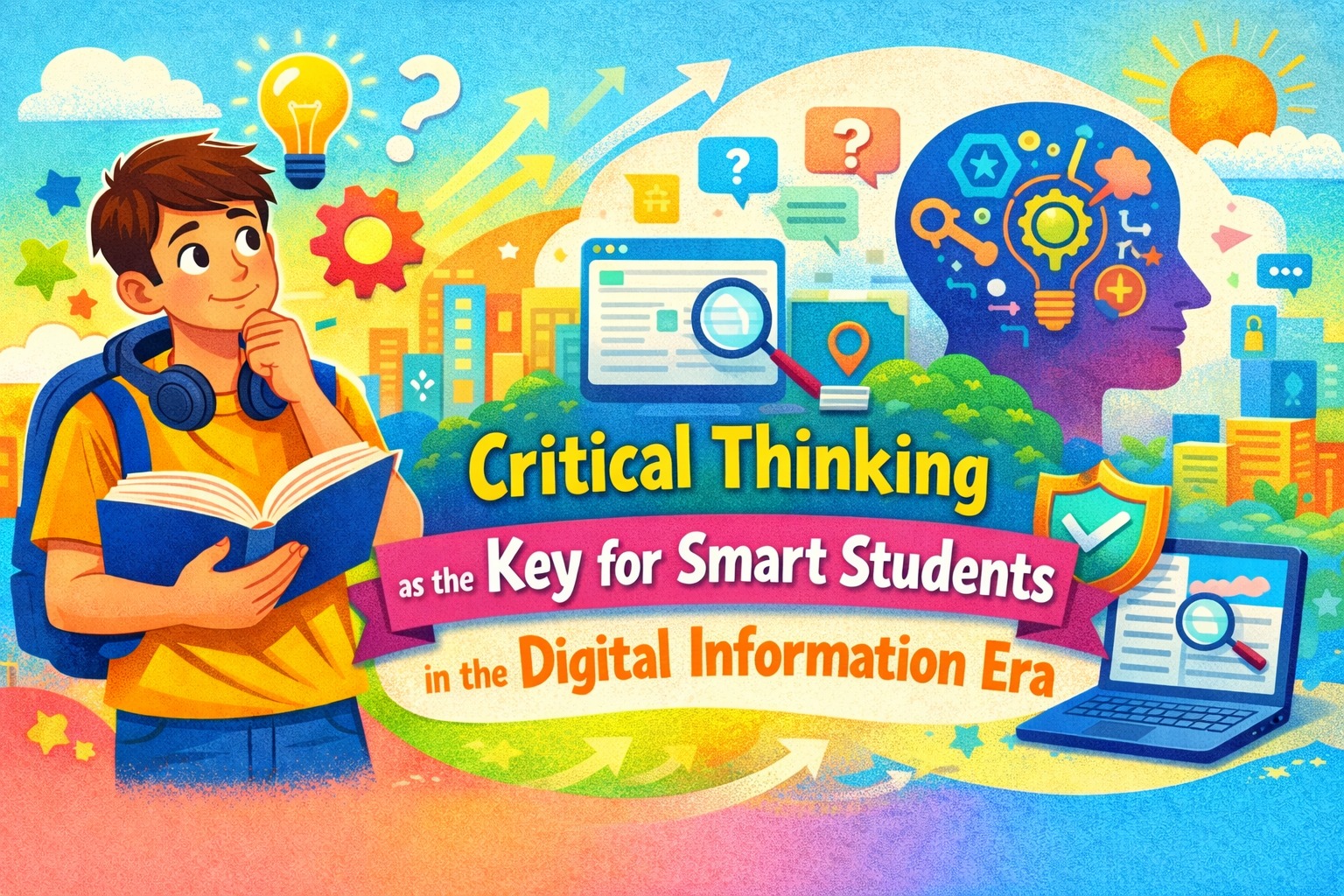
In today’s rapidly evolving digital landscape, students are surrounded by an overwhelming amount of information. From online articles and social media posts to academic databases and digital libraries, knowledge is more accessible than ever before. However, easy access to information also comes with challenges, such as misinformation, biased opinions, and unreliable sources.
For this reason, critical thinking has become an essential skill for students. It helps them analyze information carefully, evaluate different perspectives, and make well-informed decisions. In the digital information era, critical thinking is not only beneficial for academic success but also crucial for personal and professional growth.
UNDERSTANDING CRITICAL THINKING
Critical thinking refers to the ability to analyze, evaluate, and interpret information logically and objectively. Rather than accepting information at face value, individuals with strong critical thinking skills question assumptions, examine evidence, and consider multiple viewpoints before drawing conclusions.
For students, this skill plays a vital role in the learning process. It encourages deeper understanding of academic subjects and helps them develop independent opinions based on facts and logical reasoning.
THE IMPORTANCE OF CRITICAL THINKING IN THE DIGITAL ERA
The digital era provides students with unlimited access to information through the internet. While this accessibility is beneficial, it also requires students to be more selective and analytical when consuming information.
Critical thinking enables students to identify credible sources, distinguish facts from opinions, and avoid misinformation. By applying critical thinking skills, students can navigate digital content more effectively and develop a more accurate understanding of the world around them.
HOW CRITICAL THINKING IMPROVES ACADEMIC PERFORMANCE
Students who practice critical thinking tend to perform better academically. Instead of memorizing information, they analyze concepts, connect ideas, and apply knowledge to real-life situations.
This ability is particularly valuable when completing assignments, participating in discussions, or conducting research. Critical thinking helps students build strong arguments, solve complex problems, and produce higher-quality academic work.
STRATEGIES FOR DEVELOPING CRITICAL THINKING SKILLS
Developing critical thinking requires continuous practice and an open mindset. Students can strengthen their critical thinking abilities by asking questions, seeking diverse perspectives, and analyzing different sources of information.
Reading academic materials, engaging in discussions, and reflecting on different viewpoints can also help students improve their analytical skills. By practicing these habits regularly, students can become more confident thinkers and better decision-makers.
CONCLUSION
In the digital information era, critical thinking has become a key skill for smart and successful students. It allows them to evaluate information carefully, understand complex issues, and make thoughtful decisions.
As technology continues to transform education and communication, students who develop strong critical thinking abilities will be better prepared to face academic challenges and contribute meaningfully to society. Cultivating this skill today will empower students to become informed, responsible, and innovative individuals in the future.
About the Author
Gusti Ayu Tita
Author — STEKOM University
An active author focused on academic issues, educational technology, and human resource development in the campus environment.