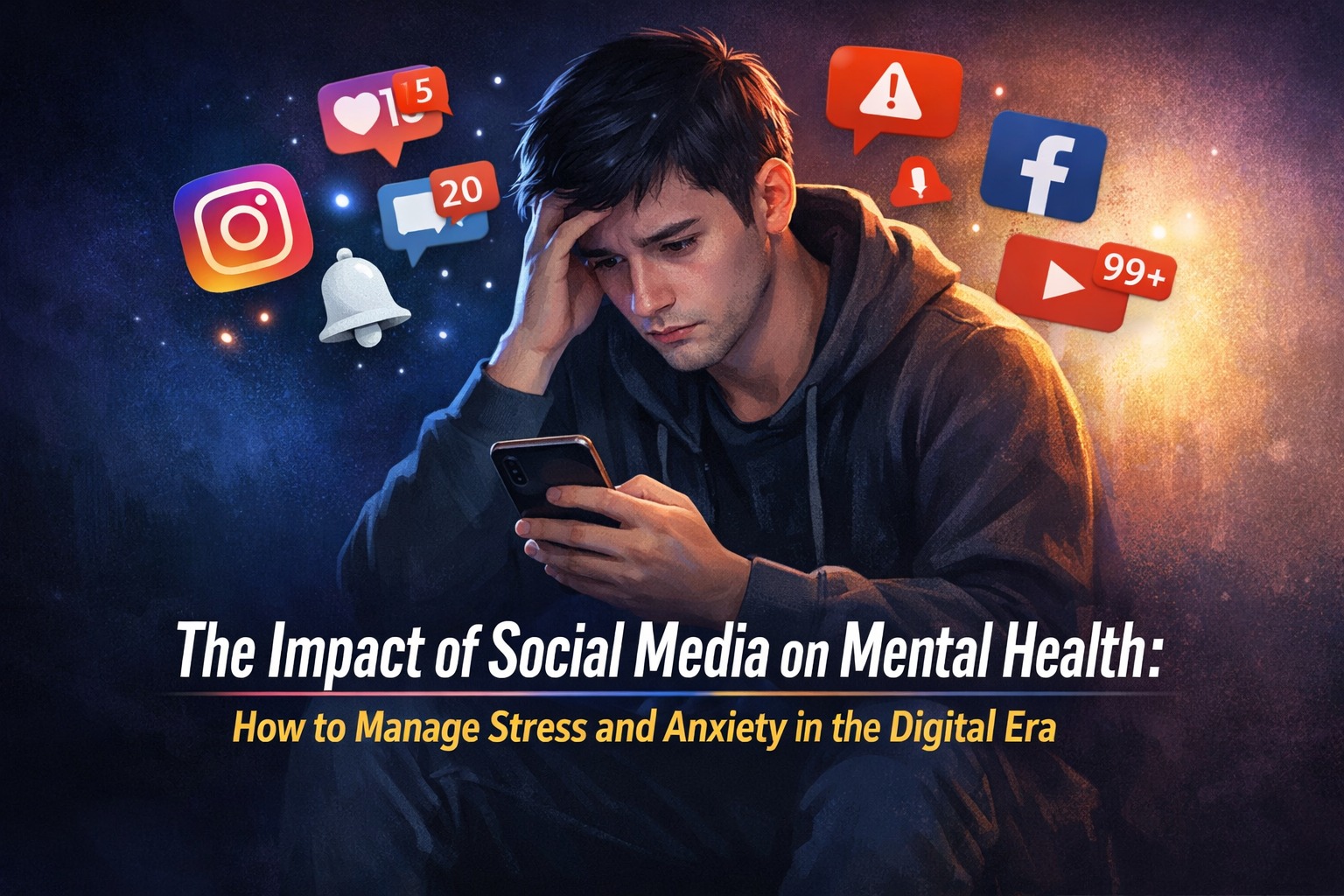
In today’s digital era, social media has become an integral part of everyday life. Platforms such as Instagram, TikTok, Facebook, and YouTube are not only tools for communication, but also spaces for entertainment, education, and information. However, despite its benefits, social media also brings significant impacts on mental health, particularly related to stress, anxiety, and feelings of insecurity.
This article discusses how social media affects mental health, the factors that worsen these conditions, and practical strategies to cope with them.
1. Social Media and Mental Health: A Growing Connection
Research has shown that excessive use of social media is associated with various psychological issues, such as:
- stress
- anxiety
- depression
- social comparison
- social isolation
- sleep disturbances
Constant digital connectivity keeps the brain continuously stimulated, which in the long term can lead to mental strain and emotional exhaustion.
2. Causes of Stress and Anxiety Triggered by Social Media
Several mechanisms make social media a source of stress and anxiety, including:
a. Unrealistic Social Comparison
Viewing other people’s seemingly perfect lives can make individuals feel inadequate, unsuccessful, or unattractive.
b. Pressure to Always Be Online and Responsive
Continuous notifications create a sense of obligation to reply quickly, maintain an online image, and remain constantly active.
c. FOMO (Fear of Missing Out)
The fear of missing information or trends drives people to check social media repeatedly.
d. Cyberbullying and Negative Comments
Harsh criticism or hostile comments can damage self-esteem and increase anxiety.
e. Information Overload
An excess of information—both positive and negative—can overwhelm the mind and cause mental fatigue.
f. Digital Addiction
Endless scrolling can develop into a habit that is difficult to control.
3. Long-Term Impacts on Mental Health
a. Decreased Self-Confidence
Idealized content on social media creates unrealistic standards.
b. Sleep Pattern Disruptions
Screen exposure before bedtime interferes with melatonin production.
c. Reduced Productivity
Social media distractions disrupt focus and concentration.
d. Depression and Feelings of Loneliness
Despite appearing “social,” social media can increase feelings of isolation.
e. Emotional Exhaustion
Notifications, comments, and constant digital demands can drain emotional energy.
4. Why Gen Z and Millennials Are More Vulnerable
Younger generations tend to be more affected because they are:
- more active on social media
- still developing their personal identity
- highly driven by the need for validation
- lacking strong stress-management skills
- facing high academic and social pressure
5. Strategies to Manage Stress and Anxiety in the Digital Era
To maintain mental well-being amid digital overload, the following strategies can be applied:
1. Limit Social Media Usage
- Use screen time monitoring features.
- Set specific times to check notifications.
- Practice digital breaks or detox sessions once a week.
Limiting usage, especially before bedtime, helps maintain better sleep quality.
2. Curate Your Digital Environment
- Unfollow accounts that make you feel inadequate.
- Follow educational and motivational content.
- Avoid toxic or drama-driven accounts.
Remember that mental health is more important than keeping up with trends.
3. Practice Mindfulness and Take Breaks
Simple practices such as:
- five-minute breathing exercises,
- light meditation,
- journaling,
- self-reflection,
can help reduce anxiety and calm the mind.
4. Control the Habit of Self-Comparison
Be aware that:
- social media content only shows highlights,
- many aspects of life are not displayed,
- everyone has a different life journey.
Writing down personal strengths and positive traits can help build self-confidence.
5. Build Real-Life Social Connections
Face-to-face interactions are more meaningful than likes or comments.
- Make time to meet friends,
- communicate with family,
- participate in community activities.
Genuine human connection plays a crucial role in maintaining mental health.
About the Author
Gusti Ayu Tita
Author — STEKOM University
An active author focused on academic issues, educational technology, and human resource development in the campus environment.