
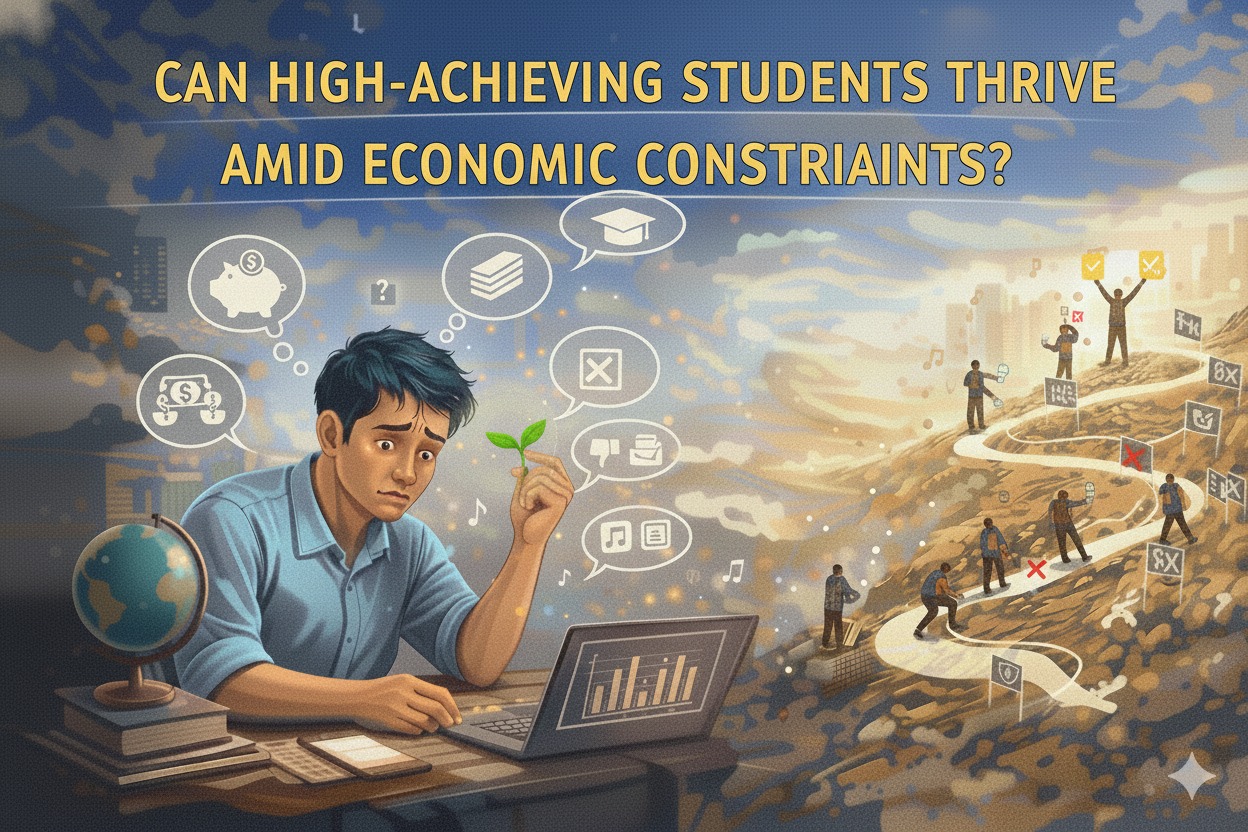
Can High-Achieving Students Grow Amid Economic Limitations?
Education is one of the main tools for creating social equality and better life opportunities. However, amid widening economic inequality, an important question arises: can high-achieving students grow and thrive despite economic limitations? In many countries, including Indonesia, limited economic conditions often become a major barrier preventing children from reaching their full educational potential. This article explores whether students living in economic hardship can still excel, along with the challenges they face and the solutions that can help them achieve their dreams.
1. Economic Inequality and Barriers in Education
Economic inequality remains a major issue in the education sector in Indonesia. Many students living in impoverished or remote areas face serious challenges in accessing quality education. School fees, textbooks, and limited learning facilities are often the biggest obstacles for children from low-income families. Even students who aspire to pursue higher education, such as university, must confront costs that are beyond the reach of many families.
Another critical factor is limited parental support. Parents struggling economically often lack the time or resources to assist their children academically. Some children are even required to help earn a living, further reducing their study time and opportunities for academic growth.
Despite these barriers, many real-life examples show that academic success is not exclusive to students from wealthy families. This raises the question of how high-achieving students can still thrive despite economic limitations.
2. Hidden Potential in Every Student
One important understanding is that every student, regardless of economic background, possesses great potential. This potential is not always reflected in academic scores alone but also in creativity, perseverance, and the ability to overcome challenges. Many students continue to grow and succeed despite difficult life circumstances.
Intelligence is not solely about answering exam questions; it also includes creative thinking, problem-solving, and adaptability. Students from underprivileged backgrounds often develop strong resilience, self-learning abilities, and determination—forms of intelligence that may not always be visible in the classroom.
In some cases, economic limitations even encourage students to become more independent and resourceful. Without access to private tutoring or expensive books, they seek alternative learning resources such as public libraries, online materials, or peer discussions. These experiences often shape them into resilient individuals capable of facing adversity.
3. Challenges Faced by High-Achieving Students from Low-Income Families
Despite their potential, students from low-income families still face significant challenges, including:
* Limited Access to Quality Educational Facilities: Schools in economically disadvantaged areas often lack proper classrooms, learning tools, and internet access, limiting students’ opportunities to develop their skills fully.
* Time and Energy Constraints: Many students must work to support their families, reducing their time to study or rest, which negatively affects academic performance.
* Psychological Challenges: Financial hardship often brings stress and emotional pressure. Concerns about the future, family finances, and lack of emotional support can weaken focus and motivation.
4. Inspiring Stories: High-Achieving Students from Poor Families
Despite these challenges, there are many inspiring stories of students who excel despite poverty. In Indonesia, numerous students have successfully pursued higher education through scholarships or support from social institutions.
One example is Siti, a student from a remote village in West Java. Despite her family’s financial difficulties, she demonstrated remarkable perseverance. She used available resources, such as internet cafés, to study beyond school materials. Eventually, she earned a scholarship to attend a prestigious university. Stories like Siti’s prove that determination and a strong learning spirit can lead to outstanding achievements, regardless of economic background.
5. Supporting High-Achieving Students from Low-Income Families
To ensure that high-achieving students from underprivileged families can grow and succeed, several measures must be taken by governments, communities, and the private sector:
* Improving Access to Free and Quality Education: Governments must ensure that all children have access to quality education at all levels, regardless of economic background.
* Scholarships and Educational Assistance: Scholarship programs should be expanded for high-achieving students from low-income families. Support such as book subsidies, school supplies, and digital devices can significantly enhance learning.
* Strengthening Psychosocial Support: Beyond financial aid, students need emotional and psychological support. School counseling programs and life-skills training can help build mental resilience.
Conclusion
High-achieving students can indeed grow and succeed despite economic limitations, as long as they have access to proper education and a supportive environment. Although the challenges are substantial, perseverance, resilience, and intelligence enable these students to achieve remarkable success. Therefore, it is essential for all stakeholders to work together to create a more inclusive education system that provides equal opportunities for all children, regardless of economic background. By doing so, talented students from underprivileged families can reach their dreams and contribute meaningfully to society.
About the Author
Gusti Ayu Tita
Author — STEKOM University
An active author focused on academic issues, educational technology, and human resource development in the campus environment.



