When the System Calls You “Strong,” but You Are Actually Just Surviving
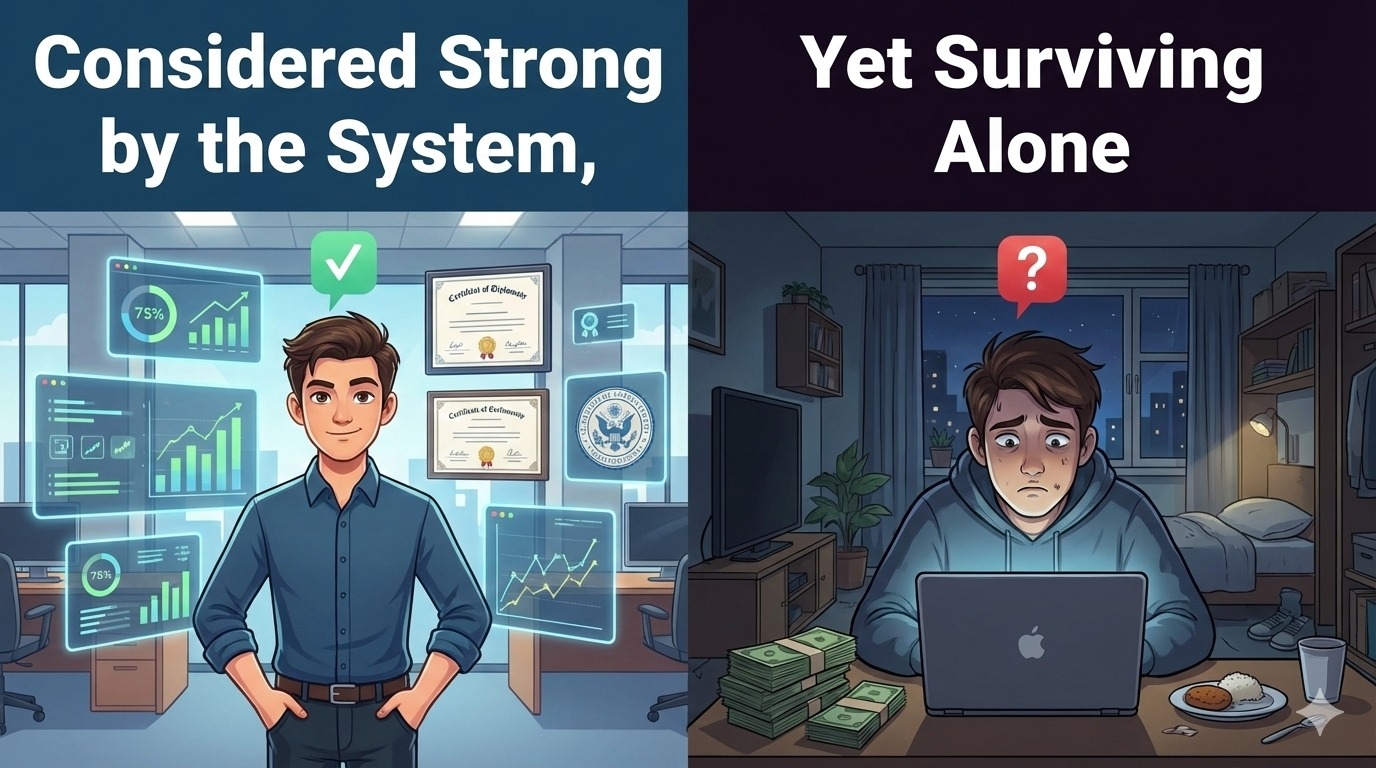
In many modern systems of life, a person is often judged by how well they can endure. As long as they show up, keep working, and continue meeting targets, they are considered fine. Few people ask what they are truly feeling behind the routine. From this reality emerges a harsh truth: many individuals are seen as strong by the system, while in fact they are silently surviving under invisible pressure.
The label “strong” often becomes a double-edged sword. On one hand, it sounds like praise. On the other, it becomes a reason to ignore someone’s emotional needs. The system keeps moving, demands never stop, and people are forced to adapt without space to complain.
The Meaning of “Strong” Through the System’s Lens
From the system’s perspective, being strong means being able to keep going without disruption. As long as someone does not stop, resist, or slow the process, they are considered capable. This definition is highly mechanical and often overlooks human complexity.
In education, work, and social life, strength is commonly measured by outcomes. Grades, targets, productivity, and achievements become the main indicators. Feelings of exhaustion, anxiety, or pressure are excluded from consideration, as long as performance appears unaffected.
Surviving Alone Under Constant Demands
Many people eventually choose silence and survive on their own. They learn to hide fatigue, suppress emotions, and normalize pain just to continue functioning according to the system’s expectations. In the short term, this may seem effective. In the long run, however, suppressed pressure slowly erodes mental health.
Those who are labeled as “strong” often experience:
* Feeling unworthy of complaining because they are seen as capable
* Fear of being perceived as weak if they show struggle
* Habitually carrying problems without emotional support
This condition deepens isolation. The longer they endure, the harder it becomes to ask for help, as the image of being “strong” has already been attached to them.
The Culture of Silence and the Normalization of Exhaustion
A culture of silence worsens the situation. Many environments subtly teach that exhaustion is part of the struggle, and complaining is viewed as a lack of gratitude. As a result, mental fatigue is normalized and not treated as a serious issue.
In such conditions, a person may appear fine on the outside but fragile within. Smiles become masks, busyness becomes an escape, and loneliness turns into a quiet survival space. Unconsciously, the system continues to benefit while individuals continue to sacrifice themselves.
Invisible Psychological Impacts
Pressure that is constantly suppressed does not simply disappear. It may manifest as emotional exhaustion, loss of motivation, sleep disturbances, or a deep sense of emptiness that is hard to explain. When left unaddressed, these conditions can lead to burnout and a loss of direction.
Ironically, it is often only when someone finally collapses that the system realizes the “strength” it admired was merely survival, not well-being. Unfortunately, this realization often comes too late.
Rehumanizing Individuals Within the System
Change must begin with how we view people within the system. Strength should not only mean the ability to endure, but also the ability to recognize personal limits and receive support when needed. A healthy system provides space for pause, dialogue, and recovery.
A caring environment can serve as an essential support system. When individuals feel safe to be honest about their condition, burdens no longer have to be carried alone. Sustainability, then, is built not on silent sacrifice, but on balance between demands and humanity.
Conclusion
Being labeled as strong by the system does not always mean truly being strong. Many individuals are simply surviving alone amid relentless demands. Recognizing this reality is the first step toward building a more humane system. When strength is understood as the courage to be honest, to ask for help, and to protect mental health, people are no longer just cogs in a machine, but human beings who are genuinely valued.
About the Author
Gusti Ayu Tita
Author — STEKOM University
An active author focused on academic issues, educational technology, and human resource development in the campus environment.