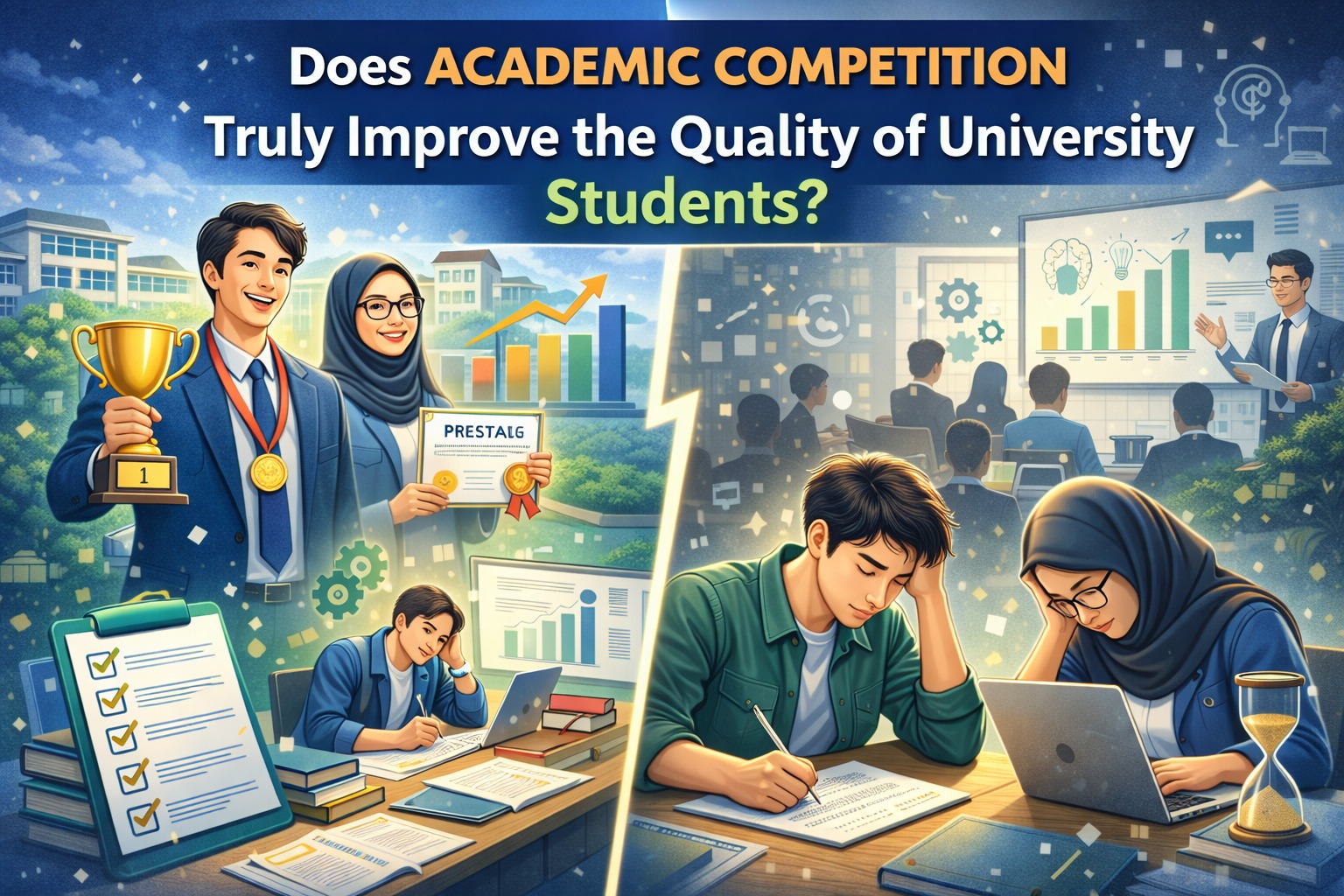
Academic competition has long been a central feature of higher education. From scholarship selections to GPA rankings and innovation contests, universities often use competitive systems to motivate students. But the key question remains: does academic competition truly improve the quality of university students?
To answer this, we need to explore both the advantages and the potential drawbacks of academic competition in the university environment.
Understanding Academic Competition in Universities
Academic competition refers to situations where students strive to outperform their peers in areas such as grades, research output, presentations, internships, and scholarships. Universities may rank students based on GPA, select the best projects for awards, or offer limited spots in prestigious programs.
In theory, competition encourages students to push their limits. However, the impact on student quality depends on how the competition is structured and managed.
The Positive Impact of Academic Competition
1. Increases Motivation and Effort
One of the strongest arguments in favor of academic competition is that it increases motivation. When students know that rewards such as scholarships, internships, or academic recognition are limited, they tend to work harder.
Competition can:
- Encourage consistent study habits
- Improve time management skills
- Increase participation in academic activities
As a result, students may develop stronger discipline and responsibility, which are essential qualities for academic and professional success.
2. Encourages Skill Development
Healthy academic competition pushes students to improve not only their knowledge but also their soft skills.
For example:
- Presentation competitions enhance public speaking skills
- Research competitions strengthen analytical thinking
- Group projects improve teamwork and leadership
When students strive to be better than their peers, they often invest more effort in mastering both academic and practical skills.
3. Prepares Students for Real-World Challenges
The professional world is competitive. Job markets, promotions, and business environments often require individuals to compete for limited opportunities. Academic competition can simulate these real-world conditions.
Students who experience structured competition at university may become more resilient, confident, and adaptable. They learn how to handle pressure, accept feedback, and recover from failure.
The Negative Side of Academic Competition
Despite its benefits, academic competition can also create problems if not managed properly.
1. Increased Stress and Anxiety
Excessive competition may lead to high levels of stress. When students feel constant pressure to outperform others, they may experience anxiety, burnout, or even a decline in mental health.
Instead of focusing on learning, students might focus only on grades. This shift can reduce intrinsic motivation and turn education into a race rather than a process of growth.
2. Reduced Collaboration
Universities are not only places for individual achievement but also for collaboration. Overly competitive environments can discourage teamwork. Students may become reluctant to share knowledge or help others if they see classmates as rivals.
This can limit the development of empathy, cooperation, and social skills, which are equally important in professional life.
3. Risk of Unethical Behavior
In extreme cases, intense academic competition may push students toward academic dishonesty, such as cheating or plagiarism. When performance is valued more than integrity, the overall quality of education may decline.
Therefore, competition must be balanced with strong ethical values and supportive academic systems.
So, Does Academic Competition Truly Improve Student Quality?
The answer is not simply yes or no. Academic competition can improve the quality of university students—but only when it is healthy and well-managed.
Healthy competition:
- Focuses on personal growth, not just rankings
- Encourages collaboration alongside achievement
- Supports students’ mental well-being
- Rewards effort and creativity, not only final results
When universities create a balanced environment that promotes both excellence and cooperation, competition becomes a tool for development rather than pressure.
Conclusion
Academic competition has the potential to enhance student quality by increasing motivation, improving skills, and preparing students for future challenges. However, if it becomes excessive or unhealthy, it can lead to stress, reduced collaboration, and ethical issues.
Ultimately, the true improvement in student quality depends on how competition is implemented. Universities should aim to foster a culture where students compete to grow—not to defeat one another. In such an environment, academic competition becomes a positive force that supports both academic excellence and personal development.
About the Author
Gusti Ayu Tita P
Author — STEKOM University
An active author focused on academic issues, educational technology, and human resource development in the campus environment.