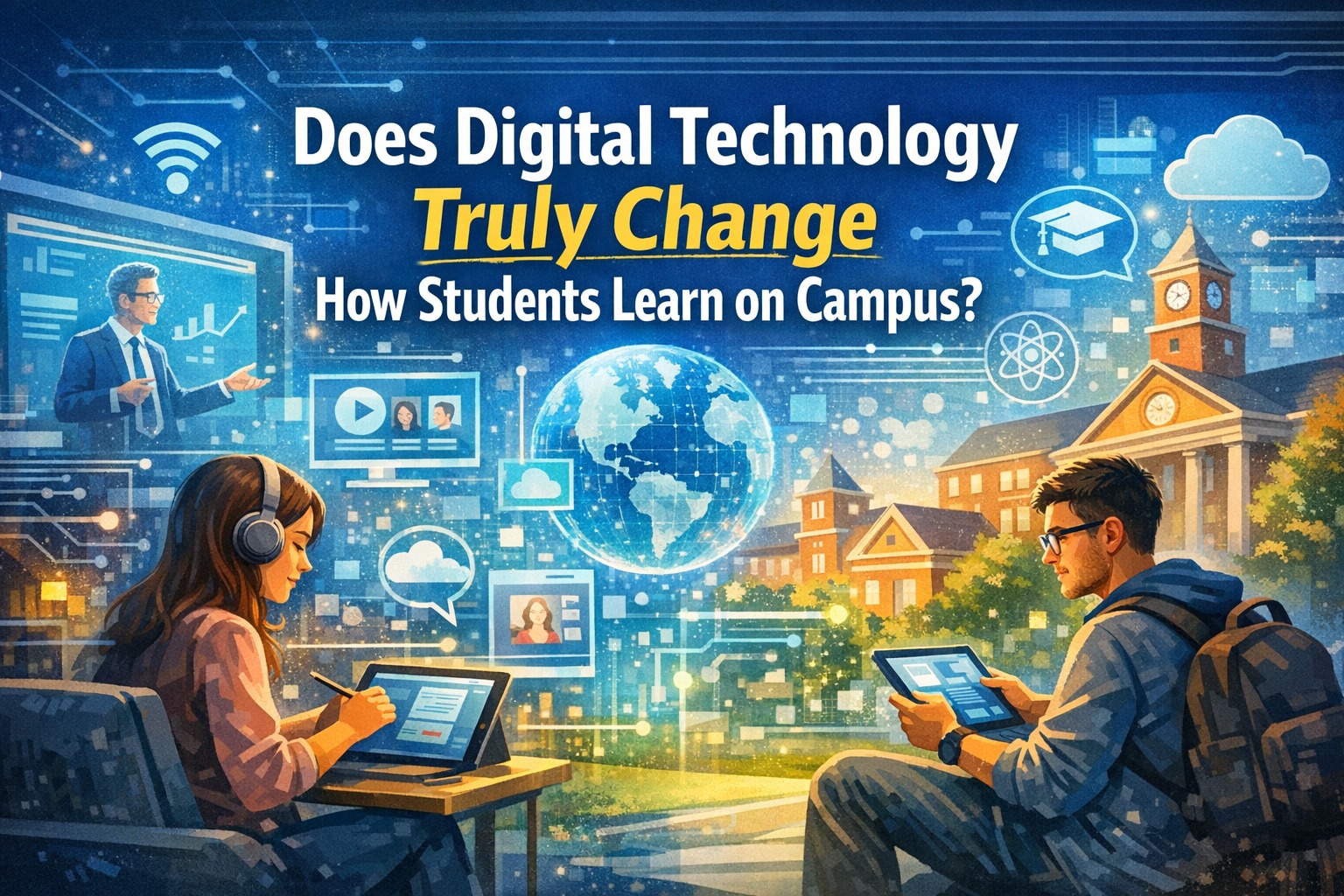
In recent years, digital technology has become an inseparable part of higher education. From online learning platforms to artificial intelligence tools, technology is reshaping the academic environment in ways that were unimaginable a decade ago. However, an important question remains: does digital technology truly change how students learn on campus, or does it simply enhance existing methods?
THE SHIFT FROM TRADITIONAL TO DIGITAL LEARNING
Traditionally, learning on campus relied heavily on face-to-face lectures, printed materials, and physical interaction between students and lecturers. Today, digital technology introduces a more flexible and accessible learning system. Learning management systems, video lectures, and digital libraries allow students to access information anytime and anywhere.
This shift does not completely replace traditional learning but transforms it into a hybrid model. Students can now review recorded lectures, participate in online discussions, and access a vast range of academic resources with just a few clicks. As a result, learning becomes more efficient and personalized.
ENHANCED ACCESS TO INFORMATION
One of the most significant impacts of digital technology is the ease of accessing information. Students are no longer limited to textbooks or campus libraries. Instead, they can explore academic journals, research databases, and educational videos from around the world.
This abundance of information encourages students to become more independent learners. They are required to evaluate sources, compare perspectives, and synthesize knowledge. Consequently, digital technology promotes critical thinking and deeper understanding when used effectively.
CHANGES IN LEARNING BEHAVIOR
Digital technology also influences how students approach learning. Many students now prefer interactive and visual content such as videos, infographics, and simulations over traditional text-based materials. This shift can increase engagement and motivation, especially for complex subjects.
However, it also presents challenges. The constant availability of digital devices can lead to distractions, such as social media and entertainment. Therefore, students must develop self-discipline and time management skills to maintain focus in a digital learning environment.
THE ROLE OF LECTURERS IN THE DIGITAL ERA
With the integration of technology, the role of lecturers is evolving. They are no longer the sole source of information but act as facilitators who guide students in navigating digital resources. Lecturers are also expected to design interactive and meaningful learning experiences using technology.
This transformation requires educators to continuously adapt and improve their digital literacy. Effective use of technology in teaching can enhance student engagement, collaboration, and overall learning outcomes.
DOES TECHNOLOGY TRULY CHANGE LEARNING?
Digital technology does not fundamentally change the purpose of learning, which is to gain knowledge and develop skills. However, it significantly changes the process. Learning becomes more flexible, personalized, and interactive. Students are more involved in their own learning journey, rather than being passive recipients of information.
In conclusion, digital technology truly changes how students learn on campus, not by replacing traditional methods entirely, but by transforming and enhancing them. The key lies in how technology is used—when applied wisely, it can create a more effective and meaningful learning experience.
About the Author
Gusti Ayu Tita
Author — STEKOM University
An active author focused on academic issues, educational technology, and human resource development in the campus environment.