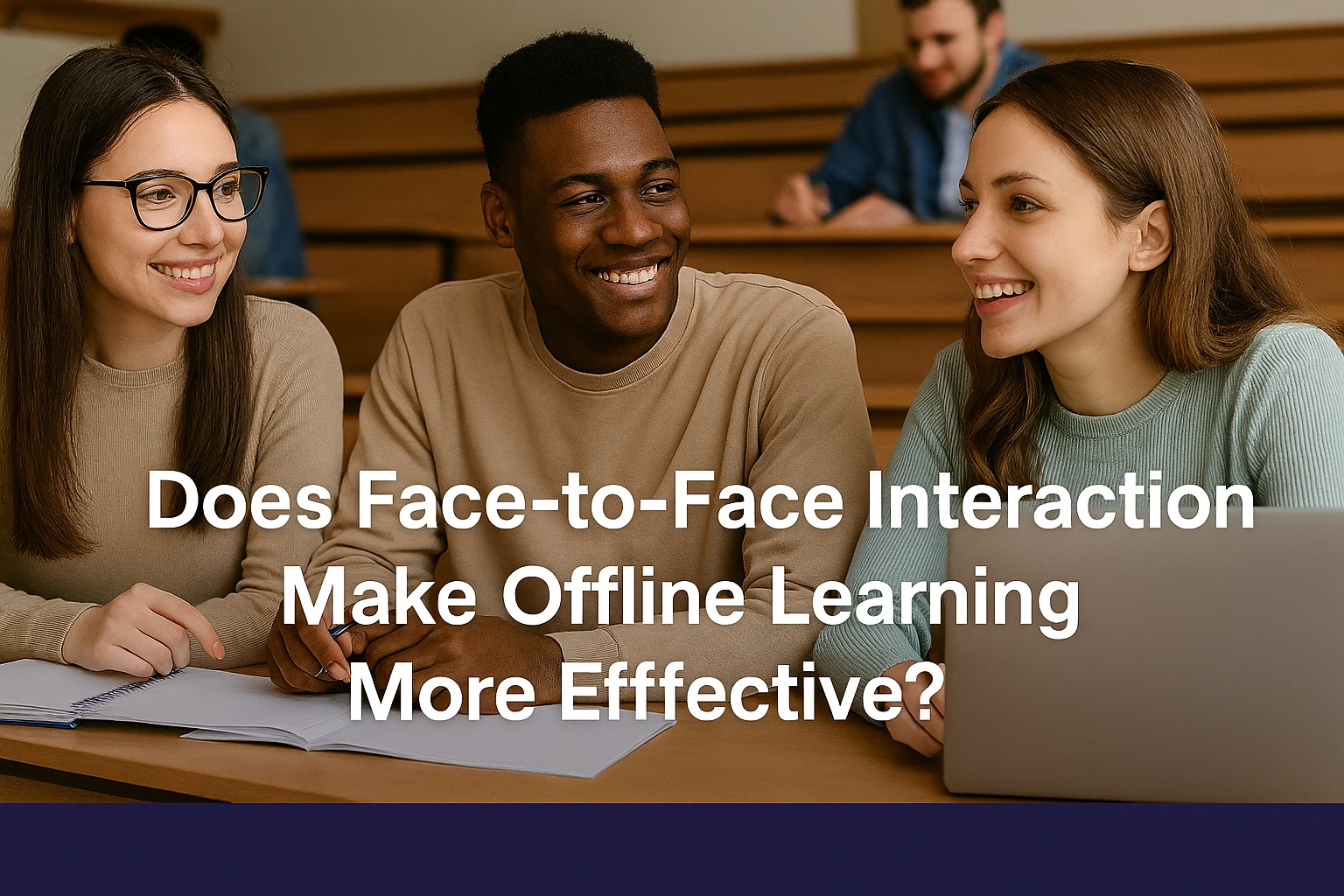
In an era where digital platforms dominate communication and education, traditional classroom learning continues to hold a strong presence. While online education offers flexibility and accessibility, many educators and students still believe that offline learning is more effective because of direct, face to face interaction. This raises an important question: does in-person communication truly make offline learning more effective?
To understand the answer, it is necessary to explore how face to face interaction influences comprehension, engagement, motivation, and overall learning outcomes.
DIRECT COMMUNICATION AND IMMEDIATE FEEDBACK
One of the greatest strengths of offline learning is the ability to communicate directly with teachers and classmates. In a physical classroom, students can ask questions spontaneously and receive immediate clarification. Teachers can also adjust their explanations by observing students’ facial expressions and body language.
This real-time feedback helps prevent misunderstandings from developing into long-term confusion. When students struggle with a concept, instructors can quickly provide alternative explanations, examples, or demonstrations. This dynamic exchange often strengthens understanding and builds confidence.
In contrast, online learning may involve delays in communication, especially in asynchronous classes. Although virtual tools allow interaction, the experience may not feel as natural or responsive as in-person discussion.
STRONGER STUDENT ENGAGEMENT
Face to face interaction encourages active participation. Classroom discussions, debates, and group projects create an interactive environment that stimulates critical thinking. Students are more likely to stay focused when they are physically present in a learning space designed for education.
Additionally, social presence plays a significant role in maintaining attention. The awareness that teachers and peers are physically nearby often increases accountability. This sense of responsibility can motivate students to engage more deeply with the material.
However, engagement also depends on teaching methods. Even in offline settings, passive lectures may reduce participation if not delivered effectively.
SOCIAL AND EMOTIONAL CONNECTIONS
Offline learning supports the development of interpersonal relationships. Students build friendships, collaborate in teams, and develop communication skills through direct interaction. These social experiences contribute to emotional well-being and create a supportive learning environment.
Emotional connection with teachers can also enhance motivation. When students feel understood and encouraged, they are more likely to participate actively and persist through academic challenges.
Online learning environments attempt to replicate these connections through video calls and discussion forums. While technology helps bridge the gap, some learners still find digital interaction less personal compared to in-person communication.
LIMITATIONS AND CONSIDERATIONS
Although face to face interaction offers clear benefits, offline learning is not without limitations. Fixed schedules, commuting time, and geographical barriers can reduce accessibility. Meanwhile, online learning provides flexibility and access to diverse digital resources that can also enhance effectiveness.
The impact of face to face interaction ultimately depends on the learner’s preferences, subject matter, and instructional quality. Practical subjects that require demonstrations and hands-on practice may benefit more from offline settings, while theoretical courses may adapt well to online formats.
CONCLUSION
Face to face interaction plays a significant role in making offline learning effective. Direct communication, immediate feedback, and strong social connections contribute to deeper understanding and higher engagement. However, effectiveness is not determined solely by physical presence. Teaching quality, student motivation, and appropriate learning strategies are equally important.
In today’s educational landscape, combining the strengths of both offline and online learning may offer the most balanced and effective approach.
About the Author
Gusti Ayu Tita P
Author — STEKOM University
An active author focused on academic issues, educational technology, and human resource development in the campus environment.