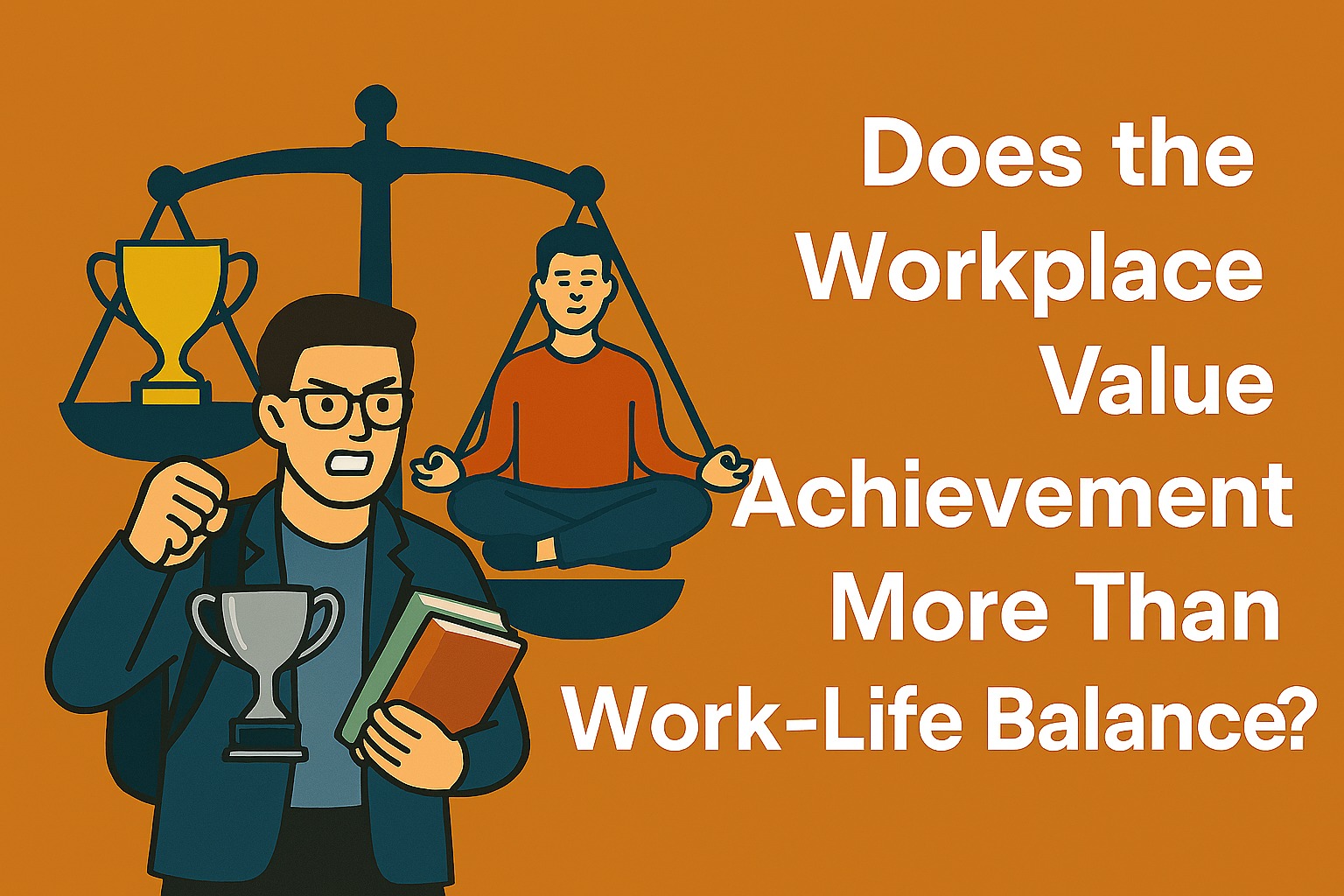
In recent years, discussions about the workplace have no longer focused solely on achievement and target accomplishment. The issue of work–life balance has also become increasingly prominent, especially among younger generations entering the professional world. So, the question is: does the workplace value achievement more, or work–life balance?
This topic is important because many students and fresh graduates feel they must choose between being highly results-oriented or maintaining a stable mental and emotional quality of life.
THE MEANING OF ACHIEVEMENT IN THE WORKPLACE
Achievement in the workplace is generally measured by target accomplishment, productivity, contribution to the company, and the ability to complete tasks with optimal results. Employees who exceed expectations often receive appreciation in the form of promotions, bonuses, or professional recognition.
Companies fundamentally need individuals who can create a tangible impact. Therefore, being results-oriented remains an important factor in performance evaluation. However, achievement does not always mean working endlessly. Good performance often comes from effective and efficient work strategies, not merely long working hours.
THE IMPORTANCE OF WORK–LIFE BALANCE FOR EMPLOYEES
On the other hand, work–life balance has become a major focus in modern work culture. Many companies have realized that employees who are physically and mentally healthy tend to be more productive in the long term.
Work–life balance includes a proportional division of time between work, family, and personal time. When individuals have space to rest and develop themselves, stress levels can be reduced.
Without balance, the risk of burnout increases. Prolonged exhaustion can decrease work quality and even affect health.
THE SHIFT IN MODERN CORPORATE MINDSET
As times evolve, many companies have begun changing their approach to employee management. Work flexibility, hybrid systems, and attention to mental health are now part of strategies to retain top talent.
This shows that the workplace no longer values achievement alone but also considers employee well-being. Companies understand that long-term productivity cannot be separated from stable mental and physical conditions.
In other words, achievement remains important, but it must be built on a foundation of healthy work–life balance.
FINDING THE BALANCE BETWEEN ACHIEVEMENT AND WELL-BEING
Rather than choosing one over the other, the best approach is to combine both. Achievement without balance can lead to exhaustion. Conversely, balance without commitment to results can hinder career growth.
Individuals who can manage their time well, set priorities, and maintain boundaries between work and personal life are usually better able to sustain long-term performance.
This is where time management, discipline, and self-awareness play crucial roles.
CONCLUSION
Does the workplace value achievement more or work–life balance? The answer is that both are equally important. Achievement remains a primary indicator of professional contribution, but work–life balance is key to maintaining sustainable performance quality.
The modern workplace increasingly recognizes that success is not measured solely by short-term results, but also by the ability to maintain stability throughout one’s career journey. Therefore, building healthy and sustainable achievement is the best strategy for professional success.
About the Author
Gusti Ayu Tita
Author — STEKOM University
An active author focused on academic issues, educational technology, and human resource development in the campus environment.