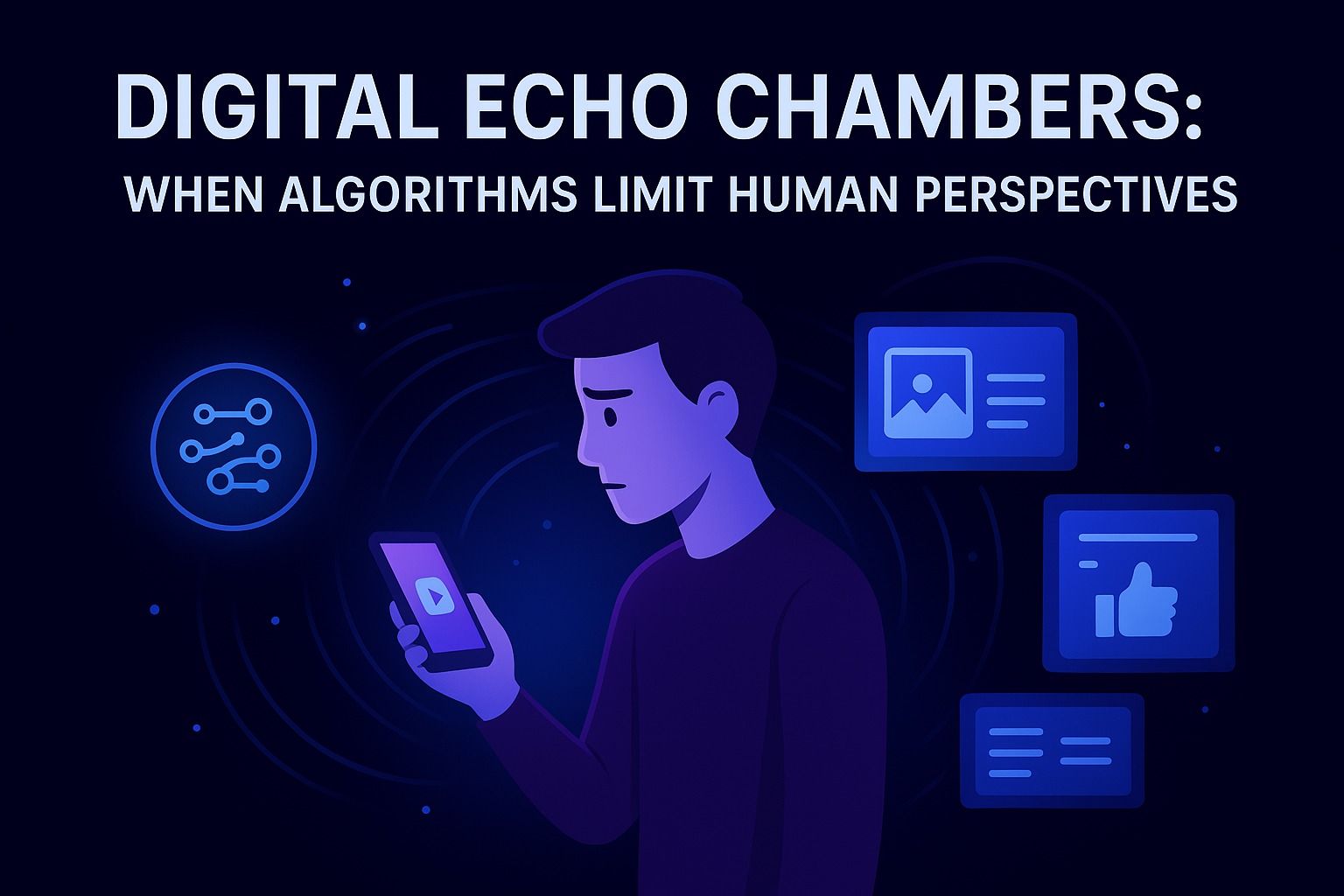
In an era where everyone is connected through screens, algorithms have become the gatekeepers that determine what we see, read, and believe. This phenomenon gives rise to the digital echo chamber—a condition in which individuals are exposed only to information that aligns with their existing views. Its impact extends beyond user behavior, influencing how societies form collective opinions. This article explores how echo chambers are formed, their risks, and how we can break free from these increasingly narrow circles of perspective.
WHAT IS A DIGITAL ECHO CHAMBER
A digital echo chamber is an information space created when platform algorithms deliver content that matches a user’s preferences, habits, and interactions. While this system is designed to create a more personalized experience, it also carries the consequence of narrowing perspectives.
Users who frequently engage with certain topics will continually receive similar content. Over time, exposure to differing viewpoints becomes increasingly rare. As a result, the digital environment begins to resemble an echo—repeating the same opinions without variation.
HOW ALGORITHMS CREATE A CLOSED LOOP
Algorithms analyze user behavior—likes, shares, watch time, and search history—to predict the content that will most likely keep users on the platform. Several mechanisms reinforce the formation of echo chambers:
1. Excessive personalization
To maintain user engagement, algorithms push content that aligns with individual preferences. The more frequently a person interacts with a certain topic, the more often it appears, creating an increasingly narrow loop.
2. Filter bubbles
This concept describes situations in which users receive only information filtered according to their preferences and attitudes. Contradicting information is automatically excluded, making it difficult for users to encounter new perspectives.
3. Repetitive interaction patterns
If users follow only specific accounts or media outlets, algorithms prioritize similar content. As a result, the diversity of information decreases drastically.
THE IMPACT OF ECHO CHAMBERS ON SOCIETY
Digital echo chambers have wide-ranging effects—not only on individuals, but also on social and cultural dynamics.
1. Opinion polarization
When individuals are exposed only to one-sided viewpoints, tolerance for differing opinions declines. Public debates become more heated as each group believes its perspective is the most correct. This polarization clouds discussions and widens divisions.
2. Spread of misinformation
In closed information spaces, false information spreads easily because it lacks opposition from other perspectives. Echo chambers reinforce belief in hoaxes and baseless theories.
3. Weakening of critical thinking
When information consistently aligns with one’s beliefs, the ability to question or challenge it diminishes. Users become less aware of bias, even though bias is inherent in digital information processing.
4. Declining social empathy
Limited exposure to different viewpoints makes it harder to understand others’ experiences. Over time, this erodes empathy, which is essential for building an inclusive society.
WHY ECHO CHAMBERS FEEL COMFORTABLE
Despite their negative effects, many users feel comfortable within echo chambers without realizing it. The human brain naturally seeks information that confirms existing beliefs—a tendency known as confirmation bias.
When algorithms present content that aligns with personal beliefs, users feel validated. The sense of being correct and supported by a digital community makes the echo chamber feel reassuring. This comfort is one of the main reasons echo chambers are difficult to avoid without conscious effort.
HOW TO BREAK FREE FROM DIGITAL ECHO CHAMBERS
Avoiding echo chambers does not mean rejecting algorithms entirely. Instead, it requires understanding how to keep our perspectives diverse. Here are several steps:
1. Consume content from multiple sources
Explore alternative media or platforms that present different viewpoints. A variety of sources broadens understanding.
2. Follow accounts with differing opinions
Engaging with people or communities that think differently helps maintain balance in information intake. Exposure to distinct views fosters objectivity.
3. Verify information regularly
Get used to fact-checking, especially when encountering extreme claims. Fact-checking platforms help strengthen critical thinking habits.
4. Reduce repetitive interactions with similar content
Limit liking or sharing content on the same topics. This signals to algorithms that you are open to diverse content.
5. Use neutral browsing modes
Some platforms offer features that minimize excessive personalization. These options help reduce algorithmic bias.
CONCLUSION
Digital echo chambers are not merely technological phenomena; they are social challenges that affect how humans interpret the world. Algorithms designed to simplify access to information can unintentionally restrict perspectives if not approached thoughtfully. By increasing awareness, diversifying information sources, and strengthening critical thinking habits, users can break out of closed loops and return to broader, more objective understanding.
About the Author
Gusti Ayu Tita
Author — STEKOM University
An active author focused on academic issues, educational technology, and human resource development in the campus environment.