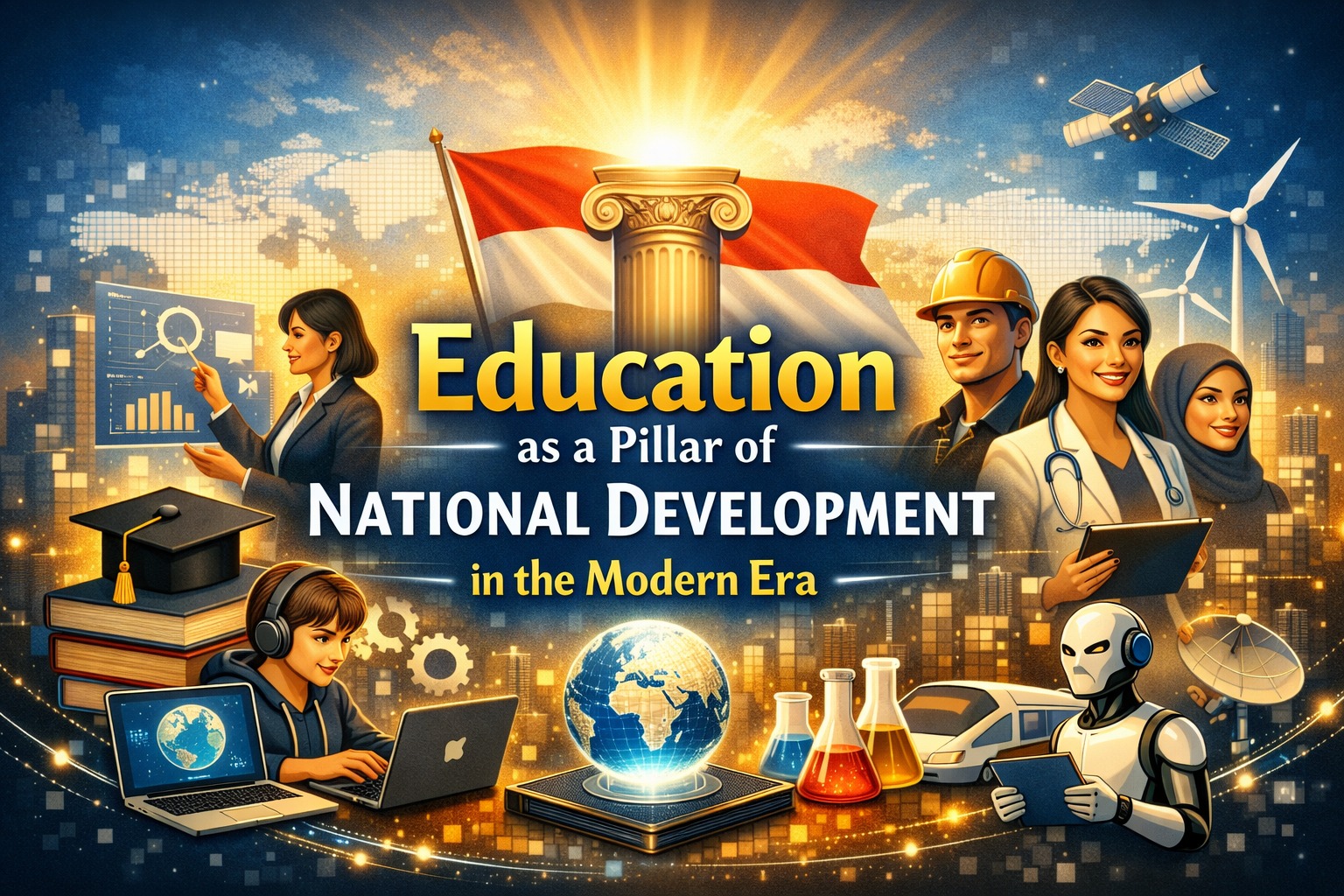
Education is the cornerstone of a nation’s progress. In the modern era, where innovation and technology drive global growth, education plays a crucial role in shaping human capital, fostering economic development, and strengthening social stability. A well‑educated population is not only capable of adapting to change but also of leading transformation across industries and communities.
THE ROLE OF EDUCATION IN NATIONAL GROWTH
Education builds the foundation for national development by empowering individuals with knowledge and skills. It enhances productivity, promotes innovation, and reduces poverty. Nations that invest in education experience sustainable economic growth, as educated citizens contribute to industries, governance, and technological advancement.
EDUCATION AND TECHNOLOGICAL ADVANCEMENT
In today’s digital world, education must evolve alongside technology. Modern learning integrates digital tools, online platforms, and data‑driven approaches to prepare students for the future workforce. By embracing technology, education becomes a catalyst for innovation, enabling nations to compete globally and adapt to rapid changes.
SOCIAL IMPACT OF EDUCATION
Beyond economic benefits, education strengthens social cohesion. It promotes equality, tolerance, and civic responsibility. Educated citizens are more likely to participate in democratic processes, respect diversity, and contribute to community development. In this way, education becomes a unifying force that builds a stable and inclusive society.
CHALLENGES IN MODERN EDUCATION SYSTEMS
Despite its importance, many countries face challenges such as unequal access, outdated curricula, and limited resources. Governments must prioritize educational reform, ensuring quality learning opportunities for all. Collaboration between public and private sectors can help bridge gaps and create innovative solutions for modern education needs.
INVESTING IN EDUCATION FOR FUTURE DEVELOPMENT
Education is not an expense—it is an investment. By funding research, teacher training, and digital infrastructure, nations can cultivate a generation of thinkers, innovators, and leaders. The long‑term benefits of education extend beyond individuals, shaping the nation’s identity and global influence.
Conclusion
Education stands as the pillar of national development in the modern era. It empowers people, drives innovation, and builds a resilient society. As technology continues to evolve, nations that prioritize education will lead the way toward sustainable growth and a brighter future.
National Development, Modern Education, Innovation, Technology, Human Capital
About the Author
Gusti Ayu Tita
Author — STEKOM University
An active author focused on academic issues, educational technology, and human resource development in the campus environment.