Education has long been recognized as the foundation of a nation’s progress. Countries that invest in strong education systems tend to achieve higher economic growth, technological innovation, and social stability. In the modern era, where globalization and digital transformation continue to reshape societies, education plays an increasingly vital role in shaping a nation’s future.
EDUCATION AS THE FOUNDATION OF NATIONAL DEVELOPMENT
Education is more than the transfer of knowledge; it shapes character, critical thinking, and adaptability. A nation that prioritizes education builds a generation capable of facing global challenges and contributing to long-term development.
When access to education is distributed fairly, individuals gain greater opportunities to improve their quality of life. Education empowers people to secure better jobs, increase their income, and actively contribute to national growth.
THE ROLE OF EDUCATION IN IMPROVING HUMAN RESOURCES
High-quality human resources are the result of effective education systems. Education enhances technical skills, communication abilities, and creativity—three essential competencies in today’s competitive job market.
Furthermore, education encourages innovation. Innovation drives progress in technology, creative industries, and entrepreneurship. A nation with well-educated citizens is better equipped to compete on a global scale.
THE CONNECTION BETWEEN EDUCATION AND ECONOMIC GROWTH
Education has a direct impact on economic development. Skilled workers increase productivity and efficiency across industries, strengthening national competitiveness.
Investing in education also brings long-term benefits. Improved education systems help reduce unemployment and poverty rates. As a result, education supports both individual prosperity and overall economic stability.
CHARACTER EDUCATION FOR A STRONGER FUTURE
Beyond academics, character education plays a crucial role in shaping responsible citizens. Values such as integrity, discipline, responsibility, and teamwork must be nurtured from an early age.
Strong character development helps build a harmonious and tolerant society. This is essential for maintaining unity and social stability in diverse communities.
CHALLENGES OF EDUCATION IN THE DIGITAL ERA
Technological advancement presents new opportunities and challenges in education. The abundance of information requires strong digital literacy skills. Without these skills, individuals may struggle to navigate misinformation and technological misuse.
Therefore, education systems must adapt to technological changes. Integrating digital tools into learning can improve effectiveness and expand access to education, especially in remote areas.
STRATEGIES TO IMPROVE EDUCATION QUALITY
Several strategic steps can strengthen education systems:
* Expanding equal access to education
* Improving teacher training and professional development
* Integrating technology into learning environments
* Developing skill-based and future-ready curricula
With the right strategies, education can become the primary driver of national advancement.
CONCLUSION
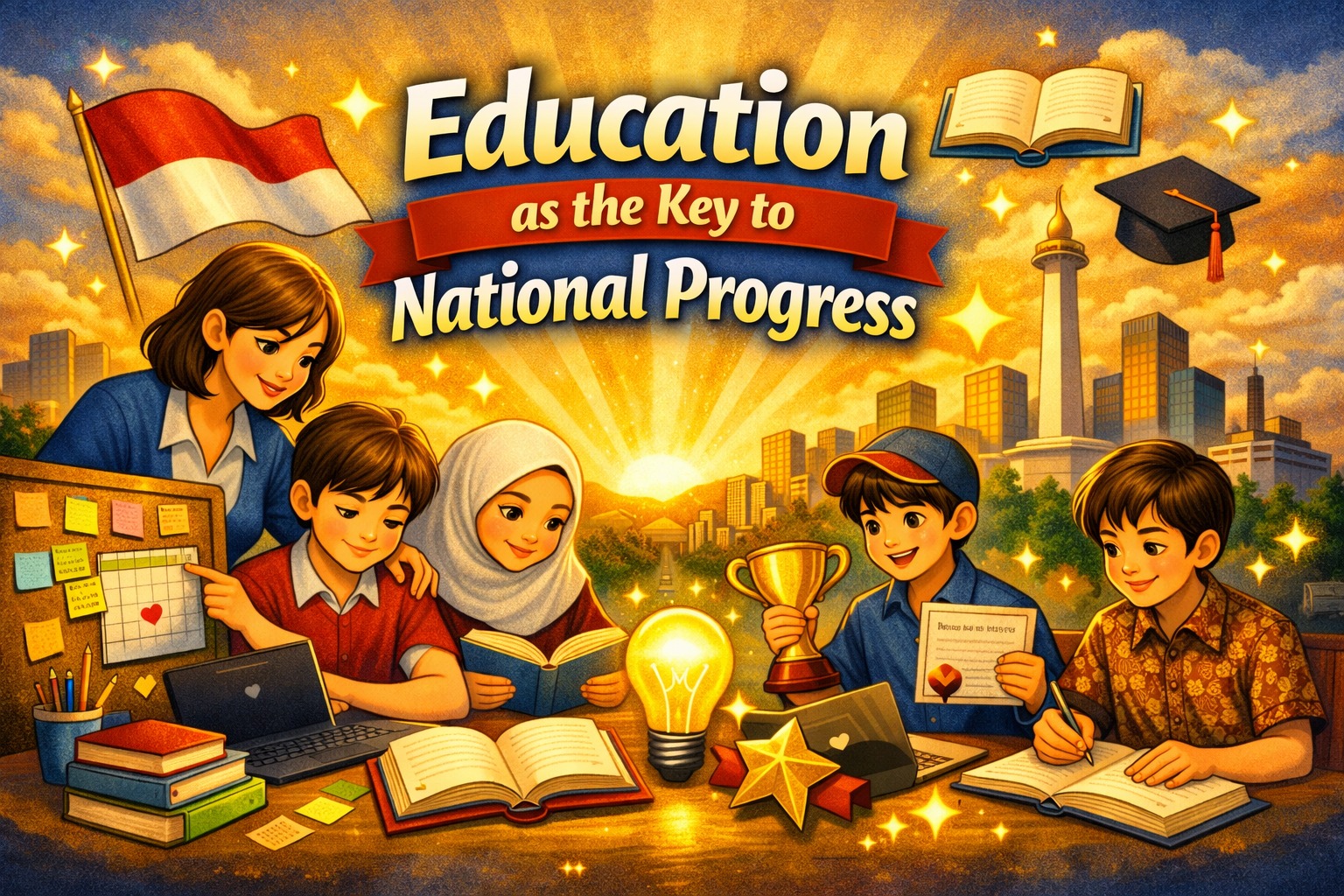
Education as the Key to National Progress is not just a slogan—it is a proven reality. Education creates opportunities, improves quality of life, and strengthens economic and social foundations.
Investing in education means investing in the future. When education becomes a national priority, sustainable progress becomes an achievable goal.
About the Author
Gusti Ayu Tita
Author — STEKOM University
An active author focused on academic issues, educational technology, and human resource development in the campus environment.