
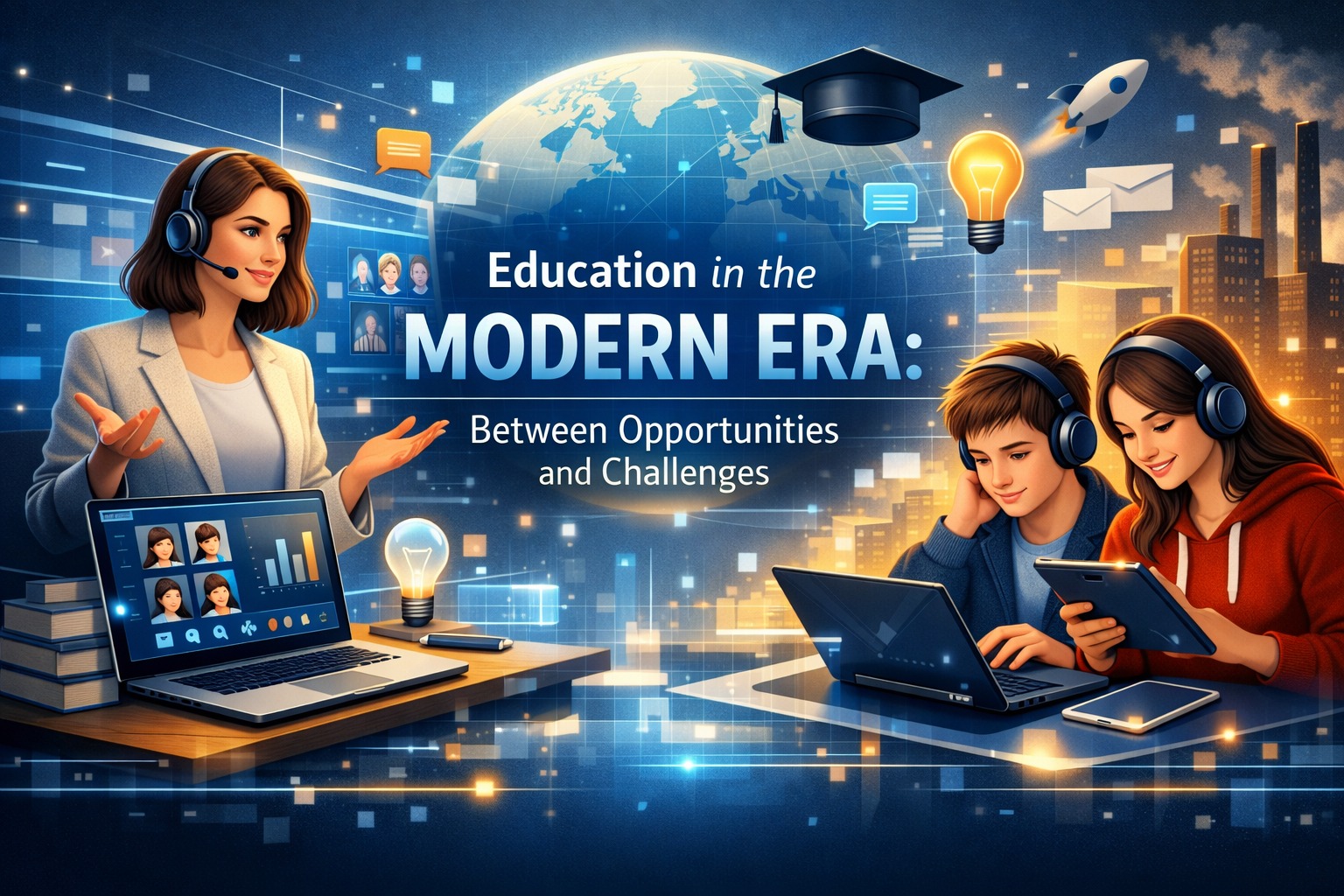
Education in the modern era has undergone significant transformation due to rapid technological development, globalization, and changing social dynamics. Traditional learning methods are gradually being replaced by digital education systems that allow students to access information anytime and anywhere. While these advancements create many opportunities for educational growth, they also bring various challenges that must be addressed carefully.
In today’s world, education plays a crucial role in preparing students to face global competition, technological innovation, and future career demands. Therefore, understanding both the opportunities and challenges of modern education is essential for building a better and more effective educational system.
THE TRANSFORMATION OF MODERN EDUCATION
The development of technology has changed the way people learn and teach. Digital platforms, online classrooms, educational applications, and virtual learning environments are now widely used in schools and universities.
Students can access learning materials more easily through smartphones, tablets, and laptops. Teachers can also create interactive lessons using multimedia presentations, educational videos, and digital collaboration tools.
This transformation has made education more flexible, accessible, and innovative compared to traditional learning systems.
OPPORTUNITIES IN MODERN EDUCATION
Modern education offers many opportunities for students and educators. One major advantage is easier access to information and learning resources. Students can explore various topics through online libraries, digital courses, and educational platforms.
Technology also encourages creativity and innovation in learning. Interactive learning methods such as virtual simulations, project-based learning, and online collaboration can improve student engagement and critical thinking skills.
Another opportunity is global connectivity. Students can communicate and collaborate with people from different countries, helping them develop broader perspectives and cross-cultural understanding.
CHALLENGES OF DIGITAL LEARNING
Despite its advantages, modern education also faces several challenges. One major issue is unequal access to technology and internet connectivity. Many students in rural or underdeveloped areas still lack proper digital resources.
Digital distractions are another challenge. Social media, online games, and entertainment platforms can reduce students’ focus and productivity.
In addition, online learning environments may limit direct interaction between teachers and students, which can affect communication and emotional connection during the learning process.
THE ROLE OF TEACHERS IN THE DIGITAL ERA
Teachers remain essential in modern education despite technological advancement. Their role has expanded beyond delivering information to guiding students in developing creativity, problem-solving abilities, and critical thinking skills.
Modern teachers must continuously improve their digital competence and adapt to innovative teaching methods. They should also encourage active participation and collaborative learning among students.
Professional development programs and digital training are important to help teachers face educational changes effectively.
THE IMPORTANCE OF DIGITAL LITERACY
Digital literacy is one of the most important skills in modern education. Students need the ability to search for reliable information, identify misinformation, and use technology responsibly.
Without proper digital literacy, students may become vulnerable to cyber risks, online scams, and harmful digital behavior. Schools should integrate digital literacy education into their curriculum to prepare students for the modern world.
Strong digital literacy skills can help students maximize technology’s benefits while avoiding its negative impacts.
CHARACTER EDUCATION IN MODERN SOCIETY
While technology continues to influence education, character education remains equally important. Students need moral values such as honesty, discipline, empathy, and responsibility to succeed in both academic and social environments.
The influence of social media and digital culture can negatively affect students if they are not guided properly. Therefore, schools and families must work together to strengthen students’ character development.
Balancing academic achievement with character education can help create responsible and ethical future generations.
STRATEGIES TO IMPROVE MODERN EDUCATION
Several strategies can help improve education in the modern era. Governments and educational institutions should invest in digital infrastructure to provide equal access to technology for all students.
Schools should adopt innovative learning systems that combine technology with interactive teaching methods. Teacher training programs must also be strengthened to improve digital teaching competence.
In addition, collaboration between schools, families, and communities is necessary to support students academically and emotionally in the digital age.
THE FUTURE OF EDUCATION
The future of education will continue to evolve alongside technological advancement. Artificial intelligence, virtual reality, and personalized learning systems are expected to become more common in educational environments.
However, technology should support learning rather than replace human interaction entirely. Creativity, emotional intelligence, communication skills, and ethical values will remain essential for future success.
A balanced education system that combines technological innovation with character development will help students face future challenges confidently.
CONCLUSION
Education in the modern era offers many opportunities for innovation, creativity, and global connectivity. At the same time, it also presents challenges such as digital inequality, technological distractions, and the need for continuous adaptation.
By improving digital literacy, strengthening character education, supporting teachers, and ensuring equal access to technology, modern education can become more effective and inclusive. With the right strategies, education can prepare future generations to succeed in an increasingly competitive and digital world.
About the Author
Gusti Ayu Tita
Author — STEKOM University
An active author focused on academic issues, educational technology, and human resource development in the campus environment.



