
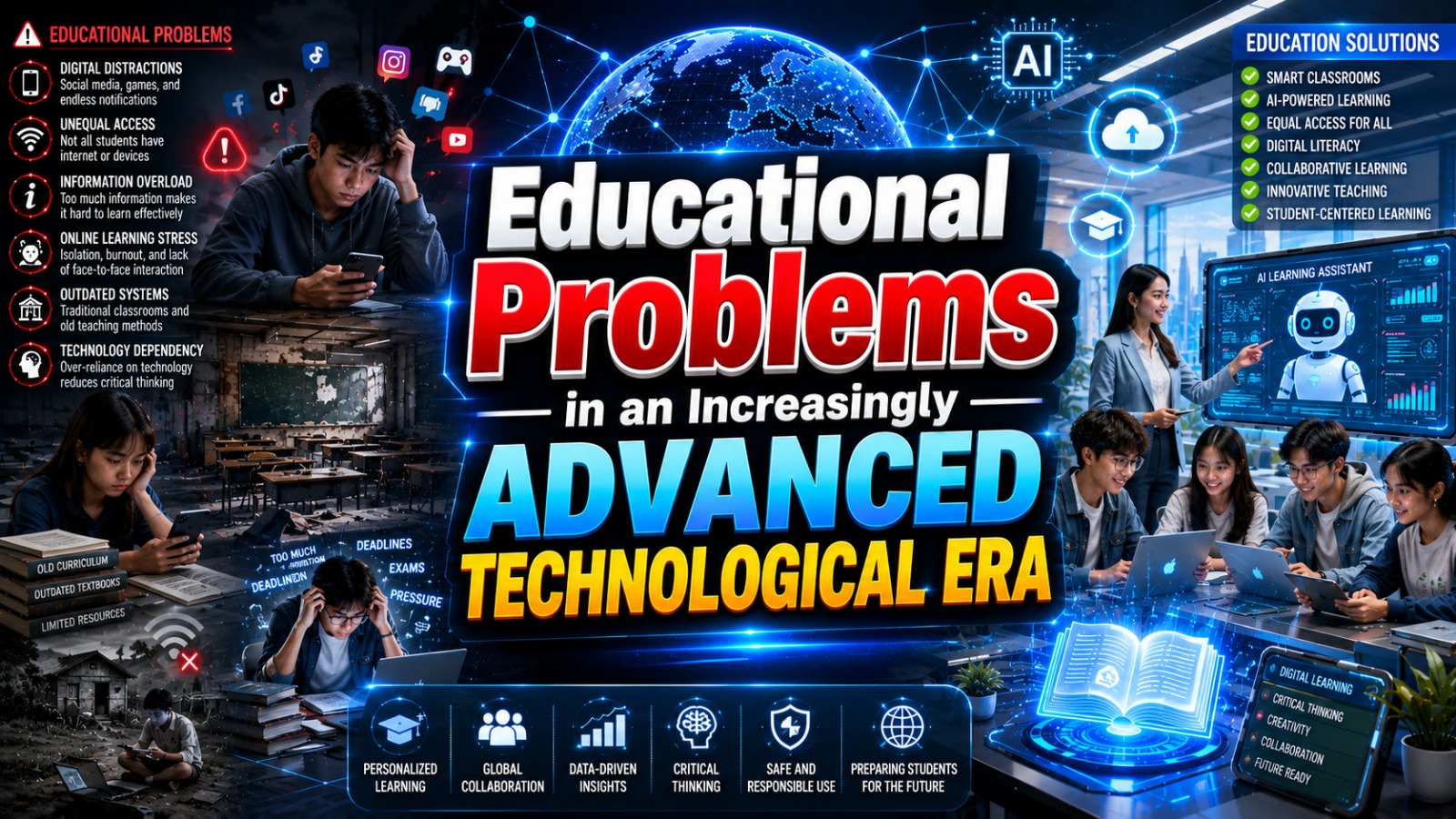
The rapid advancement of technology has significantly transformed the education sector around the world. Modern classrooms now integrate digital tools, online learning systems, artificial intelligence, and virtual collaboration platforms to improve the learning experience. While technology offers many benefits, it also creates various educational problems that affect students, teachers, and educational institutions.
In an increasingly advanced technological era, education faces challenges related to digital inequality, declining student focus, technological adaptation, and moral issues. Therefore, schools and governments must develop effective strategies to ensure that technology supports education positively and sustainably.
THE DEVELOPMENT OF TECHNOLOGY IN EDUCATION
Technology has changed the way education is delivered and accessed. Students can now learn through online courses, educational applications, video tutorials, and digital libraries.
Teachers also benefit from technology by using interactive presentations, virtual classrooms, and online assessments to make learning more engaging and efficient.
This digital transformation has created more flexible learning opportunities and improved access to information. However, the rapid pace of change also brings new educational challenges.
DIGITAL INEQUALITY IN EDUCATION
One of the biggest educational problems in the technological era is unequal access to technology. Many students still lack proper internet connections, laptops, or smartphones needed for online learning.
Students in rural and underdeveloped areas often experience limited educational opportunities compared to those in urban regions. This digital gap can reduce learning quality and widen educational inequality.
Governments and educational institutions need to improve digital infrastructure to provide equal learning opportunities for all students.
TECHNOLOGY DISTRACTIONS AND STUDENT FOCUS
Technology can improve learning, but it can also become a major distraction. Social media, online games, and entertainment platforms often reduce students’ concentration and productivity.
Many students spend more time on digital entertainment than educational activities. As a result, academic performance and learning motivation may decline.
Teachers and parents must guide students to use technology wisely and create balanced digital habits to support learning success.
CHALLENGES FOR TEACHERS IN THE DIGITAL ERA
Teachers face many challenges in adapting to modern educational technology. Some educators still struggle to use digital learning tools effectively due to limited training and technological experience.
The rapid development of educational technology also requires teachers to continuously improve their skills and teaching methods. In addition, online learning environments can make it difficult for teachers to maintain student engagement and discipline.
Professional development programs and digital training are essential to help teachers adapt to technological changes successfully.
THE IMPORTANCE OF DIGITAL LITERACY
Digital literacy has become a critical skill in modern education. Students need the ability to search for reliable information, identify misinformation, and use technology safely.
Without proper digital literacy, students may become vulnerable to fake news, cyberbullying, and harmful online content. Therefore, schools should include digital literacy education in their curriculum.
Strong digital literacy skills can help students maximize the benefits of technology while avoiding its negative effects.
MORAL AND CHARACTER ISSUES
The increasing use of technology has also influenced students’ moral values and behavior. Easy access to social media and online content can affect discipline, responsibility, and communication skills.
Problems such as plagiarism, cyberbullying, and internet addiction are becoming more common among students in the digital era.
Character education remains essential to help students develop ethical behavior, empathy, honesty, and social responsibility while using technology.
STRATEGIES TO SOLVE EDUCATIONAL PROBLEMS
Several strategies can help address educational problems in the technological era. Governments should improve internet access and provide digital learning facilities for schools in all regions.
Schools need to adopt innovative learning systems that combine technology with interactive teaching methods. Teachers should also receive continuous digital training to improve their teaching effectiveness.
In addition, cooperation between schools, parents, and communities is necessary to support students academically and emotionally in the digital environment.
THE FUTURE OF EDUCATION
The future of education will continue to evolve alongside technological advancements. Artificial intelligence, virtual reality, and personalized learning systems are expected to become more common in classrooms.
However, technology should not replace human values in education. Critical thinking, creativity, communication, and emotional intelligence will remain important skills for future generations.
A balanced approach between technology and character development will help create a more effective and sustainable education system.
CONCLUSION
Educational problems in an increasingly advanced technological era require serious attention from all stakeholders. While technology provides many opportunities for innovation and learning improvement, it also creates challenges such as digital inequality, distractions, and moral issues.
By improving digital literacy, strengthening character education, supporting teachers, and ensuring equal access to technology, education systems can better adapt to modern challenges. With the right strategies, technology can become a powerful tool for building a smarter and more prepared future generation.
About the Author
Gusti Ayu Tita
Author — STEKOM University
An active author focused on academic issues, educational technology, and human resource development in the campus environment.



