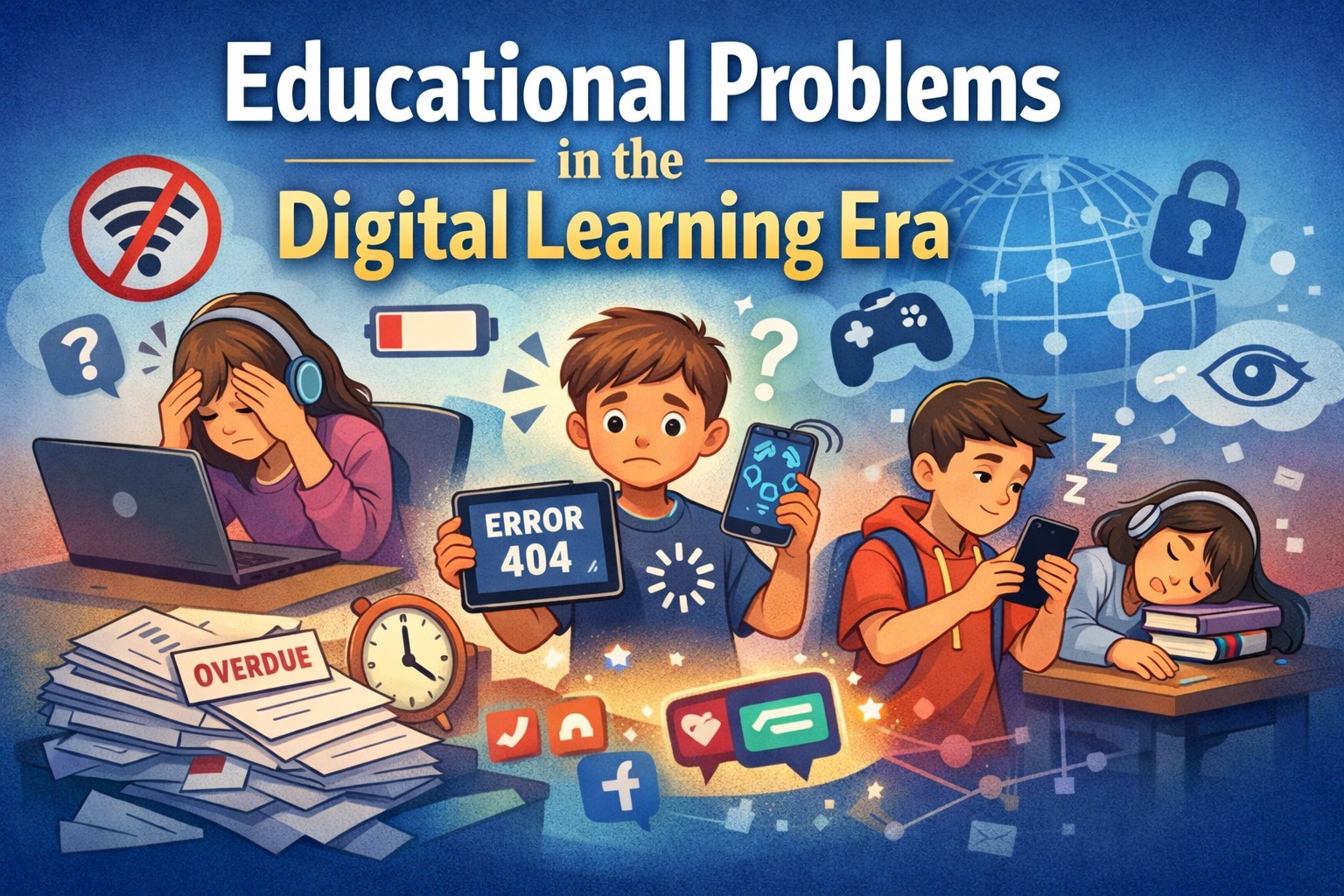
The rapid development of technology has transformed the education system worldwide. Digital learning has become an essential part of modern education, especially after the global pandemic accelerated the use of online platforms. While digital learning offers flexibility and easier access to educational resources, it also creates several educational problems that affect students, teachers, and institutions. Understanding these challenges is important to improve the quality of education in the digital era.
LACK OF EQUAL ACCESS TO TECHNOLOGY
One of the biggest educational problems in the digital learning era is unequal access to technology. Many students still struggle to obtain stable internet connections, laptops, or smartphones that support online learning activities. This condition creates a digital divide between students from wealthy families and those from lower economic backgrounds.
In rural areas, internet infrastructure is often limited, making it difficult for students to attend virtual classes or access online educational materials. As a result, many students experience learning delays and reduced academic performance compared to students with better access to technology.
DECREASING STUDENT FOCUS AND MOTIVATION
Digital learning environments can reduce students’ concentration and motivation. Studying from home often exposes students to distractions such as social media, online games, and entertainment platforms. Without direct supervision from teachers, students may lose focus during online classes.
In addition, the absence of face-to-face interaction can make learning feel less engaging. Many students experience boredom, fatigue, and stress due to long hours spent in front of screens. This condition may negatively affect mental health and academic achievement.
LIMITED INTERACTION BETWEEN TEACHERS AND STUDENTS
Effective communication is a crucial element in education. However, digital learning sometimes limits direct interaction between teachers and students. Teachers may find it difficult to monitor students’ understanding, participation, and emotional conditions through virtual meetings alone.
Students who are shy or less confident may hesitate to ask questions during online classes. Consequently, misunderstandings in lessons can occur more frequently. The lack of personal interaction may also weaken the emotional connection between teachers and students.
CHALLENGES IN MAINTAINING EDUCATION QUALITY
Another major issue in digital learning is maintaining education quality. Not all teachers are fully prepared to use digital teaching methods effectively. Some educators still struggle with technology and online classroom management.
Moreover, assessment systems in online learning can be less reliable. Academic dishonesty, such as cheating during online exams, becomes more difficult to control. Educational institutions must continuously develop innovative strategies to ensure learning objectives are achieved properly.
THE IMPORTANCE OF DIGITAL LITERACY
Digital literacy plays an important role in overcoming educational problems in the digital learning era. Students and teachers need the ability to use technology wisely, safely, and effectively. Without proper digital literacy, technology may become more harmful than beneficial.
Educational institutions should provide training programs that help teachers improve digital teaching skills. At the same time, students need guidance on responsible internet usage, time management, and online communication ethics.
SOLUTIONS FOR BETTER DIGITAL EDUCATION
Several solutions can help improve digital education systems. Governments and educational institutions should invest in better internet infrastructure and affordable technology access. Providing free or low-cost devices for students can reduce educational inequality.
Teachers should also adopt interactive teaching methods such as videos, quizzes, and collaborative projects to increase student engagement. Blended learning, which combines online and offline education, can become an effective solution for balancing flexibility and direct interaction.
Parents also play an important role in supporting students during digital learning. Proper supervision and encouragement at home can help students stay disciplined and motivated.
CONCLUSION
Educational problems in the digital learning era are complex challenges that require cooperation from governments, schools, teachers, parents, and students. Although digital learning offers many advantages, issues such as unequal access to technology, low student motivation, limited interaction, and declining education quality must be addressed seriously. By improving digital literacy, infrastructure, and teaching strategies, the education system can become more effective and inclusive in the future.
About the Author
Gusti Ayu Tita
Author — STEKOM University
An active author focused on academic issues, educational technology, and human resource development in the campus environment.