
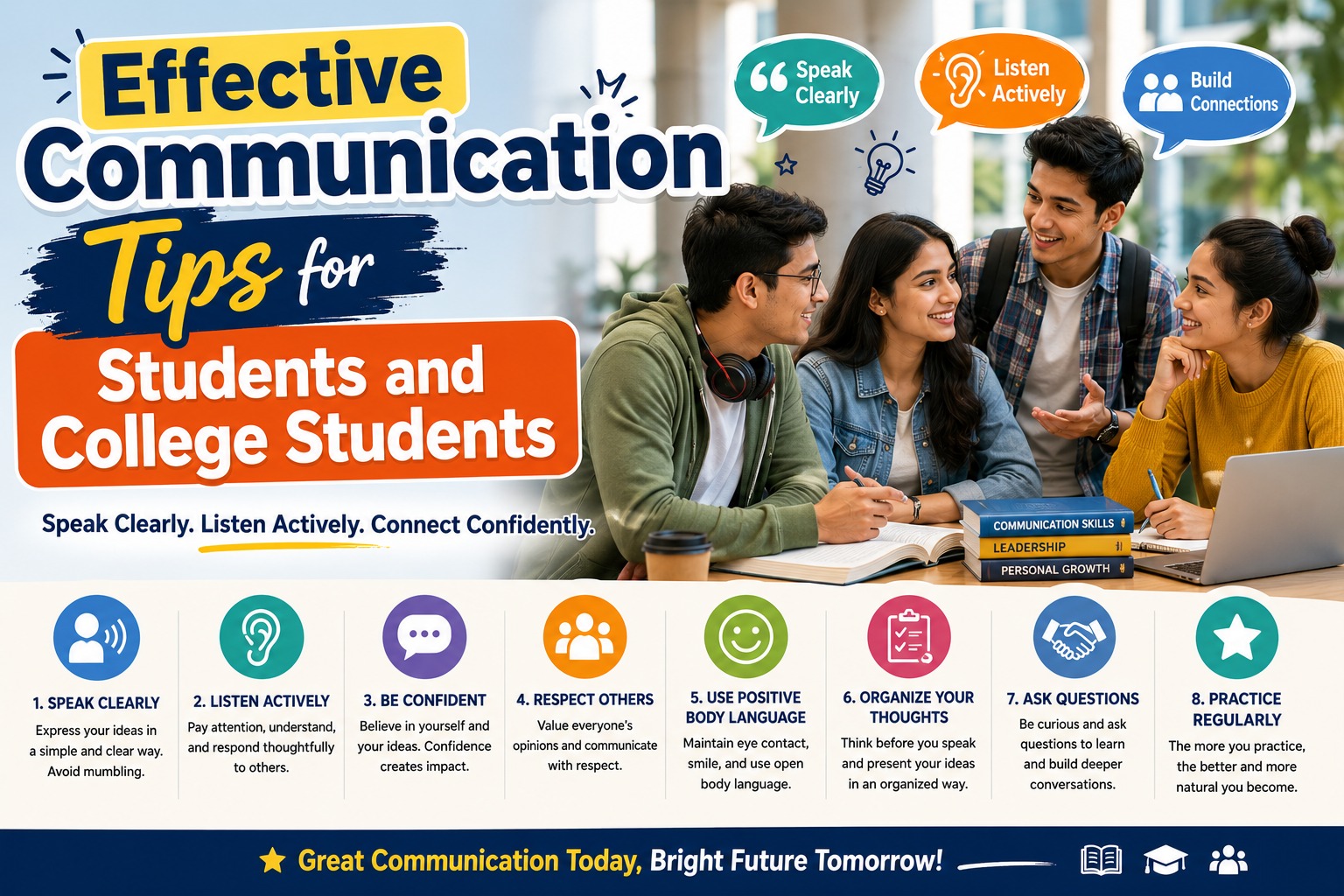
Communication skills are essential for students and college students in both academic and social life. Good communication helps students express ideas clearly, participate actively in discussions, and build positive relationships with teachers, classmates, and friends. In modern education, communication is not only important inside the classroom but also in presentations, teamwork, and online learning environments.
Many students struggle with communication because of nervousness, lack of confidence, or limited speaking experience. However, communication skills can improve through regular practice and positive habits. By developing effective communication abilities, students can become more confident, active, and successful in their studies.
WHY COMMUNICATION SKILLS ARE IMPORTANT FOR STUDENTS
Communication affects many aspects of student life. Students who communicate effectively often find it easier to understand lessons, ask questions, and collaborate with others.
Strong communication skills can help students:
- Participate actively in class discussions
- Improve teamwork and group projects
- Build confidence during presentations
- Create better friendships and social connections
- Communicate ideas more clearly
- Prepare for future careers
Good communication also supports leadership skills and personal development.
PRACTICE ACTIVE LISTENING
Active listening is one of the most important communication skills for students. Listening carefully helps students understand lessons better and respond appropriately during discussions.
To practice active listening:
- Focus fully on the speaker
- Avoid distractions during conversations
- Maintain eye contact
- Ask questions when necessary
- Take notes during important explanations
Students who listen actively often learn more effectively and communicate better with others.
SPEAK WITH CONFIDENCE
Confidence plays a major role in communication. Many students feel nervous when speaking in front of classmates or teachers, especially during presentations or group discussions.
Confidence can improve through regular speaking practice. Students should try to share opinions, ask questions, and participate more often during class activities.
Speaking clearly, maintaining a calm tone, and preparing before presentations can also improve confidence significantly.
IMPROVE BODY LANGUAGE
Body language affects how communication is received. Positive body language can make students appear more confident and approachable.
Helpful body language habits include:
- Maintaining eye contact
- Sitting or standing with good posture
- Smiling naturally
- Using appropriate hand gestures
- Avoiding nervous movements
Positive nonverbal communication can improve classroom participation and social interaction.
DEVELOP GOOD WRITTEN COMMUNICATION
Written communication is equally important for students and college students. Assignments, essays, emails, and reports all require clear and organized writing.
Good written communication should be:
- Clear and easy to understand
- Grammatically correct
- Organized logically
- Professional in tone
Reading regularly and practicing writing can help students improve vocabulary and sentence structure over time.
PARTICIPATE IN GROUP DISCUSSIONS
Group discussions help students practice communication in real-life situations. Working with classmates teaches students how to express opinions, listen to others, and solve problems together.
Joining study groups, student organizations, or classroom discussions can improve communication confidence and teamwork abilities.
Students who participate actively in discussions often become more comfortable speaking in social and academic settings.
LEARN TO MANAGE NERVOUSNESS
Feeling nervous while communicating is normal, especially for students who are still developing confidence. However, managing nervousness is important for effective communication.
Useful ways to reduce nervousness include:
- Practicing before speaking
- Taking deep breaths
- Thinking positively
- Focusing on the message instead of fear
- Starting with smaller conversations
Regular practice can gradually reduce anxiety and improve communication comfort.
USE TECHNOLOGY TO IMPROVE COMMUNICATION
Technology offers many tools that can help students improve communication skills. Educational videos, language-learning apps, online discussions, and virtual presentations provide useful learning opportunities.
Students can also practice speaking by recording themselves or participating in online communities. These activities help improve pronunciation, confidence, and speaking fluency.
Balancing online communication with face-to-face interaction is important for developing stronger social skills.
RESPECT OTHERS DURING COMMUNICATION
Respect is a key part of effective communication. Students should learn to communicate politely and listen respectfully to different opinions.
Respectful communication involves:
- Avoiding interruptions
- Speaking politely
- Appreciating different perspectives
- Responding calmly during disagreements
Respectful behavior creates a positive learning environment and improves relationships with others.
CONCLUSION
Effective communication skills are very important for students and college students. Active listening, confident speaking, positive body language, and respectful interaction can improve both academic and social experiences.
Students who develop strong communication skills often become more confident, active, and successful in their education. With regular practice and positive habits, anyone can improve communication abilities and prepare for future opportunities.
About the Author
Gusti Ayu Tita
Author — STEKOM University
An active author focused on academic issues, educational technology, and human resource development in the campus environment.



