
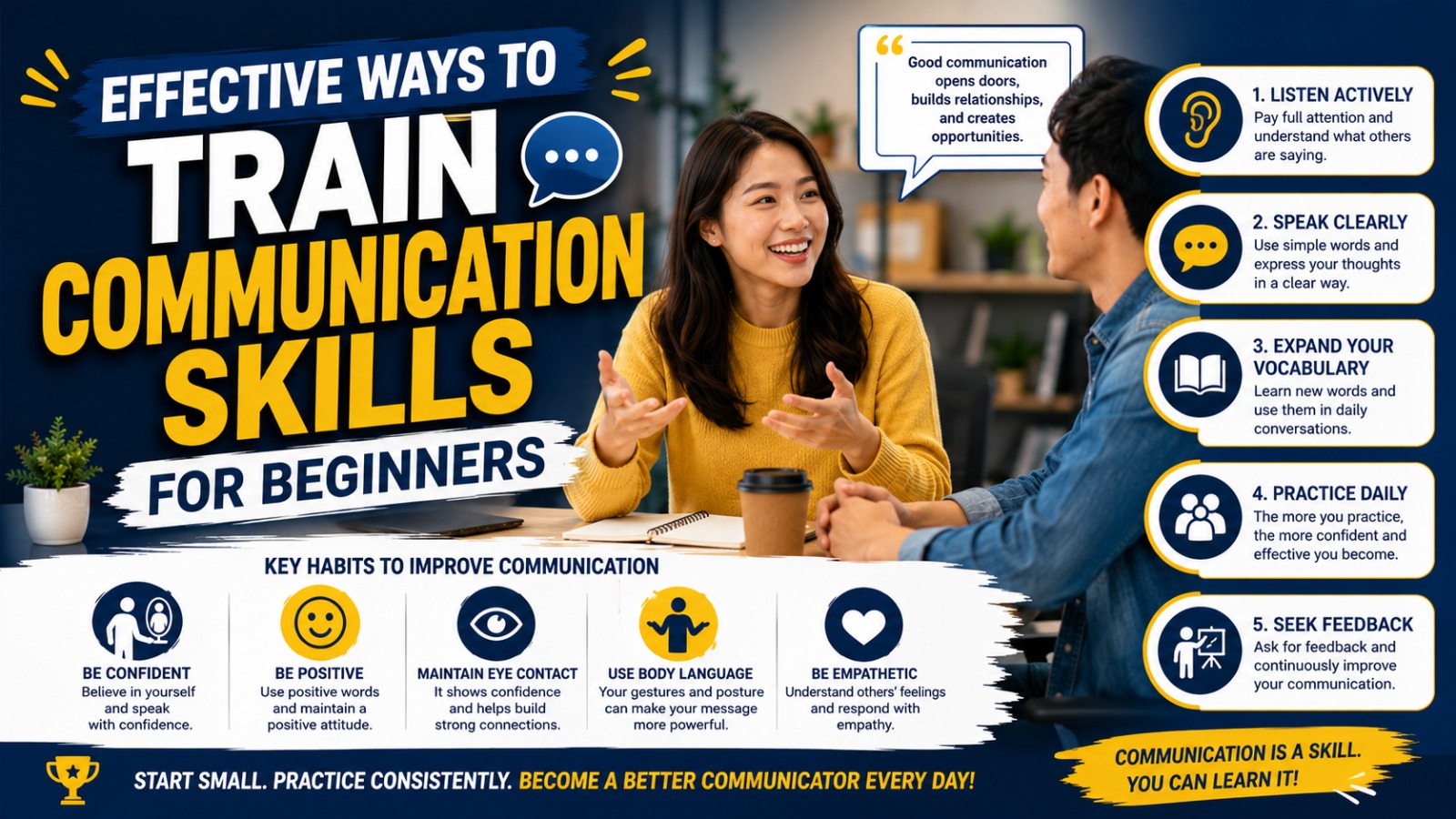
Communication skills are essential for building relationships, expressing ideas, and achieving success in both personal and professional life. For beginners, improving communication skills may feel challenging at first, especially when dealing with nervousness or lack of confidence. However, communication is a skill that can be developed through regular practice and the right techniques.
By learning effective communication methods, beginners can become more confident speakers, better listeners, and stronger communicators in everyday situations.
UNDERSTANDING THE BASICS OF COMMUNICATION
Communication is the process of sharing information, ideas, and emotions with others. Effective communication involves speaking clearly, listening actively, and understanding the message being delivered.
Good communication is not only about talking. It also requires attention to body language, tone of voice, and the ability to respond appropriately during conversations.
PRACTICE SPEAKING EVERY DAY
One of the most effective ways to improve communication skills is through daily speaking practice. Beginners should try to speak regularly, even in simple conversations with friends, family members, or classmates.
Speaking frequently helps improve confidence and makes communication feel more natural. You can also practice by talking in front of a mirror or recording your voice to evaluate your speaking style.
IMPROVE ACTIVE LISTENING
Listening is an important part of communication that is often overlooked. Active listening helps individuals understand others better and respond appropriately during conversations.
To practice active listening, focus fully on the speaker, avoid interrupting, and pay attention to important details. Showing interest through eye contact and positive responses can also improve communication quality.
EXPAND YOUR VOCABULARY
A strong vocabulary helps beginners express ideas more clearly and confidently. Learning new words regularly can improve speaking and writing abilities.
Reading books, articles, and online content can naturally increase vocabulary knowledge. Try to use new words in conversations to become more familiar with them.
DEVELOP CONFIDENCE WHEN SPEAKING
Confidence is one of the key elements of effective communication. Many beginners feel nervous because they are afraid of making mistakes. However, mistakes are a normal part of the learning process.
Start by speaking in small groups or comfortable environments before participating in larger discussions. The more you practice, the more confident you will become.
PAY ATTENTION TO BODY LANGUAGE
Nonverbal communication plays an important role in how messages are delivered and understood. Body language, facial expressions, and eye contact can influence communication effectiveness.
Maintain good posture, make eye contact, and use natural gestures during conversations. Positive body language helps create a confident and friendly impression.
JOIN DISCUSSIONS AND GROUP ACTIVITIES
Participating in discussions, presentations, or group activities can help beginners improve communication skills faster. Real interaction provides valuable experience in expressing opinions and responding to others.
Joining communication clubs or public speaking communities can also help build confidence and improve speaking abilities.
LEARN TO ORGANIZE THOUGHTS CLEARLY
Organizing thoughts before speaking helps communication become clearer and more effective. Try to think about the main points you want to deliver before starting a conversation or presentation.
Speaking in a structured way makes it easier for listeners to understand your message and improves overall communication quality.
ACCEPT FEEDBACK AND KEEP LEARNING
Feedback is useful for identifying strengths and weaknesses in communication. Ask friends, teachers, or mentors for suggestions on how to improve speaking and listening skills.
Continuous learning and regular practice are important for long-term improvement. Every conversation can become an opportunity to develop better communication abilities.
CONCLUSION
Training communication skills for beginners requires patience, confidence, and consistent practice. Speaking regularly, improving listening abilities, expanding vocabulary, and developing positive body language are effective ways to become a better communicator. By practicing continuously and learning from experience, beginners can build strong communication skills that are useful in daily life, education, and future careers.
About the Author
Gusti Ayu Tita
Author — STEKOM University
An active author focused on academic issues, educational technology, and human resource development in the campus environment.



