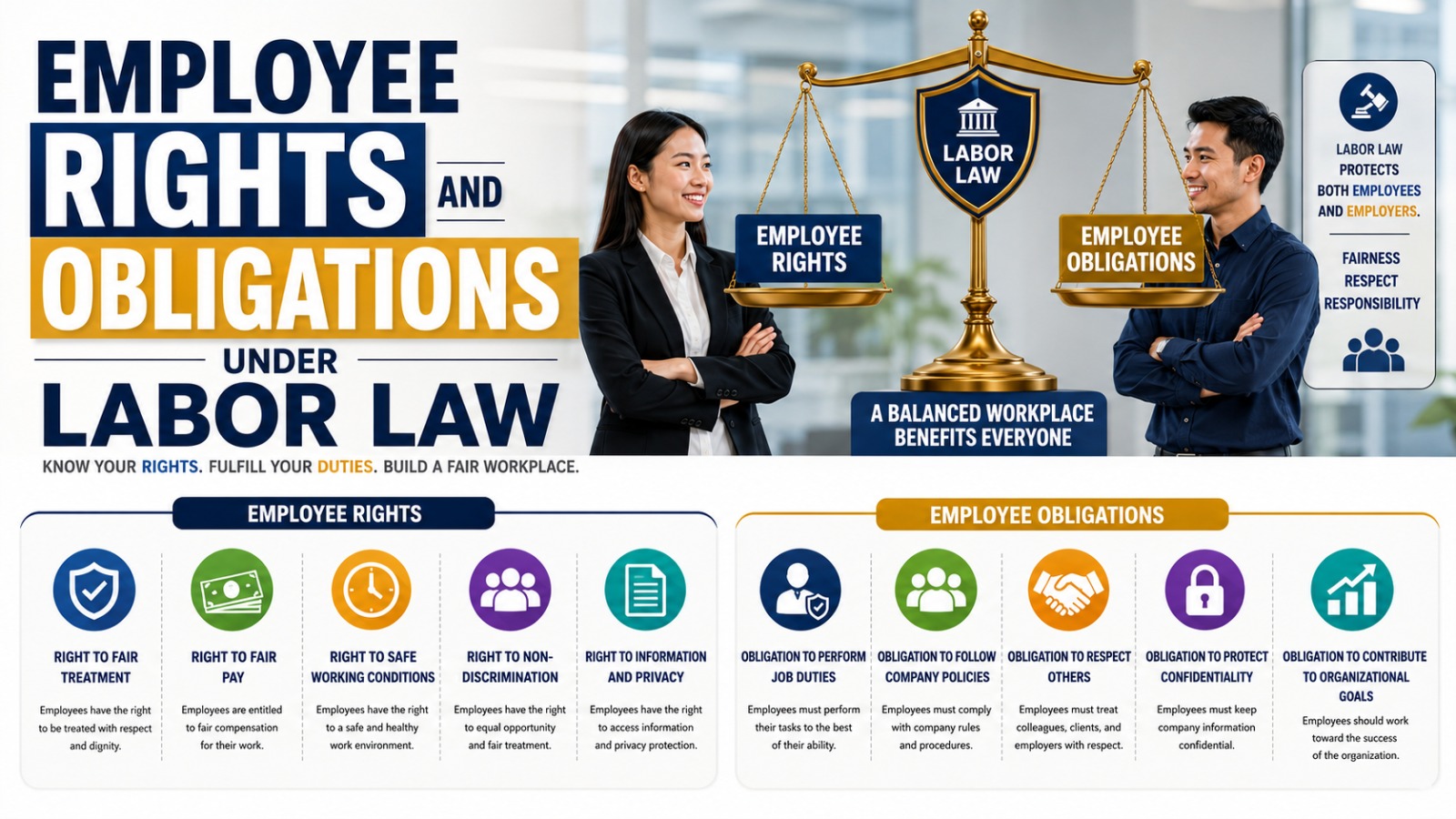
Understanding employee rights and obligations under labor law is essential for creating a fair, safe, and productive workplace. Labor laws are designed to protect both employees and employers by establishing clear standards related to wages, working conditions, responsibilities, and workplace conduct.
Employees who understand their legal rights can protect themselves from unfair treatment, while employers who comply with labor regulations can build stronger workplace relationships and avoid legal disputes. Below is a comprehensive overview of employee rights and obligations under labor law.
UNDERSTANDING LABOR LAW
Labor law refers to the legal rules and regulations that govern the relationship between employers and employees. These laws cover various aspects of employment, including wages, working hours, workplace safety, discrimination, and employee benefits.
Labor regulations may differ between countries, but their primary purpose is to ensure fairness and protect workers from exploitation.
EMPLOYEE RIGHTS UNDER LABOR LAW
Employees are entitled to several important rights that help ensure fair treatment in the workplace. These rights are generally protected by national labor regulations and employment agreements.
RIGHT TO FAIR WAGES
Employees have the right to receive fair compensation for their work according to employment agreements and minimum wage regulations. Employers are legally required to pay wages on time and provide compensation that complies with labor standards.
Fair wages help employees maintain financial stability and improve overall job satisfaction.
RIGHT TO SAFE WORKING CONDITIONS
Workplace safety is one of the most important employee rights. Employers must provide a safe and healthy work environment to reduce the risk of accidents, injuries, and occupational illnesses.
This includes proper safety equipment, training, and compliance with workplace health regulations.
RIGHT TO EQUAL TREATMENT
Employees have the right to work without discrimination based on gender, race, religion, age, disability, or other protected characteristics. Labor laws generally prohibit unfair treatment and harassment in the workplace.
Equal treatment promotes diversity, inclusion, and a healthier work environment.
RIGHT TO WORKING HOURS AND REST PERIODS
Labor laws usually regulate working hours, overtime, and rest periods to protect employee well-being. Employees are entitled to breaks, weekly rest days, and reasonable working schedules.
Proper work-life balance can improve productivity and reduce employee burnout.
RIGHT TO LEAVE BENEFITS
Employees may be entitled to various forms of leave, including annual leave, sick leave, maternity leave, and public holidays. These benefits help employees manage personal and family responsibilities while maintaining job security.
Leave policies may vary depending on company rules and local labor regulations.
RIGHT TO SOCIAL SECURITY AND BENEFITS
Many labor laws require employers to provide social security programs, health insurance, retirement benefits, or workplace injury compensation.
These protections help employees maintain financial security during emergencies or retirement.
RIGHT TO FREEDOM OF ASSOCIATION
Employees generally have the right to join labor unions or worker organizations to protect their interests and negotiate workplace conditions collectively.
Freedom of association supports fair labor practices and employee representation.
RIGHT TO TERMINATION PROTECTION
Labor laws often regulate employee termination procedures to prevent unfair dismissal. Employers may be required to provide notice, valid reasons for termination, or severance compensation depending on local regulations.
Termination protection helps employees maintain legal security in the workplace.
EMPLOYEE OBLIGATIONS UNDER LABOR LAW
In addition to rights, employees also have obligations that must be fulfilled to maintain professional and productive working relationships.
OBLIGATION TO FOLLOW COMPANY POLICIES
Employees are expected to comply with workplace rules, company policies, and employment agreements. This includes following attendance rules, dress codes, and workplace procedures.
Compliance helps maintain order and professionalism in the workplace.
OBLIGATION TO PERFORM JOB RESPONSIBILITIES
Employees must complete assigned tasks responsibly and perform their duties according to company expectations. Employers rely on employees to contribute positively to organizational goals.
Professional performance is essential for business success and career development.
OBLIGATION TO MAINTAIN WORKPLACE ETHICS
Employees should behave professionally and respectfully toward coworkers, supervisors, and customers. Ethical conduct includes honesty, integrity, and cooperation in daily work activities.
Positive workplace behavior helps create a healthy organizational culture.
OBLIGATION TO PROTECT COMPANY PROPERTY
Employees are responsible for using company resources properly and protecting business assets from damage or misuse.
This includes equipment, confidential information, and workplace facilities.
OBLIGATION TO FOLLOW SAFETY REGULATIONS
Employees must comply with workplace safety procedures and use protective equipment when necessary. Following safety rules helps reduce accidents and maintain a secure working environment.
Safety compliance benefits both employees and employers.
OBLIGATION TO MAINTAIN CONFIDENTIALITY
Employees may have access to confidential company information, including financial data, business strategies, or customer details. Labor agreements often require employees to protect sensitive information from unauthorized disclosure.
Confidentiality is important for maintaining trust and business security.
IMPORTANCE OF BALANCING RIGHTS AND OBLIGATIONS
A successful workplace depends on balancing employee rights with employee responsibilities. When employers respect worker rights and employees fulfill their obligations, organizations can build stronger relationships and improve workplace productivity.
Mutual respect between employers and employees creates a more stable and positive work environment.
CONCLUSION
Employee rights and obligations under labor law play a critical role in maintaining fairness and professionalism in the workplace. Rights such as fair wages, workplace safety, and equal treatment protect employees from unfair practices, while obligations help ensure productivity and organizational discipline.
Both employers and employees should understand labor regulations clearly to create a safe, respectful, and legally compliant work environment. A balanced approach to workplace rights and responsibilities benefits everyone involved and contributes to long-term business success.
About the Author
Gusti Ayu Tita P
Author — STEKOM University
An active author focused on academic issues, educational technology, and human resource development in the campus environment.