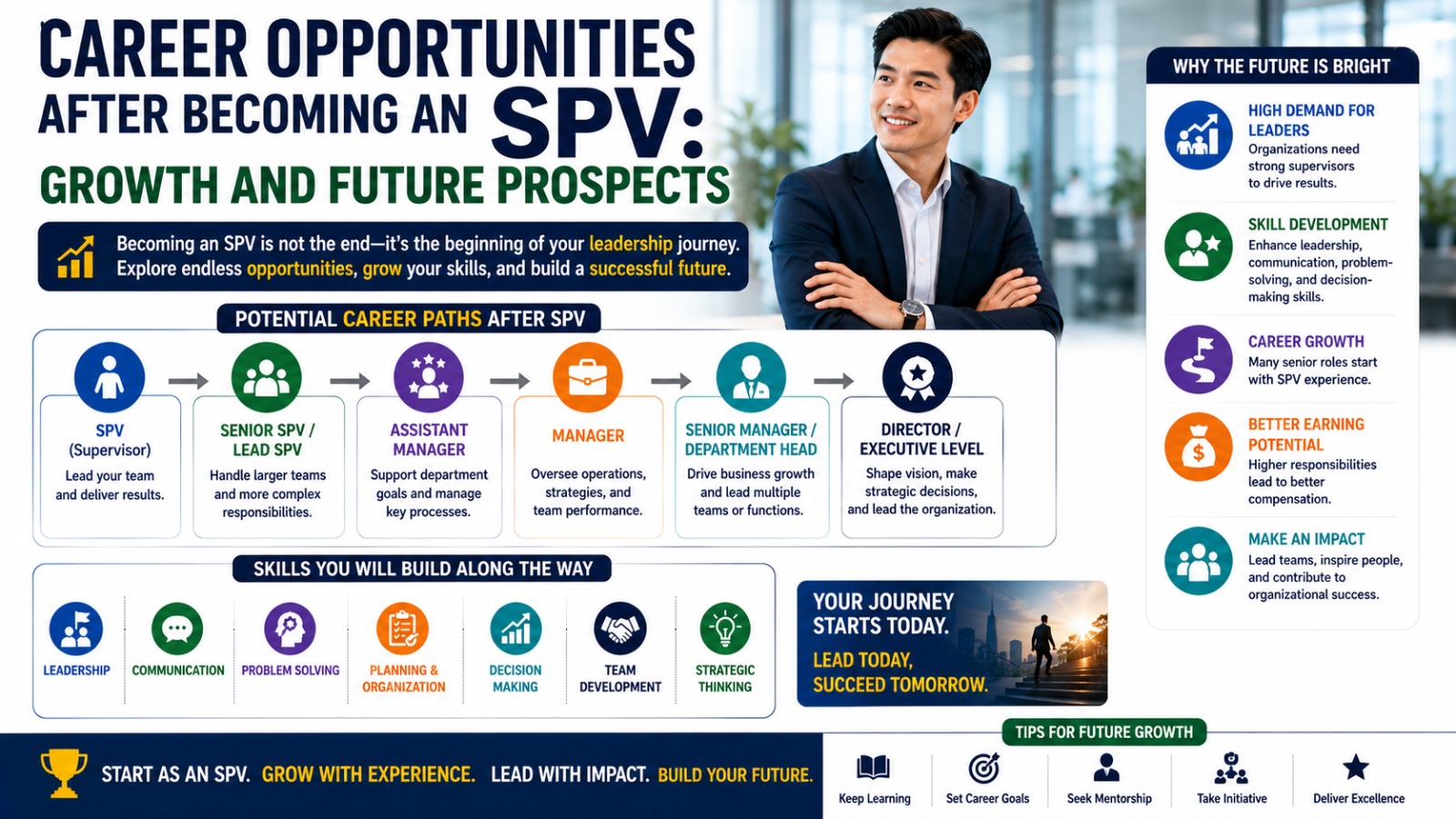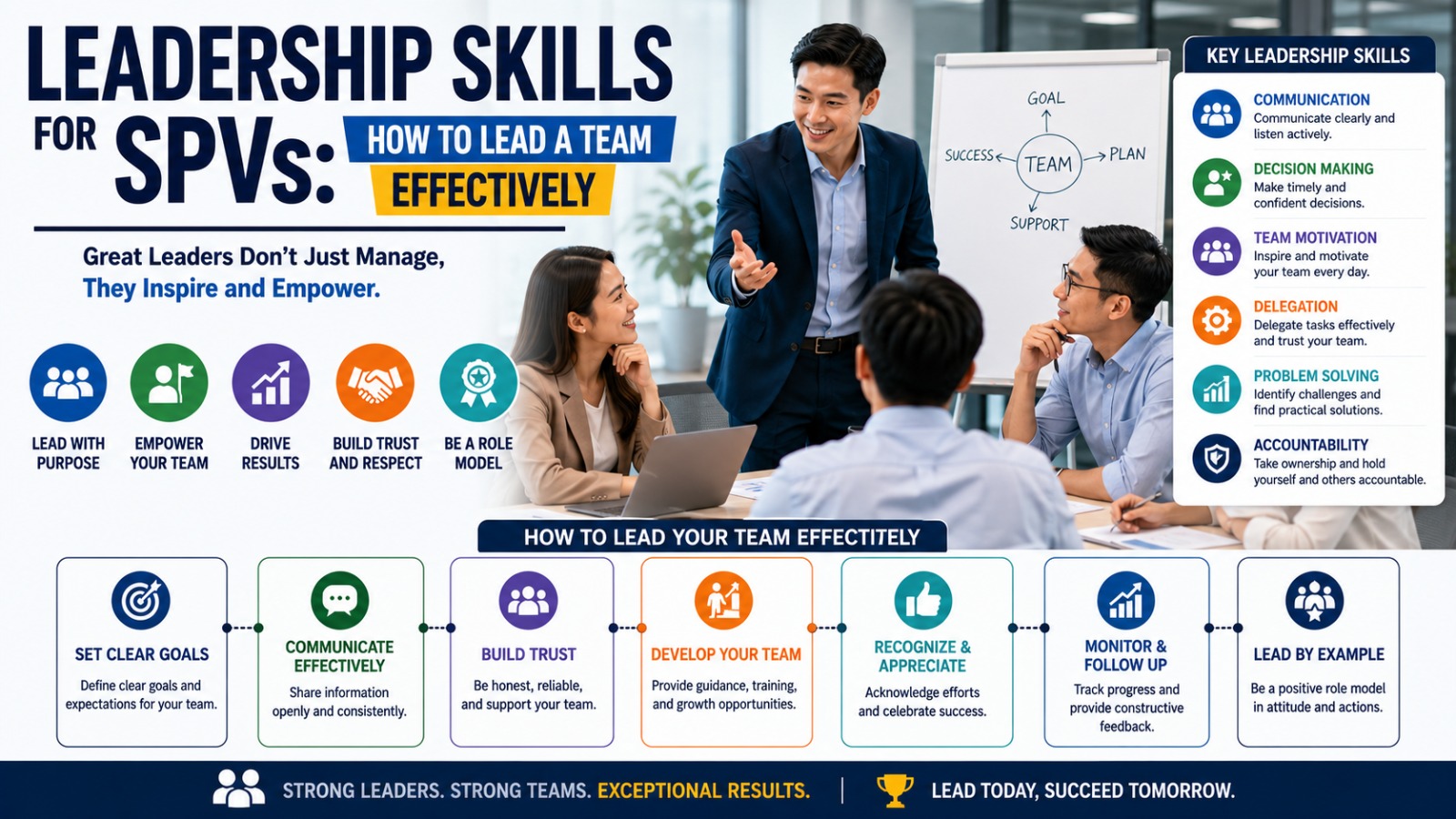
In today’s competitive business environment, the role of an SPV or Supervisor has become increasingly important across various industries. Supervisors are responsible for managing teams, ensuring operational efficiency, and maintaining communication between employees and management. Because of these responsibilities, an SPV must possess a combination of technical knowledge and strong interpersonal skills.
A professional supervisor is not only someone who can give instructions but also someone capable of leading, motivating, and solving workplace challenges effectively. Below are the essential skills every professional SPV must have to succeed in the workplace.
LEADERSHIP SKILLS
Leadership is one of the most important skills for any supervisor. An SPV must be able to guide employees, make decisions, and inspire team members to achieve company goals.
Good leadership helps create a productive work environment where employees feel motivated and supported. A strong leader also knows how to handle pressure and maintain team stability during challenging situations.
COMMUNICATION SKILLS
Effective communication is essential for supervisors because they interact with both management and employees every day. An SPV must be able to explain instructions clearly, listen actively, and deliver feedback professionally.
Strong communication reduces misunderstandings and improves teamwork within the organization.
PROBLEM-SOLVING ABILITY
Every workplace faces challenges, whether related to employee performance, operational issues, or customer complaints. A professional SPV should be able to identify problems quickly and find practical solutions.
Problem-solving skills help supervisors maintain productivity and prevent small issues from becoming major disruptions.
TIME MANAGEMENT
Supervisors often manage multiple tasks and responsibilities at the same time. Without proper time management, workloads can become overwhelming and affect operational efficiency.
An SPV should know how to prioritize tasks, manage schedules, and ensure deadlines are met consistently.
DECISION-MAKING SKILLS
Supervisors are frequently required to make important decisions under pressure. These decisions may involve employee management, operational processes, or customer service issues.
A professional SPV must be able to analyze situations carefully and make fair, effective decisions that benefit the company and the team.
TEAM MANAGEMENT
Managing a team requires more than simply assigning tasks. An SPV should understand employee strengths and weaknesses while creating a collaborative and positive work environment.
Strong team management helps improve productivity, morale, and overall workplace performance.
EMOTIONAL INTELLIGENCE
Emotional intelligence is the ability to understand and manage emotions effectively. Supervisors with high emotional intelligence can handle workplace conflicts calmly and maintain professional relationships.
This skill is especially important when dealing with employee concerns, stress, or communication challenges.
CONFLICT RESOLUTION SKILLS
Conflicts between employees can negatively affect workplace harmony and productivity. A professional SPV must know how to resolve disagreements fairly and professionally.
Good conflict resolution skills help maintain a healthy and respectful work environment.
ADAPTABILITY
Work environments constantly change due to technology, company policies, and market demands. Supervisors must be adaptable and open to learning new systems or strategies.
Adaptable SPVs can respond effectively to workplace changes without disrupting team performance.
MOTIVATIONAL ABILITY
An effective SPV knows how to motivate employees and maintain team enthusiasm. Motivation can be provided through encouragement, recognition, and positive leadership.
Employees who feel appreciated are generally more productive and committed to their work.
ORGANIZATIONAL SKILLS
Supervisors are responsible for coordinating schedules, monitoring operations, and managing workplace activities. Strong organizational skills help ensure tasks are completed efficiently and systematically.
Being organized also helps reduce confusion and improve workflow management.
CRITICAL THINKING
Critical thinking allows supervisors to analyze situations objectively and make logical decisions. An SPV should evaluate problems carefully before taking action.
This skill helps supervisors avoid impulsive decisions that could negatively affect operations or employee relationships.
NEGOTIATION SKILLS
In some situations, supervisors must negotiate with employees, clients, or management regarding schedules, workloads, or operational concerns.
Good negotiation skills help achieve balanced solutions that benefit all parties involved.
TECHNICAL KNOWLEDGE
Besides leadership and communication abilities, an SPV should also understand the technical aspects of their industry or department.
Technical knowledge helps supervisors guide employees more effectively and solve operational problems with confidence.
PROFESSIONALISM
Professionalism reflects how supervisors behave and carry themselves in the workplace. This includes maintaining discipline, respecting others, and acting responsibly.
A professional SPV earns trust from both employees and management.
WHY THESE SKILLS ARE IMPORTANT FOR AN SPV
The success of a supervisor directly affects team productivity and workplace performance. SPVs with strong skills can build better communication, improve employee motivation, and create a healthier work environment.
Companies often rely on skilled supervisors to maintain operational stability and achieve business objectives efficiently.
HOW TO DEVELOP SPV SKILLS
Professional skills can be improved through continuous learning and experience. Supervisors can develop their abilities by attending training programs, participating in leadership workshops, and gaining hands-on workplace experience.
Reading industry-related materials and learning from experienced leaders can also help improve supervisory skills.
CONCLUSION
A professional SPV must possess a wide range of skills, including leadership, communication, problem-solving, emotional intelligence, and team management abilities. These skills are essential for maintaining productivity, managing employees, and ensuring smooth business operations.
As industries continue to evolve, supervisors who continuously improve their skills will have greater opportunities for career growth and professional success. Becoming an effective SPV requires dedication, continuous learning, and the ability to lead others with professionalism and confidence.
About the Author
Gusti Ayu Tita
Author — STEKOM University
An active author focused on academic issues, educational technology, and human resource development in the campus environment.