
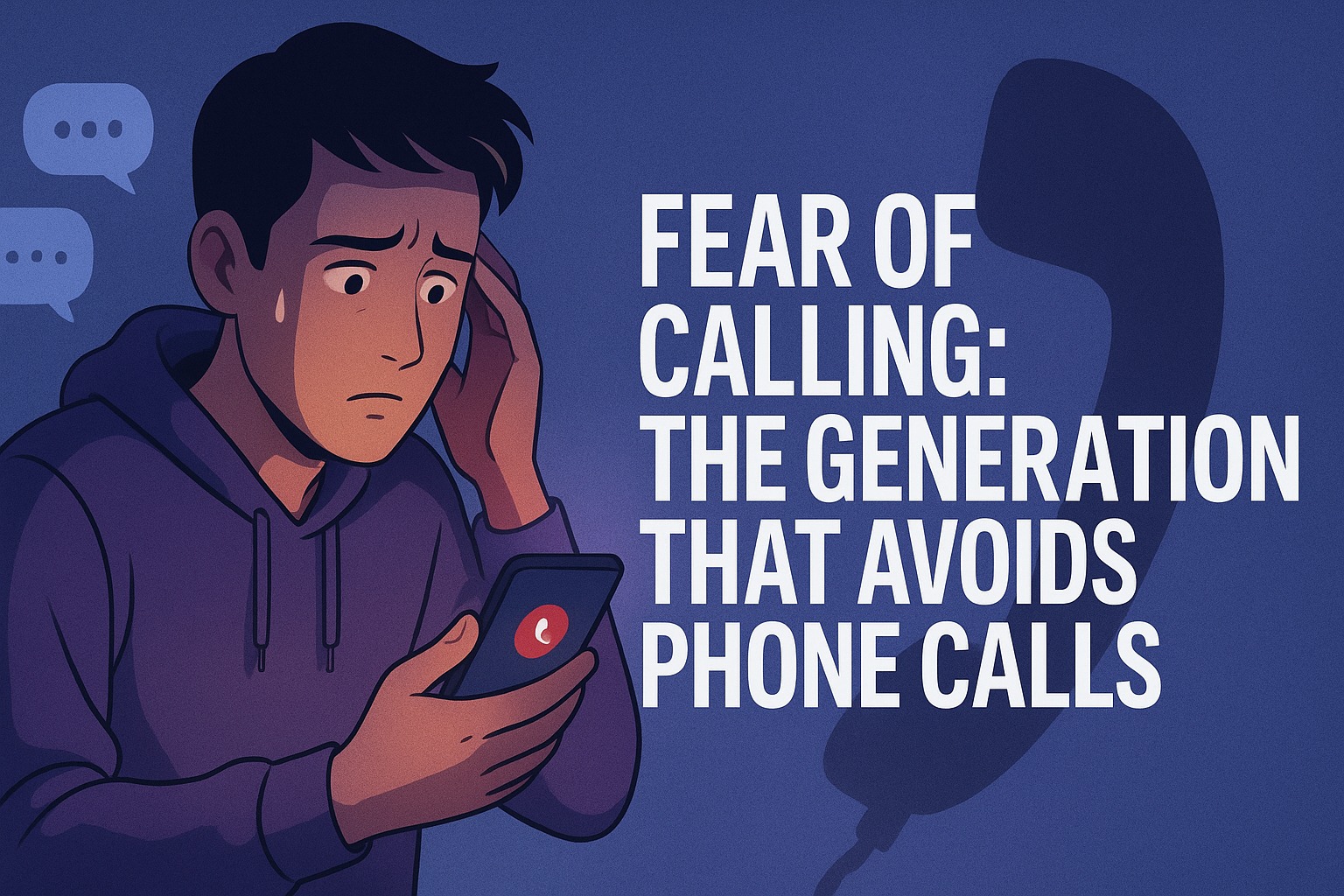
In this era of rapid communication, the phone should theoretically be the most direct and efficient way to interact. However, the reality is that many young people are experiencing fear of calling—anxiety or fear when they have to make a voice call. This phenomenon emerges alongside a cultural shift in communication, where text messages, chats, and voice notes become the primary choices over speaking directly over the phone.
While seemingly trivial, the fear of making phone calls can affect various aspects of life, including work, social relationships, and managing daily responsibilities. The younger generation often feels nervous, unsure of what to say, or afraid of making a mistake when they have to answer or make a call. This article will delve deeper into the causes of the fear of calling, its impact on modern life, and the steps that can be taken to gradually overcome it.
WHAT IS FEAR OF CALLING?
Fear of calling is a condition where a person feels anxious or stressed when they have to speak over the phone. This anxiety is not always related to communication ability, but rather to the discomfort of facing a real-time conversation without a pause for thought.
This phenomenon is commonly found in the generation that grew up with social media and instant messaging applications. They are more accustomed to expressing themselves in writing rather than verbally, which makes phone conversations feel more intense.
WHY IS THE YOUNGER GENERATION AFRAID OF PHONE CALLS
1. No Time to Prepare an Answer
Unlike text messages, which provide time to think, phone calls demand an immediate response. This can trigger anxiety for those who are afraid of misstating something or not knowing what to say.
2. Concern About Being Judged by How They Speak
Voice, intonation, and speed of speech make many people feel vulnerable. They worry about sounding unconfident, impolite, or unprofessional.
3. Social Trauma or Bad Experiences
Experiences of being scolded over the phone, sudden calls, or high-pressure conversations can leave a negative impression. This causes a person to be reluctant to repeat similar experiences.
4. More Comfortable with Asynchronous Communication
Text messages and chats allow for greater control over the conversation. Many young people feel comfortable with communication that does not demand an immediate response.
THE IMPACT OF FEAR OF CALLING ON DAILY LIFE
Phone anxiety not only affects personal communication but also professional matters. Many jobs require calls, ranging from work coordination, interviews, to communication with clients. The inability to make calls can hinder career opportunities.
Furthermore, important administrative matters such as contacting customer service, booking services, or asking for information often require a phone call. When fear prevents action, a person tends to procrastinate until the problem escalates.
HOW TO OVERCOME FEAR OF CALLING
1. Start with Short Calls
Practicing by making brief calls to friends or family can help lower the anxiety level. The more frequently it is done, the less the fear will become.
2. Prepare a Short Script
Writing down important points before making a call helps create a sense of security. With preparation, the conversation feels more focused and less stressful.
3. Practice Breathing and Intonation
Deep breathing techniques can reduce anxiety before and during speaking. This practice also helps the voice sound more stable and confident.
4. Change Your Perspective
Remembering that the person on the other end is a normal person who does not expect perfection can make the process of making a phone call feel lighter.
CONCLUSION
Fear of calling is becoming an increasingly common phenomenon in the digital age, especially among the younger generation. The change in communication patterns and the comfort of using chat make phone conversations feel stressful. Even so, the ability to make calls remains important in various aspects of life.
With gradual practice, simple preparation, and a change in perspective, this fear can be reduced. Facing the fear of calling is not just about courage, but also a skill that can be trained to support more effective communication.
About the Author
Gusti Ayu Tita
Author — STEKOM University
An active author focused on academic issues, educational technology, and human resource development in the campus environment.



