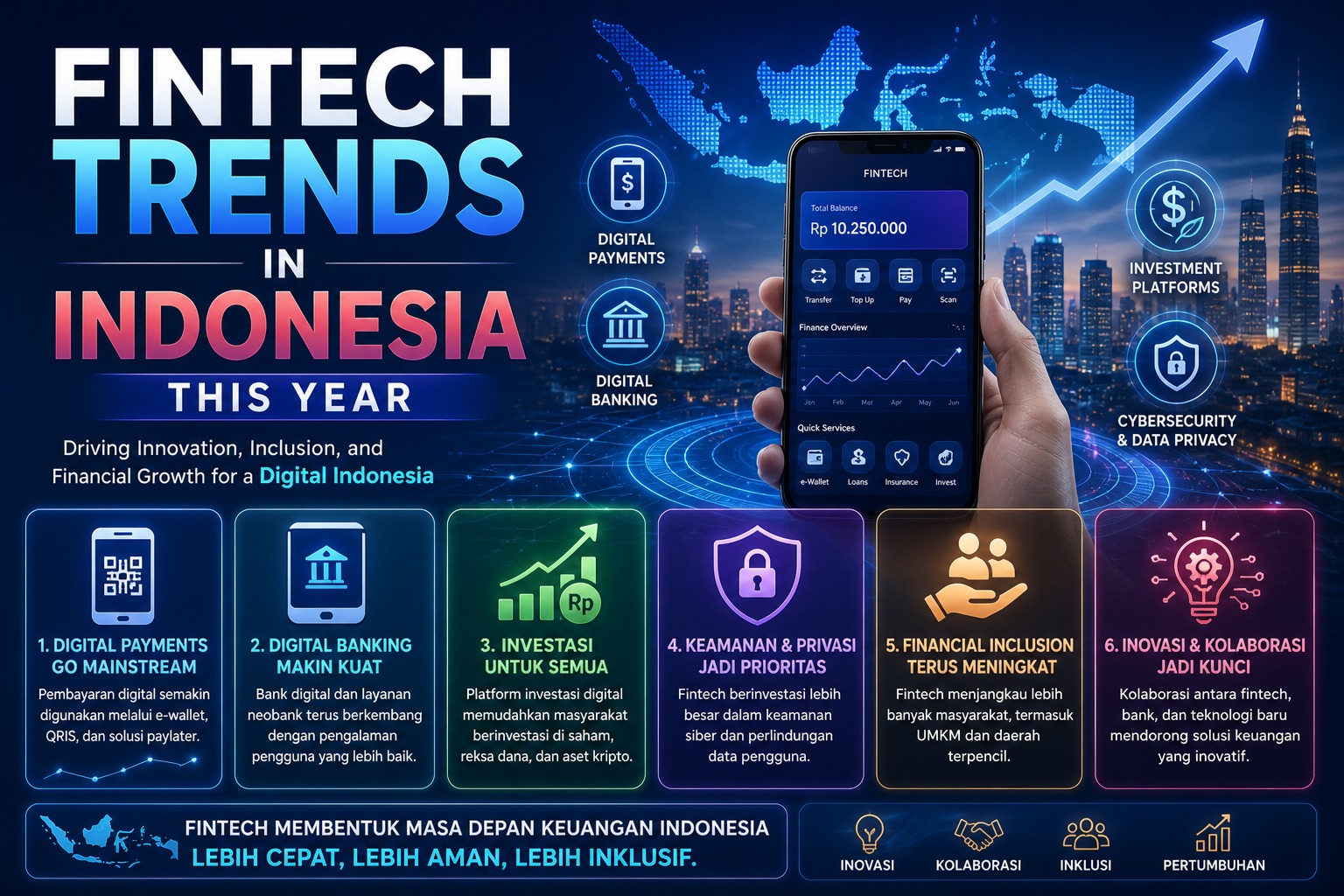
Indonesia’s fintech industry continues to experience rapid growth and transformation in 2026. As one of the largest digital economies in Southeast Asia, the country is witnessing increasing adoption of financial technology driven by a young, tech-savvy population and expanding internet penetration. This year, fintech is not only reshaping financial services but also playing a crucial role in driving financial inclusion and economic growth.
OVERVIEW OF INDONESIA’S FINTECH LANDSCAPE
Indonesia has evolved into one of the most dynamic fintech markets in the region, with hundreds of active companies operating across various segments such as digital payments, lending, and wealth management (). The industry continues to mature with stronger regulatory frameworks introduced by authorities like Bank Indonesia and the Financial Services Authority (OJK), ensuring sustainable growth and innovation ().
Fintech is no longer just an alternative to traditional banking—it has become an integral part of the financial ecosystem, connecting digital infrastructure, policy, and economic development.
RISE OF EMBEDDED FINANCE
One of the most significant trends this year is the growth of embedded finance. This model integrates financial services directly into non-financial platforms, allowing users to access payments, insurance, or lending services seamlessly within apps they already use.
For example, travel or e-commerce platforms now offer payment options, insurance, or “buy now, pay later” features without requiring users to switch applications. This trend enhances user experience and increases accessibility to financial services ().
EXPANSION OF DIGITAL LENDING
Digital lending, particularly peer-to-peer (P2P) lending, remains a dominant segment in Indonesia’s fintech industry. It plays a vital role in providing financing to underserved populations, especially micro, small, and medium-sized enterprises (MSMEs).
In 2026, fintech lending is expected to continue growing strongly, supported by improved risk management and regulatory oversight (). This growth helps bridge the financing gap for businesses that lack access to traditional banking services.
INTEGRATION OF AI AND MACHINE LEARNING
Artificial intelligence (AI) and machine learning are becoming core components of fintech innovation in Indonesia. These technologies are used for credit scoring, fraud detection, customer service automation, and personalized financial recommendations.
AI enables faster and more accurate decision-making by analyzing alternative data sources, improving efficiency and reducing risk. As fintech platforms continue to adopt AI, they are able to deliver smarter and more tailored financial solutions ().
OPEN FINANCE AND DATA SHARING
Open finance is gaining traction as an evolution of open banking. It allows users to share their financial data securely with third-party providers, enabling a more integrated financial experience.
With open finance, users can manage multiple accounts, track spending, and receive personalized financial products through a single platform. This trend promotes transparency, competition, and innovation within the financial ecosystem ().
FOCUS ON FINANCIAL INCLUSION
Financial inclusion remains a key driver of fintech growth in Indonesia. Millions of people, particularly in rural areas, still lack access to traditional financial services.
Fintech solutions are helping bridge this gap by providing accessible and affordable financial products. Digital payments, microloans, and mobile banking services enable individuals and small businesses to participate in the formal economy, contributing to national and regional economic growth ().
GROWTH OF SUSTAINABLE FINTECH (ESG)
Sustainable finance is emerging as a major trend, driven by increasing awareness of environmental and social issues. Fintech platforms are now offering investment options that align with Environmental, Social, and Governance (ESG) principles.
Younger generations, particularly millennials and Gen Z, are showing strong interest in sustainable investments. This shift is encouraging fintech companies to develop products that support responsible and ethical financial practices ().
CROSS-BORDER PAYMENTS AND REGIONAL INTEGRATION
As ASEAN economies move toward greater integration, cross-border payment systems are becoming increasingly important. Fintech is playing a key role in enabling faster, cheaper, and more efficient international transactions.
Interoperable payment systems are expected to reduce friction in trade, tourism, and digital services, making it easier for businesses and individuals to operate across borders ().
CHALLENGES FACING THE INDUSTRY
Despite its rapid growth, the fintech sector in Indonesia faces several challenges. Regulatory compliance, cybersecurity risks, and funding constraints remain key concerns.
Additionally, managing credit risk in digital lending and ensuring consumer protection are critical for long-term sustainability. Collaboration between regulators, fintech companies, and traditional financial institutions will be essential to address these challenges.
FUTURE OUTLOOK
The future of fintech in Indonesia looks highly promising. With continuous innovation, supportive regulations, and increasing adoption, the industry is expected to play an even greater role in shaping the country’s digital economy.
As technologies like AI, blockchain, and open finance continue to evolve, fintech will drive new opportunities for businesses and consumers alike. Indonesia is well-positioned to become a leading fintech hub in Southeast Asia.
CONCLUSION
Fintech trends in Indonesia this year highlight a shift toward a more integrated, inclusive, and technology-driven financial ecosystem. From embedded finance and AI adoption to digital lending and sustainable investments, the industry is undergoing significant transformation.
By addressing challenges and leveraging innovation, Indonesia’s fintech sector will continue to grow and contribute to economic development. Its impact will extend beyond financial services, shaping the future of how people interact with money.
About the Author
Gusti Ayu Tita
Author — STEKOM University
An active author focused on academic issues, educational technology, and human resource development in the campus environment.